The Runner and the Gym

img_6834-editIf you are avid runner, there’s a good chance that all you do is run – little or no time is spent stretching, weight training, or cross training. And let’s face it – when you are short on time, it’s common to only get done what feels necessary – for many of us that means those miles towards race training. The old school thought was that runners simply needed to run in order to improve. Some coaches and runners still practice that method, but many of us are fans of runners doing other things too. In this blog I am going to give you the rundown on why I as a coach and athlete am a fan in runners weight training, stretching and cross training. I am going to ask you to be open-minded and to remember that no two bodies are the same.

  • In order to improve as a runner, you must run. There is no real substitute for running, and so you will spend most of your training time pounding the pavement.
  • Runners often develop extremely strong bodies, but rarely balanced. This imbalance is often what leads to injury.
  • Running tends to tighten the human body’s hips, muscles, and sometimes compromises range of motion. Even if you don’t notice your range of motion changing, a tight hip may slightly change your stride, causing potential pain or problems anywhere in the body from your hip to your toes. We are rarely designed to be 100% even on both sides, and very few of us are ambidextrous. We usually favor one side of our bodies. When doing something extremely repetitive like running, those imperfections often come out.
  • Our arms counter our legs as we run, and can be a huge source of power and strength on the race course. Totally ignoring your upper body means your arms won’t be as strong as they could be, or in balance with our heavy, strong legs. Weight training and strengthening your body from the waist and up will give you the strength and power you’ll need for PRs.
  • Our arms and legs swing from our core. Ignoring your core (front and back) means you won’t have a strong anchor. With a strong core, your entire body will feel like a harmonious running machine. You’ll be less likely to sink into your hips, collapse your shoulders, and fall apart on the race course.
  • Weight training should work in harmony with your training. Lift heavy, 2-3 times per week, ideally on your hard run days, a few hours after your hard run. Be sure to refuel with a protein-dense snack after your workout.
  • Weight training your legs will give you power, and ideally balance your body. That forward motion with running doesn’t tax or legs evenly. Becoming strong all the way around will prevent injuries due to imbalance in strength.
  • Cross training is a great way to get in some active recovery. Swap in some time cross training (swim, bike, row, stair climb, elliptical) for an easy run day. Some time away from the pavement, while flushing out your legs is a great way to prevent minor aches and pains from getting worse.
  • Every runner is different. Some runners can simply go out and run, and never experience pain, injuries or weakness. Many of us, however, benefit from not only running, but instead focusing on total body strength and wellness.

Think of the big picture – not just this season. In a prefect world, you want to stay injury-free for decades of running.
How to Handle a Disappointing Goal Race

11205146_10153338298619048_3594191690928431113_n

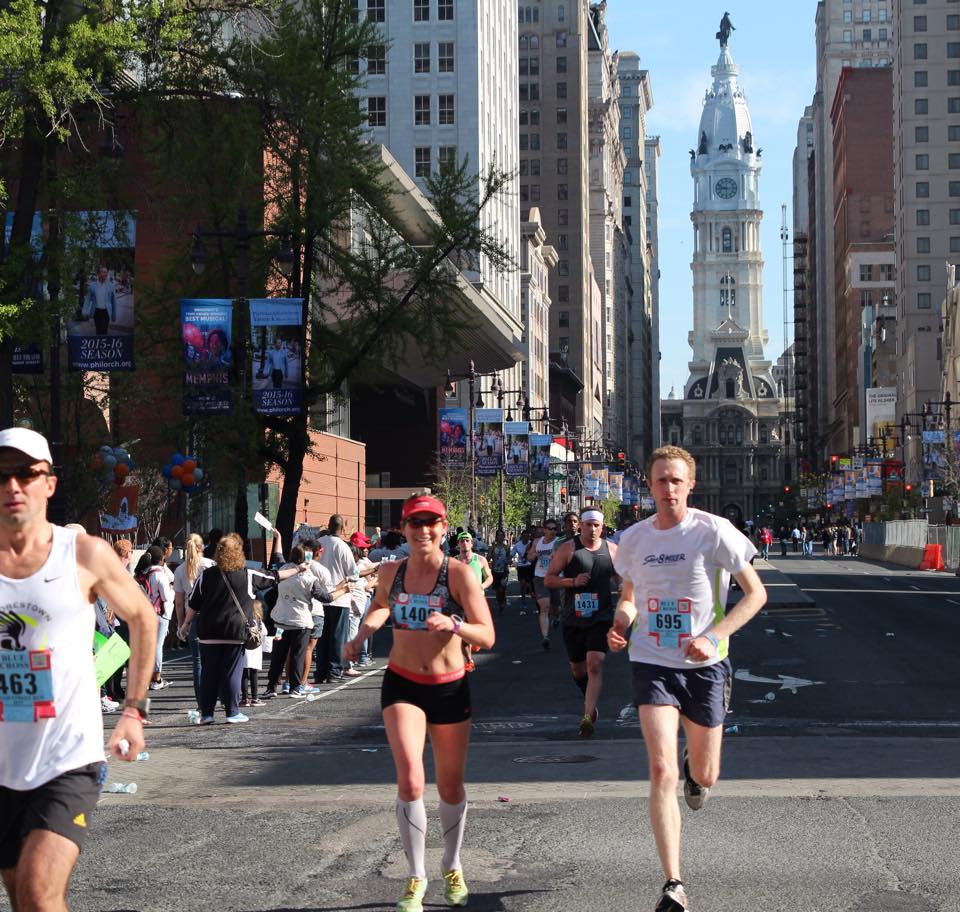
Broad Street Run 2015, around mile 6. Thanks, Alex, for capturing me when I was really feeling awful but trying to power through.

This past weekend, in what was meant to be my goal race for the Spring season, I not only missed my target finish by 4 minutes, but most of the race was a struggle. It wasn’t that I was ill-prepared – because I wasn’t. But getting sick with a head/chest cold meant my goals were simply no longer in the cards. Oxygen is vital while running (obviously!), and especially necessary when racing. Naturally I was disappointed, and also not feeling well. Not the best of combinations. But I told myself that while I couldn’t control being sick on race day, I could control my attitude. I’m sure I am not the first runner to have a bad goal race – in fact I know I’m not – and thought this could be a misfortune that could turn into a coaching lesson. After all, I am trying to look on the bright side.

If a goal race isn’t going to go the way you had hoped, there are a few things you can do. Here are some common scenarios and tips:

  • Accept the things you cannot change. Modify your plan, goals, and expectations. Being in denial isn’t helpful, and just delays your disappointment.
  • Perhaps poor weather is in the forecast. Adjust your wardrobe for it. Hot sun will mean you’ll need to fuel more frequently than perhaps anticipated. Rain means you may want to wear waterproof gear, or few layers. Wind means you will possibly need to adjust your paces. Nobody wins in a race against headwinds. You will simply need to modify your pacing and finish time expectations. Don’t believe me? Ask the folks who tried to fight the wind in the 2014 NYC Marathon.
  • A stressful week or weekend leading into your goal race can cause issues. The odds are you have put race pressure on yourself, and if you are experiencing “taper tantrum,” you may naturally be more on edge. Remember to relax. Look at the big picture, and don’t make mountains out of mole hills.
  • Bad health and minor injury are unfortunately unavoidable. For example, I had no control over the chest/head cold that plagued me this week and hit me hardest over race weekend. If you have a minor injury, all you can do is attempt to keep it happy. If health appears to compromise your goals, you need to accept that and modify your expectations and strategy. If IT Band issues plague you on race weekend, be prepared to pause and stretch on race morning. Also be prepared to change your pace and gait if you are tight or in pain.
  • If you are late to the starting line, don’t panic. You may miss your corral, or be in a rush to get into the porta potty line or bag check – but loosing your cool will only lead to a frazzled race. Instead, remember you can always drop back to a different corral. Not ideal, but if you settle into those first few miles, the odds are your race pace won’t be compromised at all in the big picture. Stay stressed and abandon all reason, and you are asking for the wheels to come off.

It can be really sad, frustrating, and upsetting to miss the mark on a goal race. But remember, as long as you are safe and smart on race day, your racing career is far from over. Instead, I urge you to go out there and enjoy the morning as much as possible – even if that means running through a heat wave, or blowing snot and coughing up gunk in your lungs at an epic rate. Every race is a journey, and we cross that finish line slightly different from when we crossed the starting line. Enjoy the journey between those two points. You’ll have your day to capture that goal – it simply just may not be today.

Boston Marathon 2015

273565_191803974_XLargeThe Boston Marathon has been part of my marathon journey since my first marathon. Working towards a BQ (Boston Qualifier) gave my training a specific goal. Achieving that goal, and anticipating Boston was a magical experience. Three Boston Marathons later, and my journey seems somehow complete for that chapter. Before I get to that, let’s talk about the Boston Marathon for a minute.

In my opinion, the Boston Marathon is the most famous, historical, and prestigious marathon in the world. I’m sure there are prettier marathon courses out there, harder ones, easier ones – but Boston is special. Unless you opt to run for a charity, every single runner on the course earns their way to the starting line by achieving a qualifying time. I like that. I’m someone who likes to work hard, and would never run Boston without earning my spot. Just my opinion. This is because that starting line and 26.2 mile journey cannot be nearly as sweet for someone who fundraised as someone who may have put blood, sweat, tears and sacrifice into achieving that qualifier. For many of us, its as close to an Olympic Qualifier, or Olympic Trials experience. I wouldn’t want to buy my way into that either.

Besides being earned, the course is amazing. There are a few quiet miles through Boston farm towns and suburbs, but they are short-lived and broken up by the most passionate fans and towns I have ever witnessed. In Monday’s rain, the crowds only screamed louder. You can hear the Wellesley girls (famous for giving out kisses to runners) a mile or so away. The energy is electric. The locals set up tents, fire pits, and parties in their front yards – often handing out orange slices, candy, tissues, water, and all the enthusiasm they have. By the time you get to the Newton Hills, you are charged and ready for the hills that await  you. Turning the corner in Newton at the fire station, and seeing one of the first big climbs, you cannot help but feel confident and strong as Bostonians scream for you. From Brookline to the finish line on Boylston Street, the energy simply carries you.

If you have never run Boston, and have it on your list of goals, I highly recommend you do what you can to qualify. The reward for partaking in Patriot’s Day is one that cannot be accurately described. It’s an honor to share the journey with so many talented runners from around the world.

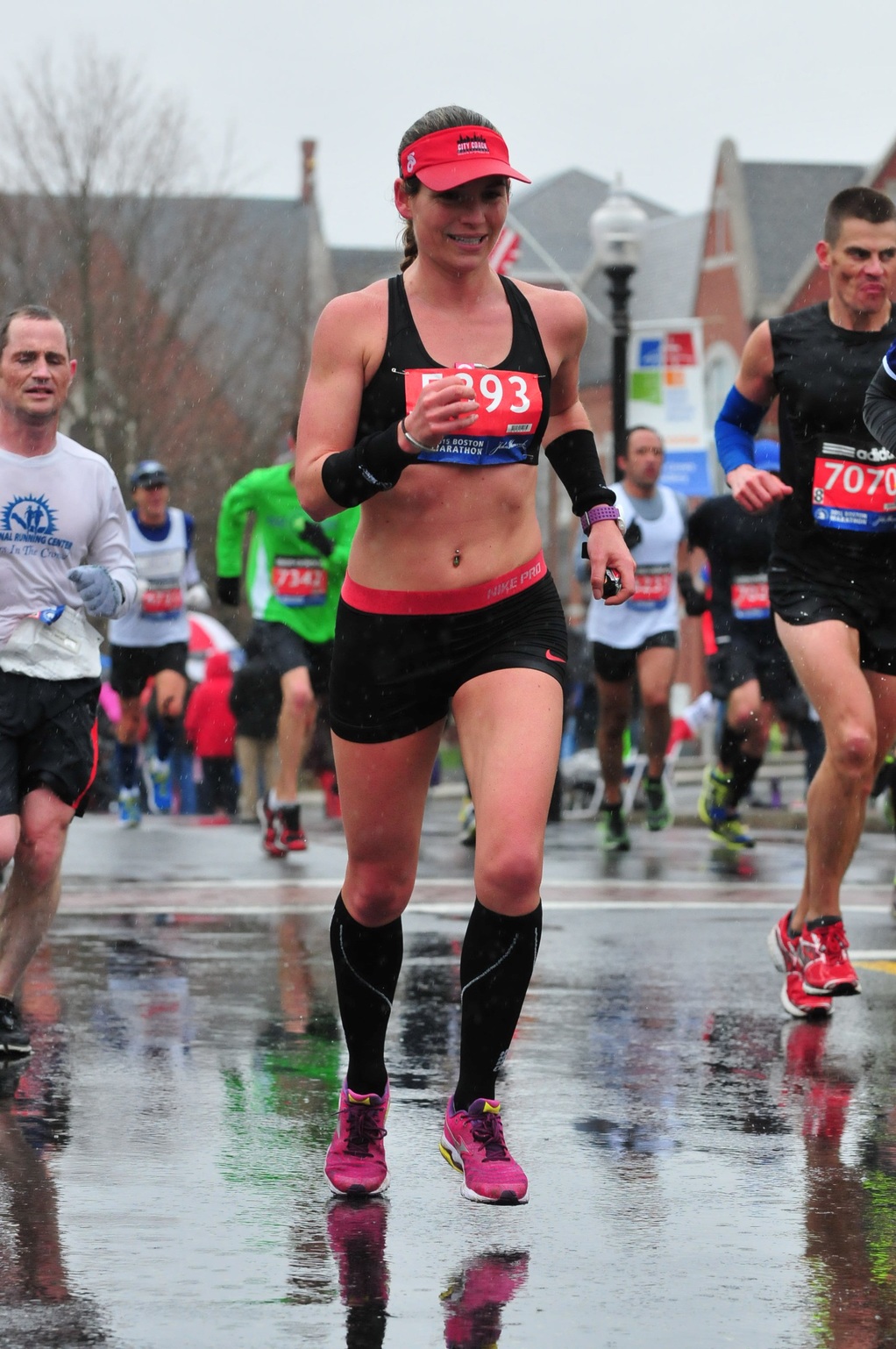
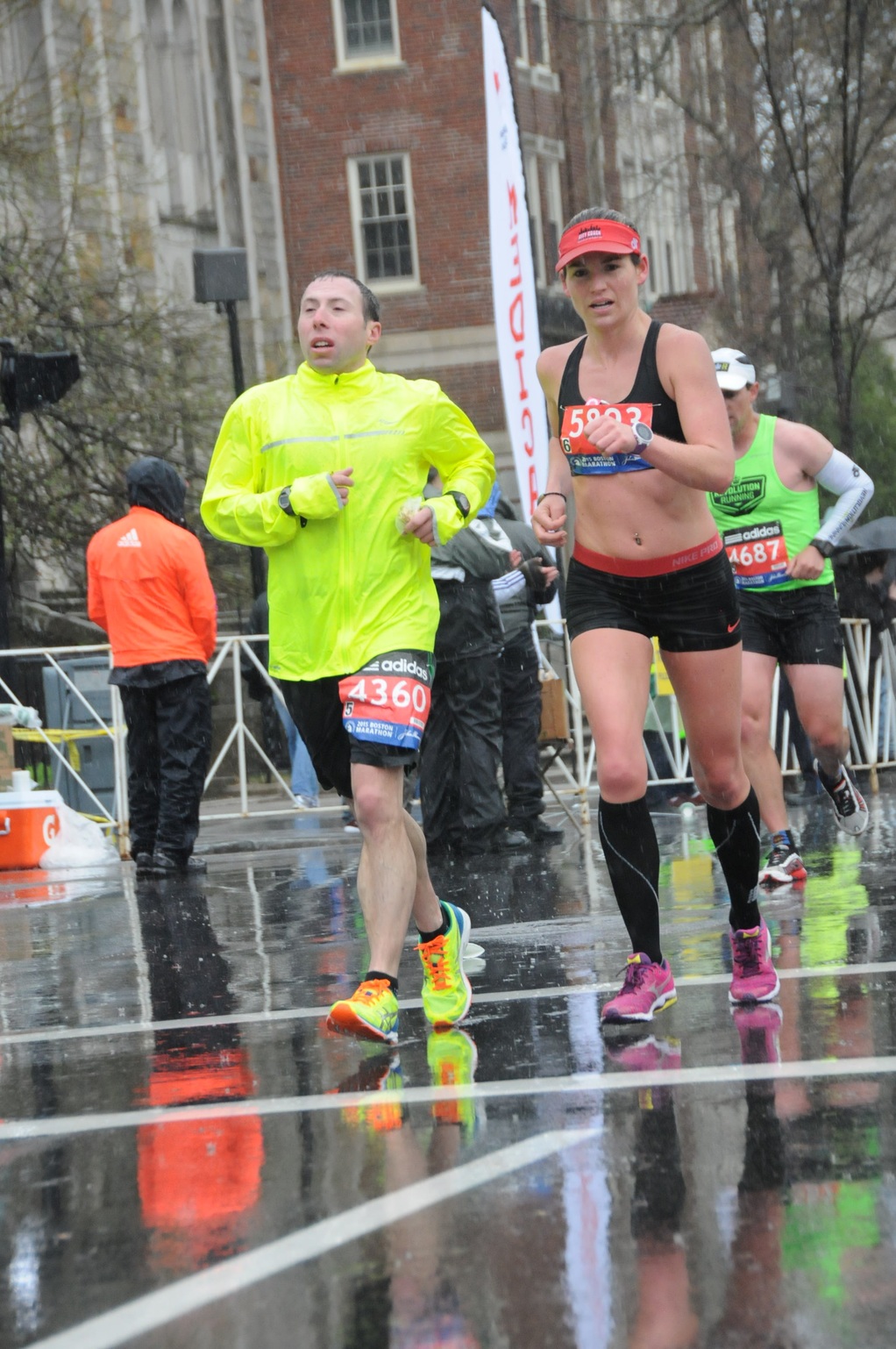
273565_191450725_XLargeThe 2015 race took place in less than ideal weather. Off and on rain (sometimes a heavy pouring rain!) and 20 MPH winds at times meant respecting the weather and not fighting it. The rain held off for me until I got to Natick, so I was a good 6-8 miles into the race before the weather got nasty. Overall, I have to say the weather wasn’t bad. Had I been trying to race, I’m sure I would have felt it. Based on the slow elite times, it obviously was a factor. The worst part was losing feeling in my hands and arms, making opening my final GU a real challenge. But in the big picture, a pretty minor inconvenience.

I have had a hard time processing this past Monday. I almost bailed on the race all together. I didn’t know if I was truly ready to come back and face the course and the city for the first time since 2013. I won’t rehash the details, but you can read my blogs about that here, here and here. Ironically, though qualifying for Boston has never been full of misses and heartbreak (I’m lucky in that department!), my experiences in Boston had never been good. In 2012, the year it was over 80 degrees at the start, I was battling a stomach bug that forced me to DNF at my 11. It was a truly terrible day, and I was so heartbroken and sad. I had never pulled out of a race before, and Boston seemed like the worst of all races to do so. In 2013, I was coming back from an injury and wasn’t sure I’d be clear to go and run – I had abandoned the original goal of really racing and trying to PR. On what was a beautiful day, and an incredible journey with my friend Cipriana, that was all erased at the finish line. So this year, the third attempt at Boston, I was more or less waiting for something to go wrong. Maybe third year was the charm? Anyway, when the weather looked sour, I figured if that was the worst of it, I’d take it. I can run in wind and rain. I wasn’t aiming to PR or really race, and I train through any and all conditions.

Race weekend was tough. Anxiety made me snappy, tense, and probably hard to deal with. We avoided crowds, Boylston Street and pretty much everything. Aside from the race expo, which we got in and out as quickly as possible, we laid low. I turned off my phone by 7pm on Sunday night, and was in bed. I wasn’t exactly sleeping, but I was resting. This may be one of the first marathons where I was calm and not at all stressed about the course, race morning, goals – I am usually a bit of a basket case. Having no race goals and knowing the course meant I let it all go. It was really strange. The most I have ever slept before a marathon, for sure. Race morning, as soon as I left the hotel and started the walk towards Boston Commons for the bus, Boston PD were out with bomb sniffing dogs at 6am. I almost threw up, but somehow told myself not to panic. Thankfully, a lovely couple (Christina and Quint) came up beside me and started chatting as we walked. Having their company from that moment until we hopped into our corrals hours later was a mind-saver. Truly.273565_192126062_XLarge

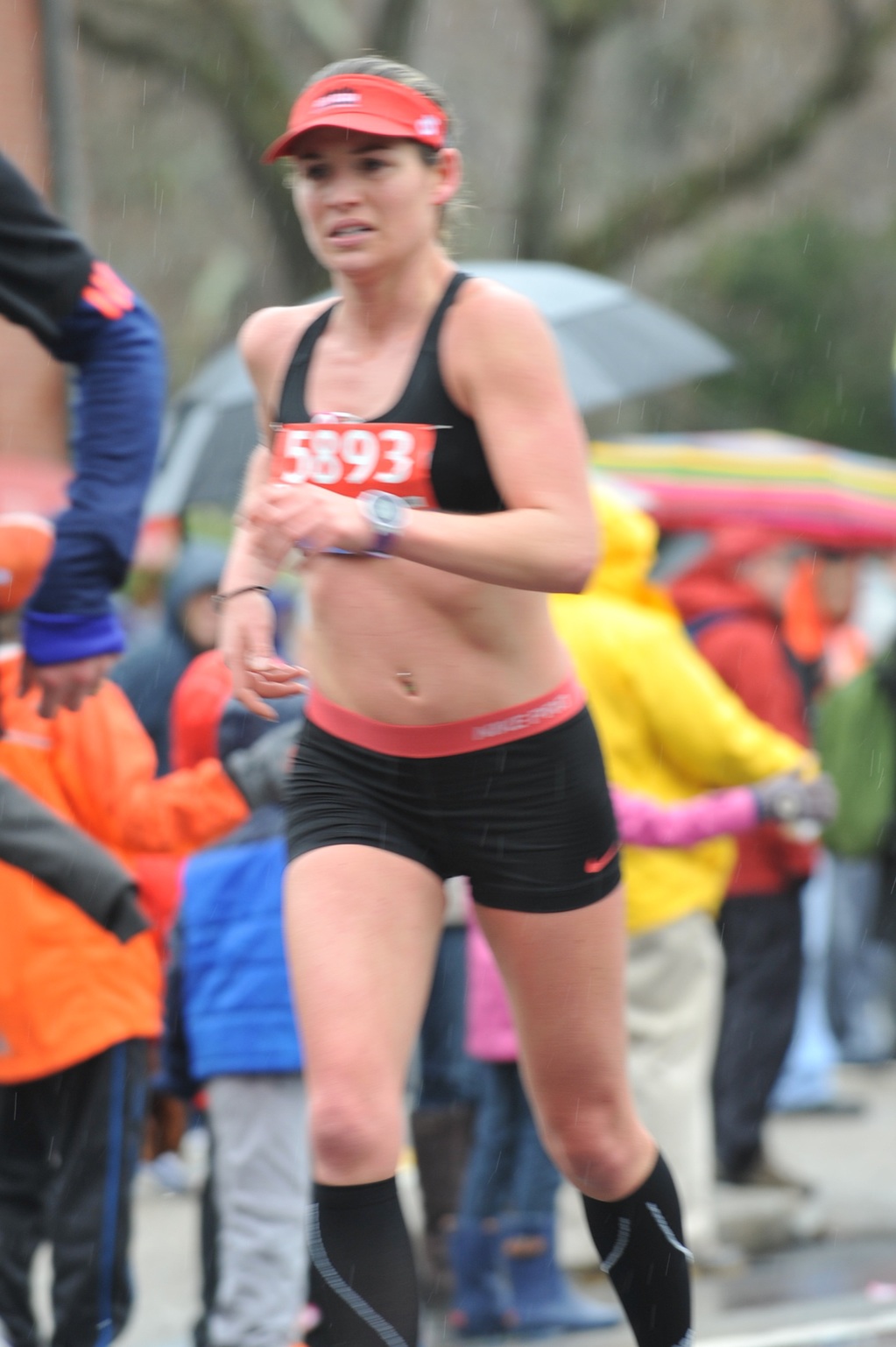
At the starting line, I was briefly overcome by emotion. Not because of PTSD or bad memories, but the reality that here I was, on the iconic starting line in Hopkinton. My plan for the day was to run a comfortable pace, and to settle and not burn out on the hills. Being a coach has made me a smarter athlete. I never lost my head or abandoned my plan. The quiet, the crowds, the rain, the wind, and calm – I took it all in. I looked forward to each town in front of me, and enjoyed the town I was in. I gave high-fives, pumped my fist when someone shouted “Go #5893!!!!,” took my GU like clockwork every 5 miles, and enjoyed the journey. While many runners around me dreaded the iconic hills between miles 16-21, I was excited to see them and climb them. I’m not going to say I was never tired out there, because 20 miles into a marathon nobody feels fresh – regardless of the pace. I recall my glutes and hips felt a little tight and tired, and I told myself “smooth and easy,” over and over each mile. Reminding myself to check my form meant I never took heavy steps – always silent or very quiet.

Getting to the top of HeartBreak is always fun – all of the Boston College kids and the fast downhill give you a surge. Plus it’s only 5 miles to the finish. This is where I started passing runners by the dozens. I found my even splits meant I passed many runners on the hills who had gone out too fast, but then the final 5 miles all I did was fish in runners who struggled. It’s a GREAT feeling to pass everyone towards the end of a race. Though I only looked at my watch periodically to make sure I wasn’t going too fast, I ran 1:38:57 for the first half, and a slightly positive split for a finish time of 3:20:23.

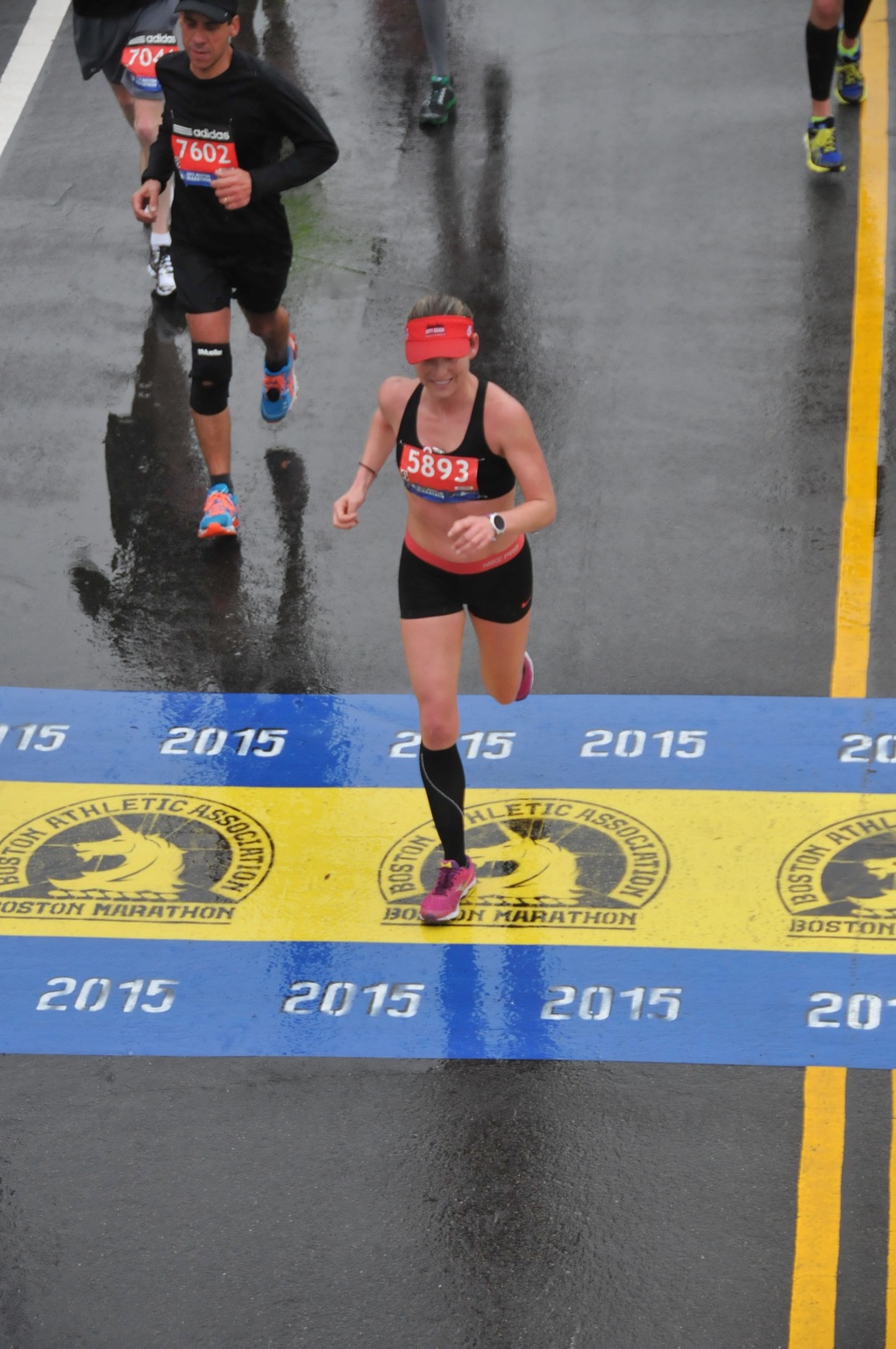
Chris was standing at the overpass he was at in 2013, wearing a poncho and trying to snap photos in the rain. Once I saw him, it was a block until the right turn on Hereford Street, and the quick left onto Boylston Street. On Hereford, I gathered myself for what was ahead. I remember briefly closing my eyes and closing out the world. I told myself this was it, the epic stretch was before me, and this time it was mine to celebrate without anything bad. I had made it to Boston, all I had left was Boyslton Street. Running down Boylston Street is something I cannot put into words. The energy is unfathomable. It’s all around you. I laughed, I cried, I opened up my stride to finish strong. I remember giving a second of reflection as I passed the National Flags, having witnessed them destroyed two years ago.

Once at the finish, I turned around and forced myself to look back. No bombs. No fear. Just cheering and runners coming in behind me. The rain and wind, though noticeable, was such a minor thing in the big picture. My frozen hands and arms had a hard time holding the water bottle handed to me, and a volunteer put my medal around my neck and helped me with my mylar poncho. My legs were so cold I couldn’t tell where my shorts stopped and my legs began. As I exited Boystlon Street and walked back to my hotel, I’m sure I looked like a mess. A drenched, crying, laughing, poncho-wearing runner looking at her splits and eagerly walking the mile or so back to a hot shower.

Some interesting facts/choices made that day:

  • Pre-race, I consumed 1 banana at the hotel, and then 1 banana and 1 bagel, and 1 bottle of water in Athlete’s Village.
  • No blisters, chafing or discomfort commonly associated with long distance running occurred during this marathon – which is pretty surprising considering the wet conditions.
  • I used old running socks as mittens for my hands, and kept them on for the first 5 miles. They worked great.
  • Wearing a hat with a cap is hugely helpful when racing in rainy or sunny conditions. The rain was rarely in my face and vision was never compromised.
  • Usually one to race in sunglasses, I opted to leave them at the hotel. This worked out well, considering the humidity level and rain. Though my face did feel a little naked without them.
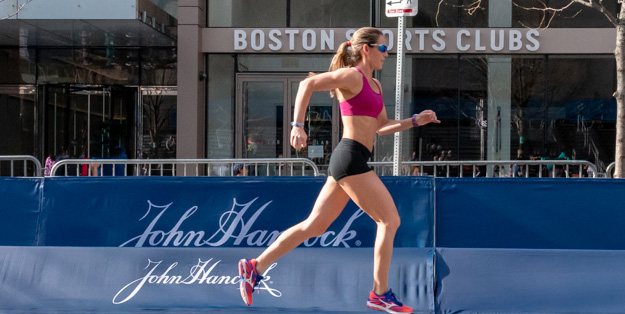
  • After much debate, I opted to dress minimally for a chilly race – sports bra, shorts, knee high compression socks, and arm sleeves – which I discarded around 10 miles in. The minimal clothes meant minimal fabric weighed down by cold rain. The only downside: my arms/hands lost all feeling by the end of the race, thanks to the wind and rain.
  • I used 4 GUs, taking them religiously every 5 miles. I stored them in my sports bra, my arm sleeves, and later held the final two in my hand after discarding the arm sleeves and looking to avoid chafing.
  • I brought my iPod with me (incase nerves became a big issue), but never used it and had the headphones tucked into my sports bra the entire 26.2 miles.
  • I never took any Gatorade, only water from hydration stations.
  • Breaking up the course by town is a nice way to look at 26.2 miles. Boston is the perfect course for this strategy, as it’s pretty much a straight shot to Boston. No hairpin turns or out-and-backs.
  • Once crossing the finish line, I kept moving. I paused for my medal and mylar sheet, but otherwise walked an additional 20 minutes or so. Resisting the temptation to stop and sit post-race can be hugely beneficial for recovery.
  • I consumed a bottle of water, a burrito, chips and guacamole, and a chocolate shake within 60-90 minutes after walking back to the hotel. Fueling post-race is important, and I waited a little longer than the ideally recommended 30-minutes post-race. I was too cold and frozen to manage eating en route to the hotel. And it was pouring.273565_191542107_XLarge

Three Patriot’s Days running Boston, and the third was certainly the best. I don’t know when I’ll be back. I’m okay with that. I have a qualifier now for 2016, but I don’t want to rush anything. Plus I don’t know what my goals are right now with the marathon. I’d love to come back and really race some day. I’d also love to crack 3 hours. Though I don’t know if Boston will be the place for that. For now, I am just relieved to have made it to today, with a positive story about the Boston Marathon. I will never forget 2013, as hard as I may try. And that’s okay, it’s unfortunately part of my history. But now I also have a newer history in Boston, that is so much sweeter.

Run a Race!

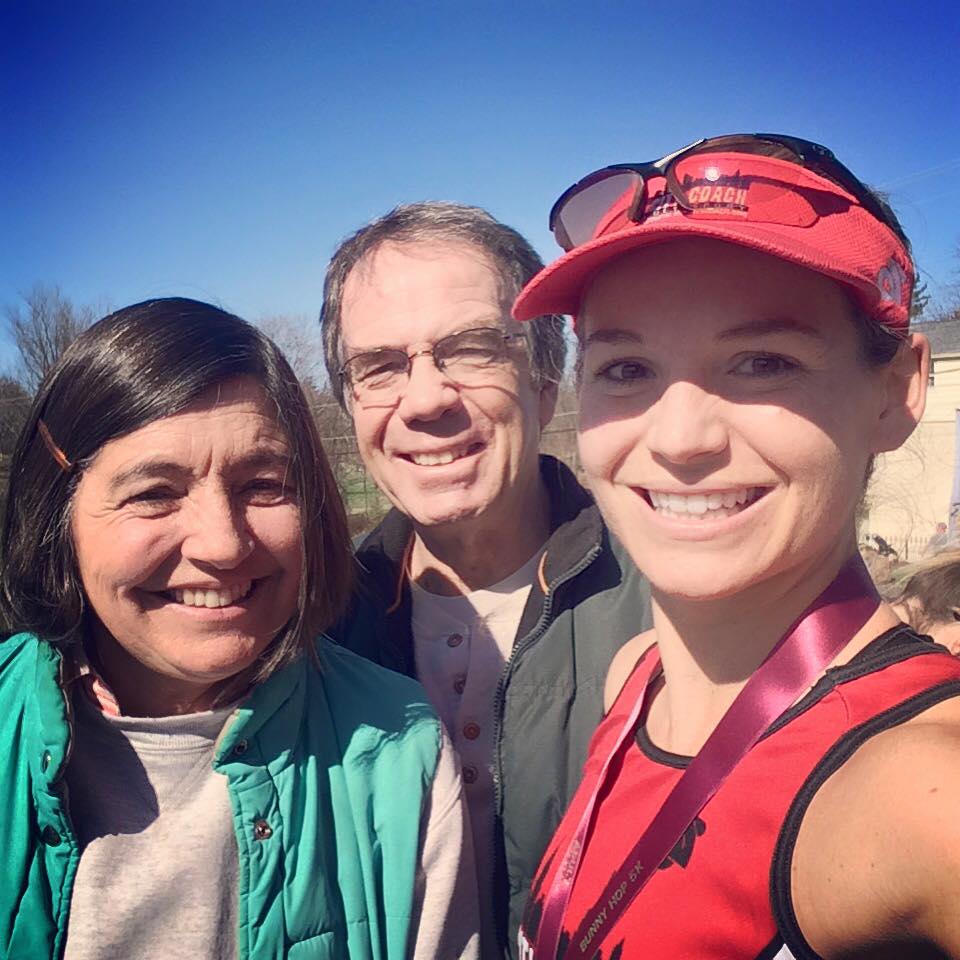
10358729_796133213815647_6984393093090976025_nI am a big fan or runners hopping into races during their training for a big goal. While the races need to be carefully timed and chosen, they are a fun way to mix up training, assess current fitness, and practice race morning routines. For many of my athletes, we’ll sue a short race in place of a speed workout. If you are itching to sign up for some races, and are wondering how to choose and how to structure your season, I am sharing a few tips with you below:

  • Choose a distance that benefits your goal race. For example, a speedy 5K can be a great workout for a runner heading to a 10K-Half Marathon race. A 5K may not be a huge asset to a marathoner unless some additional mileage is added to the day. Then again, if you are a marathoner who struggles with committing to speed workouts on your own, a 5K may be your excuse to get in speed. A half marathon, when scheduled appropriately, can be the perfect quality long run for someone in the throes of marathon training. I would race a Half Marathon no closer to a marathon than 3-4 weeks out.
  • Pick a course you like, or that offers benefit to your big goals. For example, a fast and flat 10K may be the perfect fitness assessment and speed workout for someone targeting a flat Half Marathon. A hilly Half Marathon would be perfect for preparing for a hilly marathon, like NYC Marathon.
  • Be sure to adjust your schedule that week for your race, especially if you are swapping a short and speedy race for a long run. For example, I hopped into a 5K this past Sunday as a speed workout. I usually do a speed run twice per week – Monday and Thursday, so this week I am not running speed work again until Thursday, and won’t be running long since this is a taper week for Boston. But Boston isn’t my goal race, so I am only giving myself a mini taper and focusing on the speed workouts, in preparation for my goal race a few weeks away.
  • Set goals that make sense. It’s a little unrealistic to set the goal of crushing every race – especially the ones you are using as a workout or assessment. Set a goal that makes sense and supports your big goal. For example, you may set the goal or even pacing, and learning to not be pulled by folks around you. This weekend, I set the goal of a negative-split 5K. This forced me to settle into the very hilly first mile and then shave away time in mile 2 and 3. Maybe practice fueling on your feet, using new gear, running without music – the goal doesn’t have to be time related.
  • Have fun. If this isn’t your goal race, there is no reason to take it too seriously. Yes, training races can be painful, hard, and sometimes terrible. But learn something from it, have a laugh and move on. Save that intensity and focus for the big goals. If running and racing isn’t fun, most of us shouldn’t be doing it.
  • If you live in a city like NYC, most races attract thousands of runners. Even little 4-milers in Central Park can draw 7000 runners. It’s really nice change to go hop into a small race sponsored by a small organization. You will have far less runners (easily the low hundreds, and sometimes less than 100 runners!), and you may have the opportunity to be a hot-shot and place in your age group or overall. Those little boosts of confidence can go a long way.

With Spring weather here, there will be races hosted all over the place every weekend between now and October. Enjoy them! And if you are traveling, do a little research and hop into the local race. It’s a great way to enjoy a new place, and get in some quality miles.

5 Tips for Running Etiquette and Safety

DSC_0154It’s the time of the year where runners are slowly coming out of hibernation, and folks perhaps new to running are joining the mix. Welcome – I think we are a pretty awesome group of people. In hopes to keep everyone happy and safe, I am outlining some guidelines for being a courteous and safe runner. After all, you may be sharing the road or track with lots of other runners, pedestrians or cars. Let’s all do our part to have a great season outside.

  1. When running on the road, always run against traffic – the opposite of what cyclists do. This way you can see oncoming cars. This is especially important if you are running on a road without a sidewalk or much of a shoulder. Be sure to also wear bright colors or reflective gear. You want folks driving to see you. While running/car accidents are fairly rare, they do happen and often end in critical injury or fatality.

  2. Share your space. Go run with your friends, but be aware that running 2-4 people across on a path is rude and inconsiderate to other runners. Share the road and be aware of how much space you are taking up – especially if you live and train in a city or a shared space with tourists and cyclists.

  3. Before spitting or blowing a snot rocket (gross but part of running!), LOOK to make sure you aren’t going to assault someone with your bodily fluids. This may seem like a no-brainer in a race, but be aware on training runs too.

  4. Use proper track etiquette. Always run counterclockwise, warmup/cool down in the outer lanes and save lane 1 and lane 2 for speed work. Be aware of your space and listen for runners coming up behind you. You should only use your running shoes on the track – no bikes, strollers, scooters, Rollerblade and wagons. (Yes, I’ve seen all of those before.)

  5. When on a bike/run path, stay to your far right side. This is both for your safety and consideration for cyclists. Stay right, pass on the left. If you need to pass a slower runner/walker, always check to make sure a cyclist or runner isn’t coming up behind you.

Many new runners feel intimidated to go out and join the fun, or are tempted to never try a new route. Relax, be safe and courteous, and go have some adventures. One of the best things about running is it can take you to new neighborhoods, paths, views and experiences. Go explore!