Ride the Highs

img_6399-editBest. Workout. Ever.

You know the feeling. You lifted more than ever before. Sweat out a terrible day. Ran a hard track workout strong. Conquered that 20-mile training run like a badass. Whatever the accomplishment, you know the feeling. I LOVE that feeling. It’s the feeling of progress. Of success. Of pay-off.

While that feeling doesn’t happen every day, or even every week, it’s one that we relish in when it happens. It’s what drives us to push through those tough or mediocre workouts. There’s always the chance that this could be the day for that great triumph.

When marathon training, these workouts are what keep us sane. Months of training not only wears on our bodies, but also on our minds and spirits. Injury and burnout are potentially knocking on the door. When a workout goes wrong, we question or abilities. When a workout goes right – we dream of progress, and what we are truly capable of.

The best thing, and what we all hope for: come race day, we have that awesome “workout.” That its the day we feel optimistic and focused in the eyes of fatigue and hitting the wall. That we push through, knowing it can get better. Our training, the combination of good days and bad days are what mentally prepare us for race day. We’ve learned when to push, and also learned when to settle and relax.

The marathon, just like most goals, are about the journey. We wouldn’t truly appreciate the highs without the lows.

So the next time you have a terrible workout, remember that you are just setting yourself up to really enjoy the thrill of a fantastic workout in the future.
Bursting at the Seams

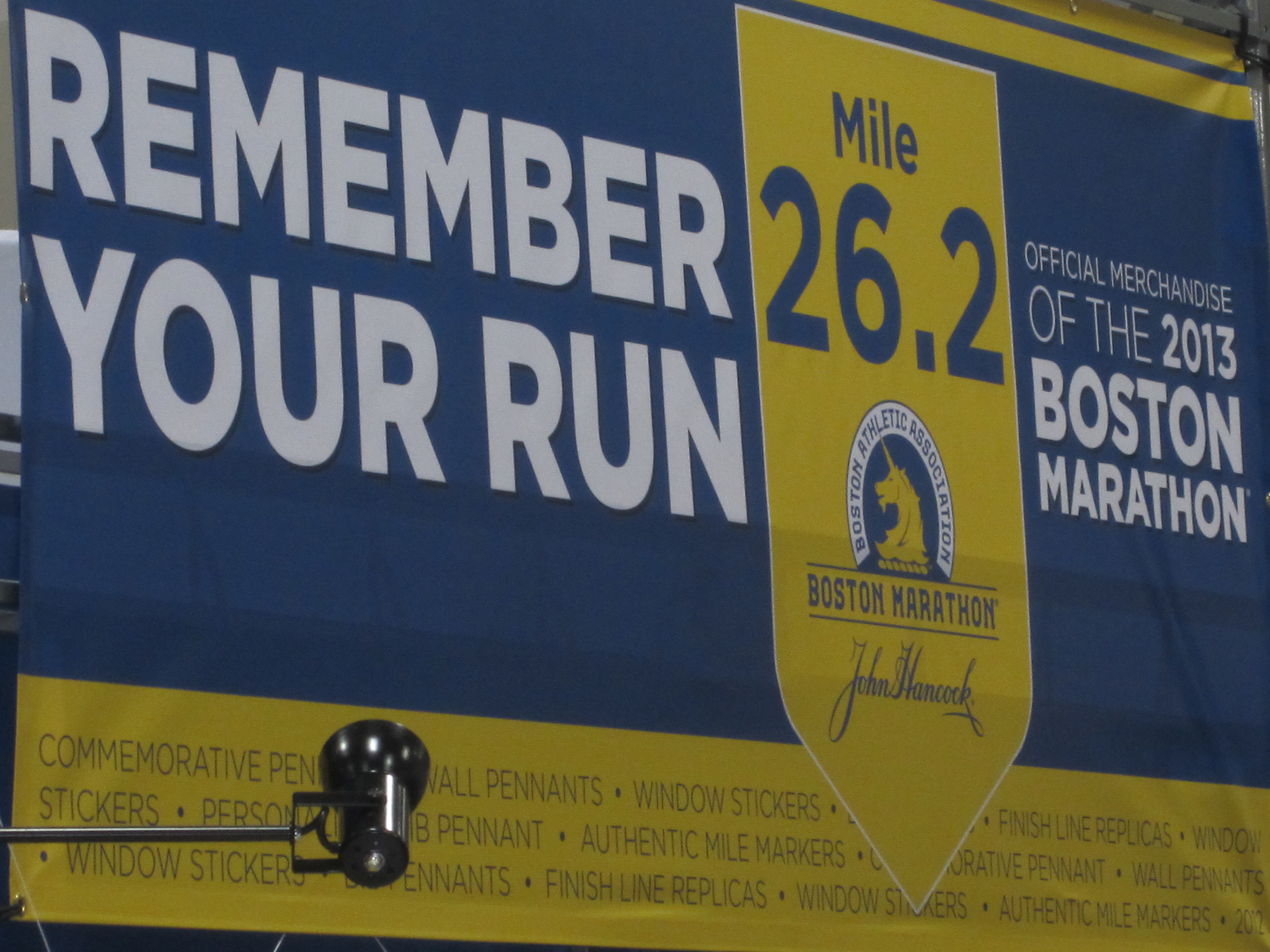
IMG_2412Recently, rumors have flooded news feeds that the Boston Marathon is considering expanding the field by 9000 runners for the April 2014 race. Some people view this news as great, while others don’t want to see the race expand. I have considered in past weeks to blog about the constantly growing fields in marathons. On the heels of this recent Boston Marathon news, it seems like a good time to discuss this topic.

Anyone who knows much about marathoning knows that the Boston Marathon is the only annual marathon that requires time qualifying performances in a previous marathon. It’s also the most famous marathon in the world. Achieving a BQ (Boston Qualifier) is always an honor, sometimes a dream come true, and not possible for many middle-of-the-pack runners. The quest and hard work to achieve a spot in this famous race is something special. Besides qualifying, the only other way into the Boston Marathon is to run and raise money for a charity.

As someone who has run Boston, I can tell you that the experience on race day, having earned a spot that I worked extremely hard for, filled me with extreme pride and emotion. After all, earning something always feels rewarding. If anyone understands that concept, it’s the marathoner. Charity runners work hard – they train AND raise money – no easy task. For the record, IF there are 9000 additional spots, it has not been revealed if those spots will be open to more qualifiers, charity runners, or a combination for the two.

In recent years, many of the big five marathons have been giving more and more spots to charities. In order to accommodate these growing charity spots, race organizers have either reduced the amount of spots for non-charity runners, or added additional spots – causing race numbers to grow at a rapid pace. Charity spots often require a financial commitment of $2500-$5000 per marathon, with a percent going to the charity of choice and a percent (larger than most runners are aware!) going to the race organization. Yes, charities are incredibly profitable for race organizations. Don’t get me wrong, race organizations need to make a profit, and charities can be a great cause – but in future years will there be any spots left for non-charity, non-elite marathoners? The London Marathon is virtually impossible to get a spot in unless you run for a charity. It won’t be long before other organizations follow suit. I wonder if in the future runners will be able to acquire marathon spots without an elite status or a charity?

For many runners, signing up with a charity is a way fulfill a dream of running a marathon they may otherwise never be able to run. For example, the New York City Marathon, despite its massive race field (over 40,000 runners!) is next to impossible to get into through the lottery. Running for a charity may mean the ability to run the NYCM, or the Boston Marathon while never running close to a BQ.

My question: how much bigger can these big city marathons possibly get? Many are already bursting at the seams, barely able to accommodate the number of runners, and stressing the resources of the host cities. When is it enough? In the aftermath of the 2013 Boston Marathon, security will be a huge concern at all of the big city marathons in future years.

It’s a wonderful thing that more people than ever are lacing up and training for marathons. What isn’t wonderful is the sense of entitlement that plagues the running community. After all, we runners take over cities for an entire weekend without much of a thought regarding how we affect the town or city we take over for the race. Perhaps it’s okay for there to be some marathons that aren’t for the “average Joe.” Frankly, I’m an “average Joe,” and shouldn’t be able to qualify for every race. Personally, if I could be qualified to run 90 out of 100 of annual marathons, and that meant we could all have a better experience, and reduce the stress on host cities, the medical and security resources – I’d be totally okay with that. And if I wanted to qualify for those remaining 10 – I’d train my butt off and set that as a goal.

I suppose what I am trying to address in this blog is the growth of the marathon, the stress on the host cities, and where is the future of marathon going? Obviously every race is as different as the course the runners travel from start to finish. Each city and race organization is different. My hope is that marathons stop becoming over-crowded (for safety reasons and for the sheer enjoyment of the runners!), and that the financial incentives for race organizations doesn’t trump the race experience and safety issues.

I hope that unless they come up with some genius plan, the BAA won’t change the number of participants for 2014. The race from Hopkinton to Boston is on a road that realistically isn’t big enough to handle an additional 9000 runners – unless they add a fourth wave, perhaps? Part of the charm of the race is the journey through the Boston suburbs, as locals cheer, hand out water and offer high-fives. This past year, there were still spots open for qualifiers after the registration dates past – meaning that EVERY runner who had planned a qualifying time by the registration date got their spot – and registration stayed open for an additional week! Therefore, is it necessary or smart to change the iconic Boston Marathon in order to accommodate an additional 9000 runners?

I understand how financially enticing an additional 9000 runners could be – especially if those go to charity spots. And I also understand how runners all across the world, speedsters and average-Joe’s alike felt this past year’s tragedy pull at their heartstrings. I get it. But I also hold the Boston Marathon in my heart as a very special race, a race that is somewhat exclusive, and a privilege that is earned. After all, it’s the Boston Marathon.

Coping Post-Boston

A race I will never forget.

A race I will never forget.

One of the many reasons I love running is that I often clear my head, sort out problems, and work through emotions all while out there clocking my miles. While quality workouts take focus, those easy days of junk miles are my time to check in with myself.

Since the Boston Marathon, I have struggled with my relationship with running. Some days I refuse to run. Other days I break down and cry while running and cut the workout short. Sometimes I feel great and smile from ear to ear out in the park. It’s a mixed bag. I suppose these varying emotions are considered normal, but I don’t like them.

Just like I don’t like the sounds of sirens, or fireworks being shot off right outside my window at all hours of the day or night, or loud noises, or people running towards me, or large crowds of people – I have to deal with them. In New York City, life is always loud and crowded.

Besides all of the flashbacks, panic attacks, insomnia, and other symptoms of PTSD, what upsets me the most is my lack of enthusiasm for the activity I love most. I hate that running is sometimes something I emotionally cannot handle. The day of the Boston Marathon, while many of us lost our sense of selves, safety, and faith in humanity and all that is good, I also lost that lovely, innocent relationship I had with running. I want that back so badly.

In the weeks since Boston, I have pulled away from lots of people – especially in the running community. The person I was before Marathon Monday only missed team practice if there was an unavoidable work conflict. Now, I find any excuse to not attend. Track work used to be a challenge I rose to face. Now, I get defeated the minute I set foot on the lovely, soft rubber. I dodge the topic of Boston when asked by friends, family and strangers alike.

The Runner’s World Magazine issue dedicated to the Boston Marathon attacks – I cannot even open it. I don’t know if I ever will. The people who dedicate a race goal to the Boston bombings, or the organizations who used Boston as a platform for their own benefit – I want to punch them in the face. The horror and pain experienced by those who were there, right at the bombings, that doesn’t vanish the way the news stories on tv do.

So today on my run I evaluated all of this, and reminded myself that sometimes all we need is time. And help. I wish I had the answers to bounce right back to the person I was that morning in Hopkinton, before my life changed.

How do I get my unrequited love for running back? How do I turn myself back into the fighter I was before Boston? How does one set sights on a goal marathon PR, and attack training and race day without fear or hesitation? I guess I am going to find out.

Nothing can be worse than my reaction at the Brooklyn Half Marathon, and so I can only go up from here. (Note I never wrote a blog about my Brooklyn Half experience. I figured a blog that was chalking up a race full of panic attacks, vomiting on the course, and despising every step wasn’t worthy of a blog entry).

As a coach, I suppose I can use my struggles to help others – which is the only silver lining from all of this. We runners are strong, stubborn individuals. Whether you run for fitness, fun, or speed, we all love it on some level. If we didn’t we wouldn’t put in the work. The love for the sport is the thread we all have in common. I want that love back.

When to take a day off

Runners and fitness enthusiasts, in general, are overachievers and type-A personalities. After all, these road and trail warriors sign up for races months in advance and stick religiously to a training schedule. Freezing cold? They’ll bundle up. Raining cats and dogs? They’ll embrace the soggy shoes and enjoy skipping through puddles. Gym crowded after work? They’ll come back and 10pm to get  that quality arm day in.

This dedication is what makes these overachiever type-A’s successful at achieving their goals – whatever they may be.

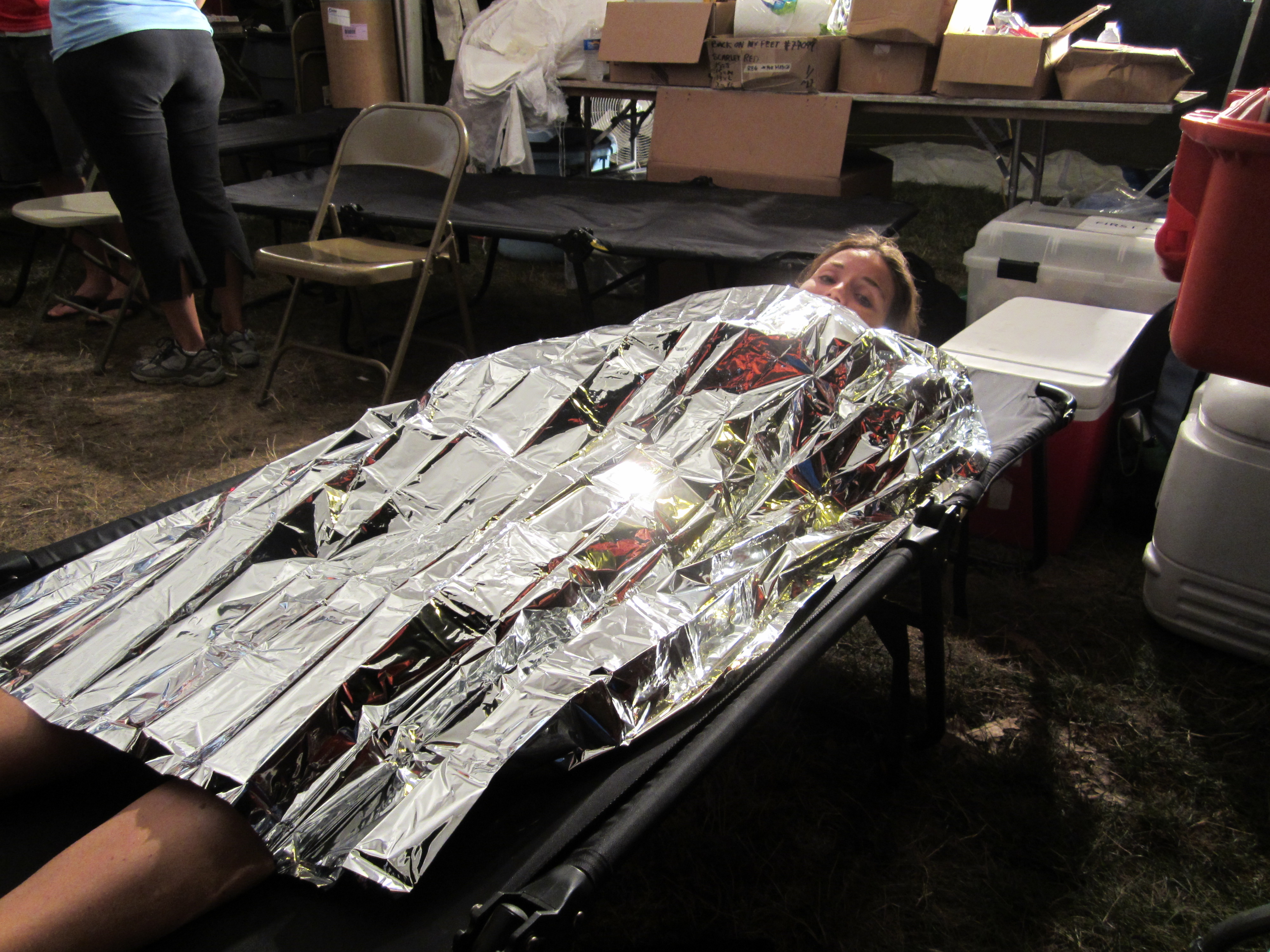
Medical Tent, after 68 miles of the Lone Ranger Ultra Marathon. Athletes push when they shouldn’t. Myself included.

Medical Tent, after 68 miles of the Lone Ranger Ultra Marathon. Athletes push when they shouldn’t. Myself included.

The downside to this driven, dedicated personality is that often that person doesn’t know when all signs point toward a rest day. Often the scheduled workout on the calendar trumps an achy knee, a head cold, or a sleepless night.

When should we suck it up and power through and when should we take some quality time off? The answer isn’t always simple. There are lots of factors, like how close are you to race day, a fitness competition, etc.

Things you can probably power through: sore muscles (not INJURED, but sore), lack of sleep, less than ideal weather. Being sore is part of the process while getting in shape, so you cannot take time off every time something hurts. Having a “easy” workout the day after a hard one is best. Lack of sleep makes motivation hard, but as soon as you get moving, your body and mind will wake up. Just budget some time to catch up on sleep. The weather on race day is completely unpredictable, so you need to get your body and mind used to the demands different climates offer. Unless there is thunder and lightning, lace up.

Things you should NOT power through: a nagging injury (unless you have seen a Doctor and been given the okay), serious illness (stomach flu, high fever, strep throat, etc.). Unless you have seen a doctor (a SPORTS DOCTOR), you do not know what is wrong with you. Yes, the internet has a ton of information out there, but how can you assume your self-diagnosis is accurate? Once you see a doctor, you will be told whether or not you can continue training or need to take time off. LISTEN to your doctor. If you are ill, you may want to push through. Most often, this is a TERRIBLE idea. Why would you power through a workout with a high fever or stomach flu? What benefit will come from this training? Another way to think of it, what damage could this workout do? You’ll recover best while resting, and powering through a workout today, while ill, may mean having to take off more days in the future.

The tricky area: when you feel a cold coming on, or are on the road to recovery from being sick, or have a strange pain that is new and not too bad, etc. If you choose to train on one of these days, don’t do a hard workout – even if your training plan says otherwise. Switch out that hard tempo run with an easy “recovery” pace run, or don’t move up the weights at the gym if you were planning on doing so. Go into the workout with the acceptance that you may need to bail out of the workout early, and that’s okay.

At the end of the day, you need to remember to be smart. Your training calendar is created assuming everyday you are in optimal health, and working under optimal conditions. Life isn’t always optimal.

Remember, by the time you toe the line for a race, or hit that goal beach vacation, missing a few workouts here or there are not going to hurt your potential on race day. Showing up to the race under the weather, injured, or simply burnt out certainly will.

Boston Marathon 2013: Part 3

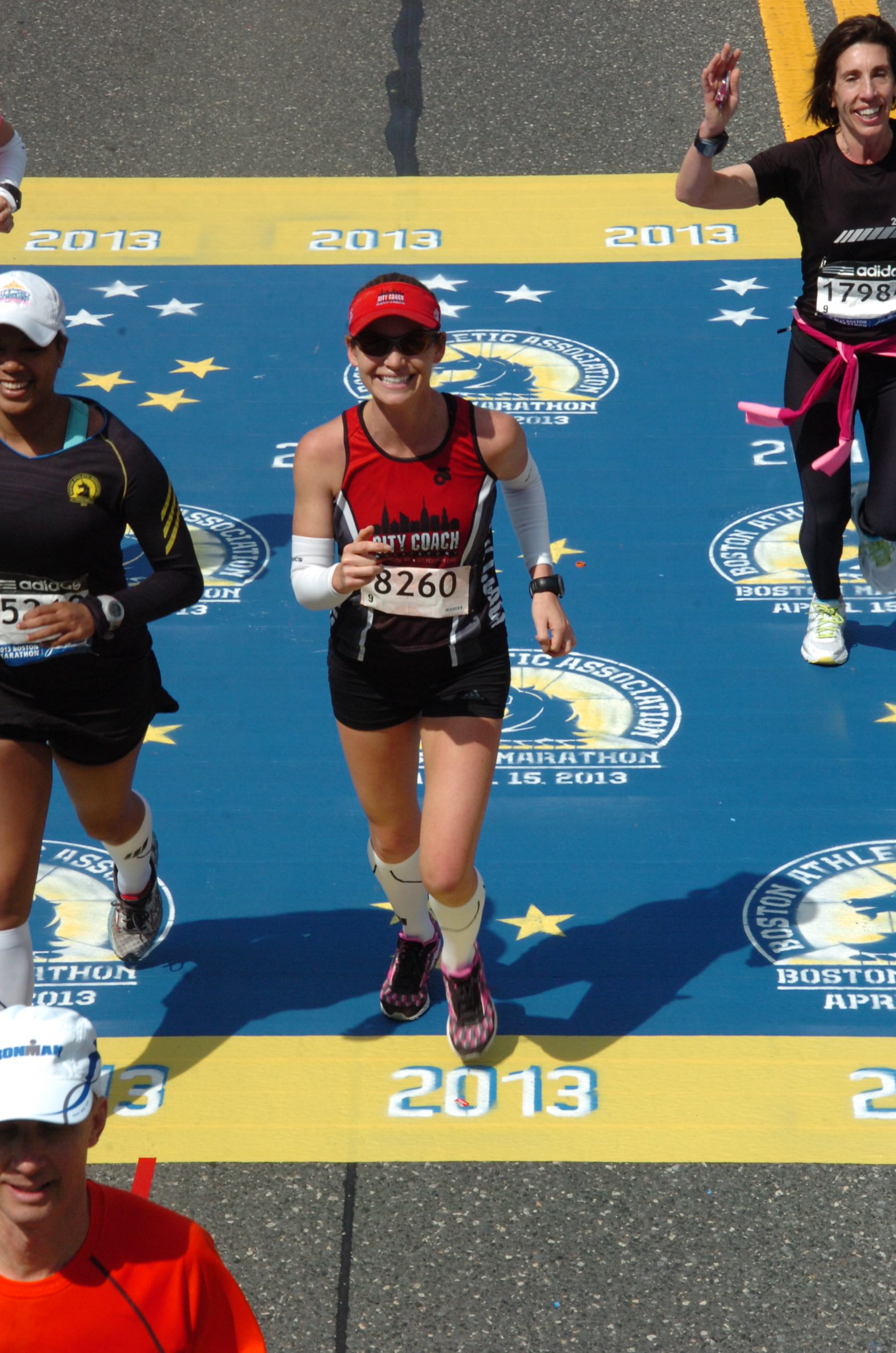
730052-1094-0025sIMG_2410Crossing the Boston Marathon finish line next to Cipriana was a wonderful, emotional experience. What happened next has changed me forever. Within five minutes of crossing the finish line at 4:05:56, the first bomb went off at 4:09:43. it sounded like a cannon. I felt it in my chest. We watched in horror as smoke engulfed the spectators on our right. My first thought was that something accidently went off – fireworks, a gas tank, some kind of accident. With barely a few seconds for Cip and I to react, the second bomb went off. At that point we knew that the explosions were no accident, and our lives could be in danger.

We hadn’t even made it to receive our medals, mylar sheets, or water bottles when the explosions occurred. We were maybe 50 yards away from the first explosion. Silence and confusion fell, and fear consumed us all. If two bombs had gone off within seconds of each other on Boylston Street, how many more bombs were there? We didn’t know, but we knew we had to get off of Boylston Street, and fast. As we tried to run around tired runners, some of whom seemed too wiped out from the marathon to even realize what had happened behind them, we ran as fast as we could away from the finish line.

A woman near us began to break down. Clearly she had spent every ounce of energy on the marathon, and she started wailing that her husband was standing where the first bomb went off. She kept screaming that she had just seen him there. She half crumbled to the ground, her legs buckling under her, and she was going to try  to get to where she thought her husband was. I told her to stay calm, to come with us, away from the explosions, that she didn’t know anything for sure about her husband, and that we needed to be concerned about our own safety, and not be in the way of first-responders. I don’t know what happened to this woman, since she was hardly responsive.

IMG_20130417_091416_251I will admit, as Cip and I ran away from the terror, for a moment I thought of turning around. Not that I could have helped much, but with being certified in CPR and first aid, I thought maybe I could do something. However, I quickly reminded myself that if people had lost limbs, I didn’t have the medical ability to do anything for them, and I didn’t think it was safe for me to head back.

Luckily, the bus with Cip’s baggage was directly down Boylston Street, so we went there and grabbed her bag. Unlike my bag, hers had a phone in it with battery power. We then retraced our steps by a block to try to exit the blocked of streets. We grabbed my bag, and had turned the corner off of Boylston Street. Around this time, I heard the first sirens. Still not feeling safe, but a bit safer than we had on Boylston Street, we slowed to a walk and tried to come up with the best course of action. Just then, we heard people yelling, and volunteers and staff cameramen came running at us, telling us to run. My thought: what do they know that we don’t know? I kept expecting an explosion to happen any second. Perhaps out of a building, a trash can, or under my feet. I kept telling myself that I might not still be safe. I might be blown to bits.

IMG_2412With Cip’s phone we were able to make a few phone calls. We decided to walk toward her hotel, right near Boston Common, and away from the finish line area. More sirens and helicopters. More people crying and screaming. We got to Cip’s hotel room, where I was able to charge my phone and we could turn on the news.

A few hours later, Chris and I walked back from Cip’s hotel (he walked to find me) back to The Eliot. We walked as far away from Boylston Street as possible, considering our hotel was a short two blacks away from the location of the second explosion. I was in a state of shock, still unable to totally process what had happened. Survival mode had kept me from becoming emotional. Between being emotionally and physically drained, and the request from the Boston PD and FBI for everyone to stay where they are, we stayed in the hotel for the rest of the night.

Monday night I barely slept. my mind was haunted with images, emotions, fears – things I could not shake from my conscious or unconscious. I kept waiting for our hotel room to explode. For something else to happen.

904376_902782584544_2034901455_oTuesday morning was a strange time. The sun was shining, and it was a beautiful spring day in Boston. We packed our bags and checked out of the hotel, headed back to Back Bay Station and our Amtrak ride home. Exiting the hotel, there were police and swat teams on every corner, including outside our hotel. Our block was part of a crime scene, and we had to detour around Boylston Street.

Being outside made everything worse. It was all too real. The roped off blocks, the medical tents and finish area abandoned, standing just as it had Monday afternoon. News teams swarmed like vultures, all looking for marathoners to interview. They were set up with their vans, cameras, and lighting equipment by the dozens on every block.

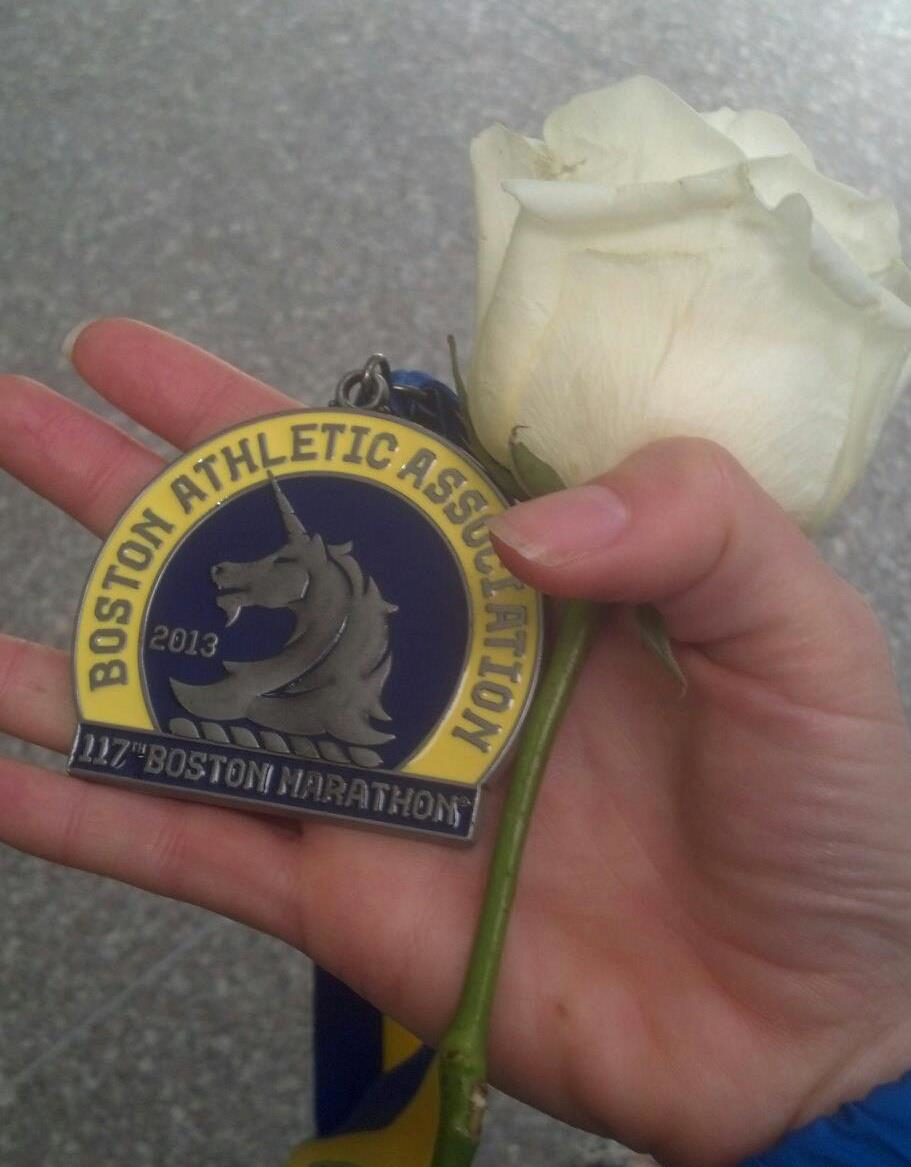
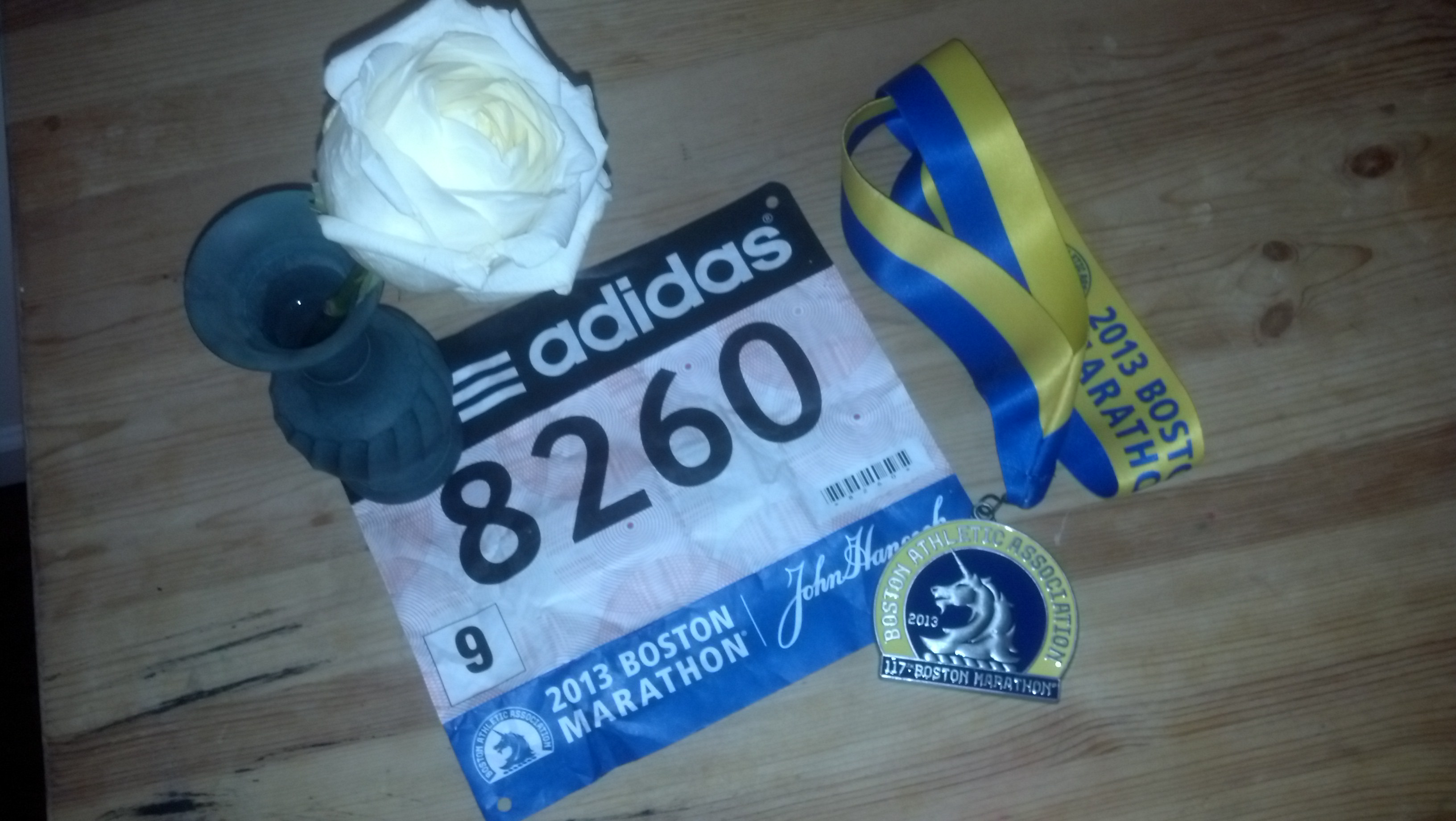
As we walked, I lost it. I could not stop crying. I could not handle being there, and fought off panic attacks a few times. We walked past a young woman, and she handed me a white rose and thanked me for running the Boston Marathon. If I had any control over how I was conducting myself before, this gesture made me lose it entirely. I carried that white rose back with me to NYC, and it is currently in a vase in my kitchen.

I was asked for two interviews by news teams, both of which I declined. I didn’t want to keep reliving what I had experienced. I was already incredibly tired and frustrated from all of the questions everyone was already asking me. I know it was coming from a place of caring or curiosity, but every time I was asked what happened or how I was feeling, I had to revisit that pain. I wanted to yell at everyone to shut up and leave me alone.

155738_10101268085877673_955661079_nI am sure, like the city of Boston, that I will at some point get past what I experienced on Monday. I have overcome PTSD before, though this is my first time personally experiencing a terrorist attack. Everyone has questions, which is natural. Just please, before jumping to any conclusions, consider your resources. The day of the explosions, all kinds of false claims were being made, and many people were buying into them. Right now, the most important thing on everyone’s mind should be the recovery, healing, and grieving regarding the people injured, traumatized or killed.

I keep telling myself that I am incredibly lucky. I am also incredibly thankful that none of my friends, team mates or loved ones were injured. Many people were not so lucky. This is a time for healing and coming together, not for self-promotion or jumping on conspiracy band wagons.

While I won’t be running Boston in 2014 (I’m not running a qualifying race), I will probably be there to cheer on my friends. Come 2015, I hope to be there as a runner, looking to run a hard race. Until then, I am going to go out and run. I am going to run to celebrate life. I am going to run to clear my head. I am going to run because I can, some others are no longer lucky enough to have that gift.