Bad Bandits

2014bostonAt the 2014 Boston Marathon, history was made. If you haven’t heard, American Meb Keflezighi won the Boston Marathon. He is the first American male to win the iconic marathon since 1983. I should probably mention that is was also a few weeks shy of his 39th birthday. The female race ended with the first three women beating the current course record – with Rita Jeptoo smashing the course record by almost 2 minutes. It was a great day for America and for the sport of marathoning. I know I was a ball of emotions as I watched live coverage of the race on my laptop, screaming for Meb to run faster over the last few miles as his pursuers closed the gap, coffee mug in hand.

In the wake of a beautiful race day, news hit the running community of many accounts of people duplicating race bibs and running the Boston Marathon by cheating. Bandits (runners who unofficially run a marathon, often by hopping in without a race bib), have been part of road race culture for a very long time. The Boston Marathon is famous for its bandits. However, with this being the first Boston Marathon after the 2013 bombings, security was planned to be heightened and bandits were strongly discouraged. Registered runners were not allowed to check bags for post-race, and the entire course to Boston was protected like never before. When stories broke of folks stealing bibs by printing them off of photos runners posted on social media of their official race bibs, the reaction was hardly positive. In an attempt to not get into the self entitlement and selfishness of folks who decide the rules do not apply to them, let me put on my coaching hat for a second….

Do NOT run bandit. If a race has rules, follow them. Simple. If you cannot play by the rules, don’t play.Yes, its totally unfortunate and sucks that if you purchase a race bib and months later cannot run the race that your bib must go to waste and your entrance fee goes up in smoke. Sure, your buddy could use your bib if you can’t, right? But what does it matter who is running if you aren’t going to win? Look, I get it. I’ve been that runner who couldn’t use her race bib because of an injury. I’ve also been offered friend’s race bibs when injury gets in the way of their race. Its tempting to accept it, but so far I have never taken another runner’s bib. It may sound silly that a bib that may cost $70-$250 will go to waste, but once again – rules are rules.

Here are reasons to NOT bandit/steal bibs:

  • Safety. Every bib has an identity attached to it and emergency contact and medical info. If you run bandit and something happens to you, no one will know who to call, or if you are diabetic or are on blood pressure medication. If you steal someone else’s bib and something happens to you, that person’s emergency contact will be contacted. You may say “I’m healthy so who cares?” Okay, fine. Do you know how many “healthy people” DNF because of dehydration, cramping, injury, fainting, cardiac arrest, etc? Don’t assume you won’t be part of that list at some point. I know I have. And if something crazy like the 2013 Boston Marathon bombings happens again, none of us can assume we are going to be the lucky ones.
  • Consideration. Rules are rules. If you want to run a race, enter it officially like everybody else. It’s unfair to everyone lined up beside you who PAID good money to run that race. That money goes towards permits to shut down roads, race-day equipment, refreshments on the course, race medals, medical support, and more. You are stealing from everyone around you if you run bandit. If you are simply too poor to run a race (I get it, some of them are VERY expensive!), sign up for a charity and raise money. If you raise the amount of money required by your charity, you won’t need to put a single dollar of your own towards race fees.
  • Fueling. Race organizers plan to support the amount of registered runners. Period. Sure, there is some wiggle room, as they often try to overshoot the numbers to make sure they are over prepared. But if you steal a bib and run bandit, you are a person the race director wasn’t counting. If you think its okay, do you think you are alone? Nope. There are far more self-entitled bandits out there than anyone has taken the time to track down and count. Have you ever run a race where they run out of water or Gatorade? Or race medals or mylar sheets? Guess what, it sucks. If you bandit, your actions may mean a runner behind you won’t have the supplies they paid for and are expecting at the water station. When you are dehydrated and tired, the WORST thing is getting to a station that has run out of supplies. You want to cry. What gives YOU the right to take that from the runner behind you? That runner has probably trained hard for this race, paid their entrance fees, and played by the rules.
  • Ethics. Look, we all have different moral codes. We’re human. But I would like to think that we as a running community can all agree that PEDS, cheating, and running bandit are all wrong. If we don’t hold ourselves to those simple standards, how can we be happy with ourselves? How can we feel that we truly accomplished something great? I don’t think anyone with a moral code who stole bibs, finished the Boston Marathon, and claimed their medal can ever really feel good about that race, can they? Perhaps I am wrong, but I don’t think the race would have the same meaning to me as qualifying or running for a meaningful charity, and doing it the way the race rules state.

It is my hope that more and more races will allow official bib transfers, which are starting to happen in some popular races. Race directors realize that runners cannot always use their bibs, and official transfers means the original runner can get their money back and the new runner will have their information (including emergency info) on record. However, this isn’t common practice for all races, so read the fine print if you are debating signing up for a race months down the road.

Perhaps because the Boston Marathon is a very special race, requiring its participants to qualify or run for charity, that bandits left an even more sour than normal taste in everyone’s mouth. it’s a race that avid runners spend years trying to qualify for. Its the closest thing many of us will ever see to the magic of the Olympics or the Olympic Trials. It is a race that so many runners put blood, sweat and tears into getting to, that printing out a bib someone else posted online seems so incredibly wrong. Of course its really not more wrong than cheating your way into any other marathon, or is it? I suppose that’s up for debate. Regardless of reason, the bandits in this year’s Boston struck a chord.

*** Now, there are always grey areas and exceptions to rules. Here’s how to handle those areas in a way that protects your safety and doesn’t take (much) away from everyone else out there:

  • If you buy/transfer a bib from someone unofficially, (NOT stealing a photo of a bib off the internet!!!), wear a Road ID in case you need medical or safety help. Remember, the bib will have the official runner’s emergency info attached to it. Also, write on the back of the bib your own info. List any important info and write clearly.
  • If you are unofficially using a bib from a friend/transfer, for God’s sake make sure you are NOT going to win an award (top finish, age group or otherwise), and that you are NOT qualifying the original registered runner for Boston or Olympic Trials.
  • If you are hopping into a race to pace a friend for a few miles, DO NOT take any of the refreshments on the course. It’s common practice for a buddy or a coach to hop in during those tough miles, but taking away from paid participants is wrong. Be sure to hop OUT before getting to the finish line. (Due to security post-Boston 2013, it may be difficult to do this in the major big-city races.)

To me, running and races is about becoming a better person and a better athlete. Putting challenges in front of myself and working hard to rise to said challenge. Cheating is a sour, ugly, awful toxin that poisons this sport. If you couldn’t get a spot in a race for whatever reason, there will always be next year. be a grownup, and play by the rules. I guess if you wondered what my thoughts are on bandit runners, now you know.

Report from the Trenches: NJ Marathon

Carb-loading with a sundae and a side of fries for lunch!

Carb-loading with a sundae and a side of fries for lunch!

Over the weekend of April 26-27th, I packed my bags and hopped the train to Long Branch, NJ. I was en route to this cute beach town to pace one of my athletes during his marathon debut. The NJ Marathon and Half Marathon runs through residential neighborhoods with many twists and turns, with the marathon heading on an out-and-back to Asbury Park, ending with a mile or so run along the beach and what would have been the boardwalk if Hurricane Sandy hadn’t destroyed it, finishing with the ocean on your right and screaming crowds and hotels and condos on your left.

If you are looking for a springtime race, this might be one to add to your calendar. The weather turned out to be practically perfect. Cool and sunny, low humidity thanks to rain showers the night before, and minimal gusty winds as beach marathons go. The Half Marathon started 75 minutes before the Marathon, giving way to a race course that never felt crowded after the first mile. The race is small by city marathon standards, and so logistics were easy. Instead of navigating race morning around 20,000+ runners, only 2113 runners completed the marathon.

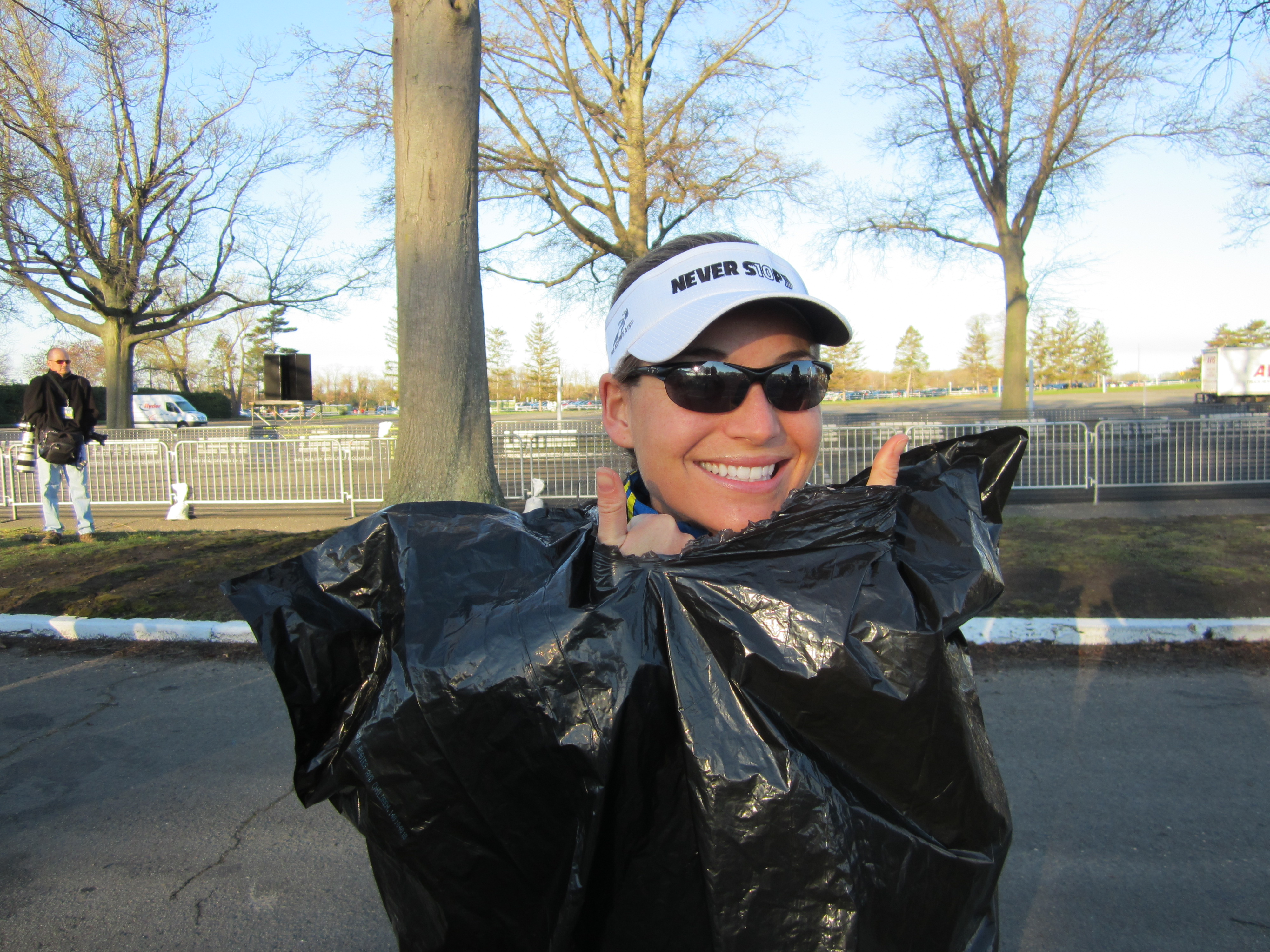
Wearing a trash bag pre-race to keep warm. Yes, its ghetto. But it works.

Wearing a trash bag pre-race to keep warm. Yes, its ghetto. But it works.

The race course was very flat, with only a few very tiny elevation changes in the first 10K. Bag check, parking, and porta potty lines were never very crowded. The race expo was also never very crowded, and easy and free parking made the process a breeze. The race organization also sent emails (I think I received 10 emails?!?) with race-day information as things changed, and in an effort to guarantee a great race weekend for everyone.

There are a few restaurants in Long Branch serving the needs of carb-loading marathoners, but the Italian restaurant we chose filled up quickly after 6pm. Luckily we sat down right before the restaurant got slammed, so consider this when strategizing meals. I find its often best to eat an early dinner the night before a race, as this gives you the opportunity to rest, sleep and digest without feeling rushed or full when trying to sleep.

The volunteers were great, but if you are looking for a race with lots of energetic spectators, this isn’t a big city race and doesn’t have those big city crowds. There were many quiet miles, though the folks who were out and cheering were much appreciated by the runners. Both the Marathon and the Half offered pacers, a tool many runners take advantage of, especially when they have a specific time goal. If a small, flat, no-nonsense and fanfare race is what you crave, I highly recommend NJ Marathon.

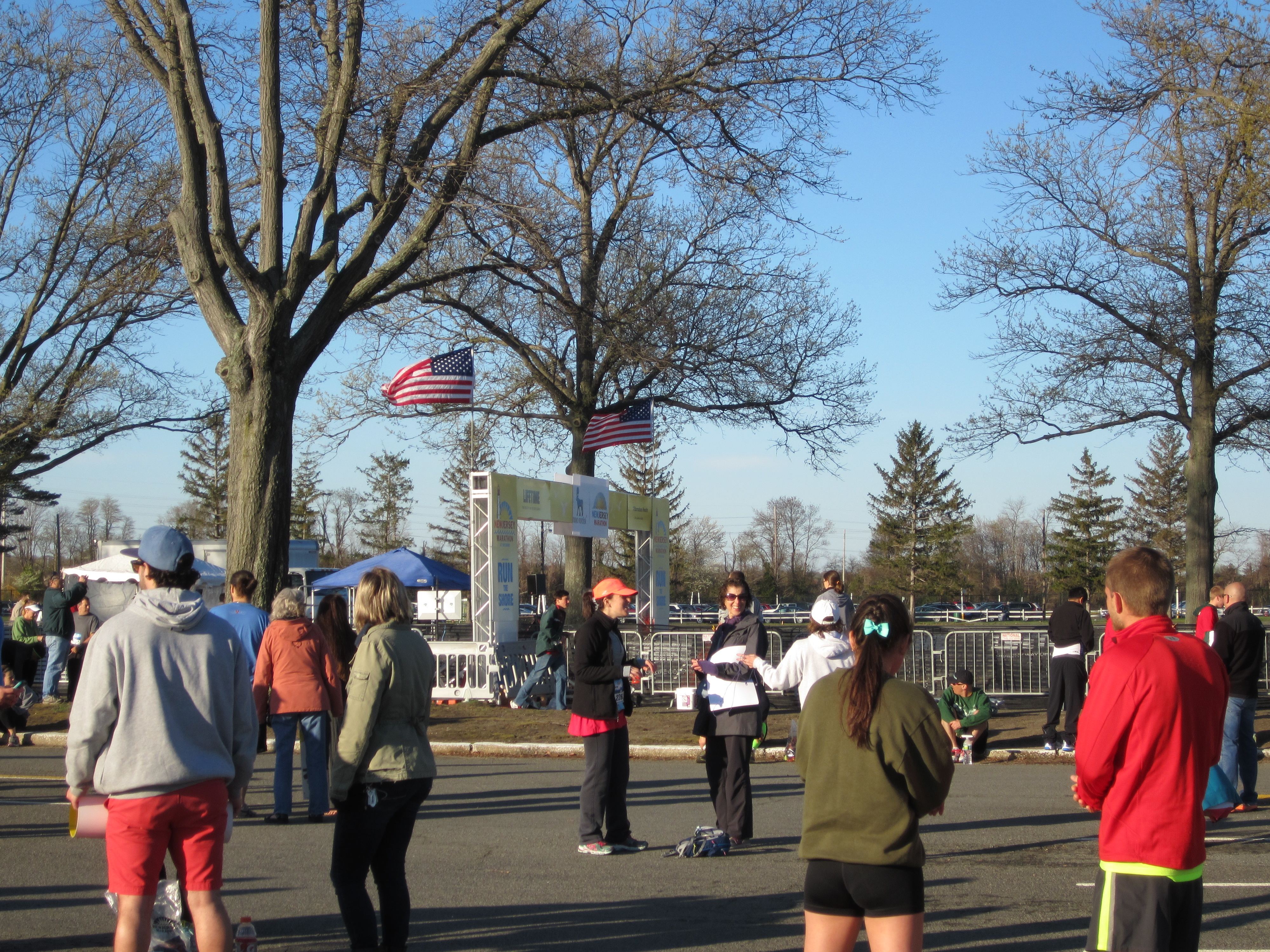
Starting line. A thin crowd 40 minutes before the start.

Starting line. A thin crowd 40 minutes before the start.

How to transition from injured to racing again

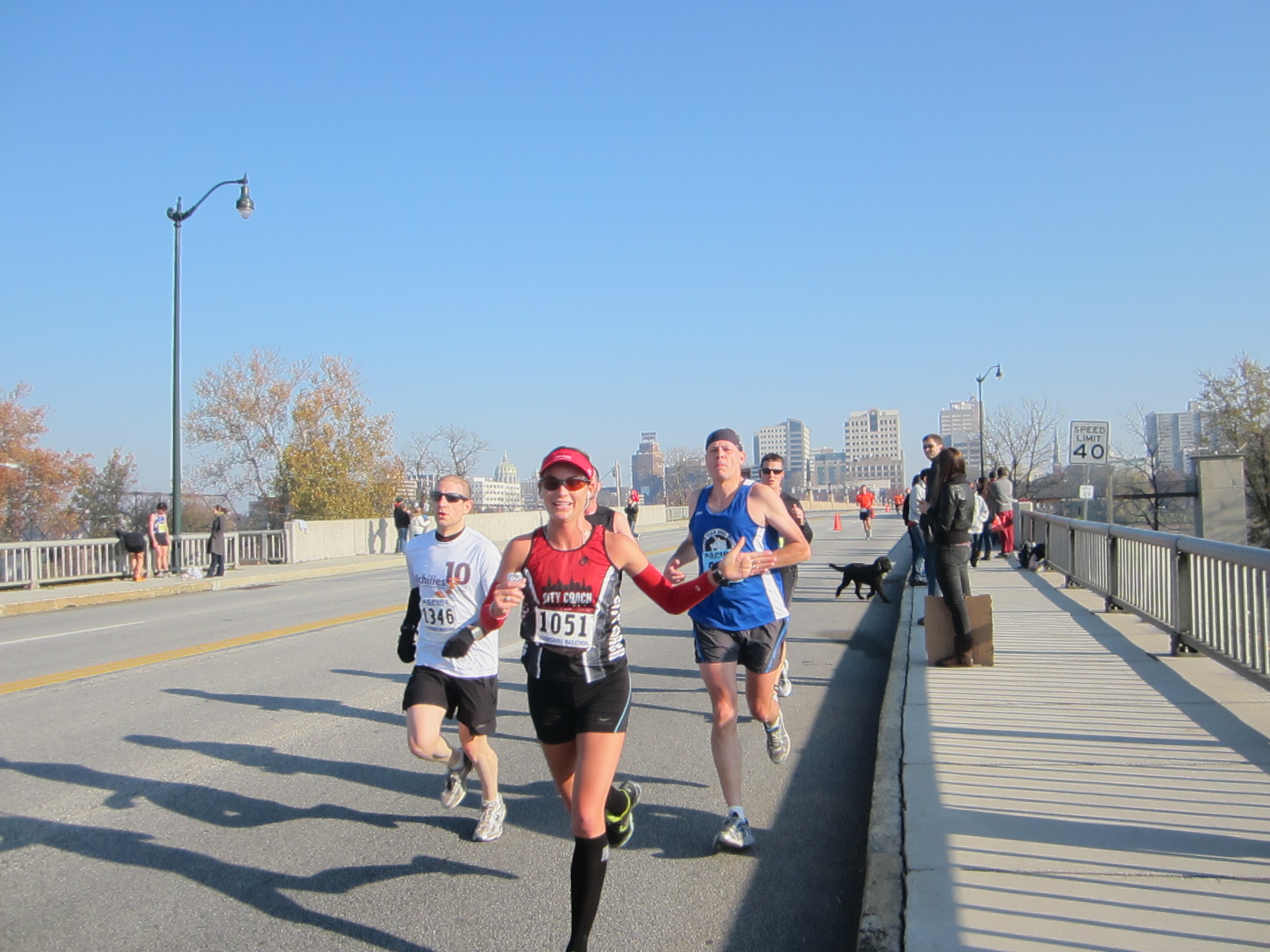
Harrisburg Marathon 2012. En route to a PR until I injured a few miles later. After this race I was forced to stop running for 8 weeks.

Harrisburg Marathon 2012. En route to a PR until I injured a few miles later. After this race I was forced to stop running for 8 weeks.

I was recently requested to write a blog about coming back to training for a goal race after some time off due to injury. I am happy to oblige Miss. Gallagher (girl, you are going to come back stronger than ever!), and think this topic is one that’s all too familiar for runners but also something we often struggle with.

Taking time off from running is rarely a choice runners want to make, but often forced to make at some point in their running careers. A troublesome IT band, tendonitis, stress fractures, torn ligaments – these are the unhappy and always frustrating part of this sport we love. Sadly, there is no magic pill or shoe or weird food we can eat to fix the problem. At the end of the day, the doctor may tell you what none of us want to hear: “REST.” The worst is when we are told “Rest for ________ months.” That’s like a knife to the gut. Being forced to rest many a runner insane. Personally, I become a monster to deal with. I am unhappy, restless, convince myself everyday that I am going to lose all fitness, and will never be as fast or strong as I once was, that my life is over, so on and so forth. The pity party can last for a few days or a few months, depending on the person and how many races or beautiful running days pass them by.

Then, like a child on Christmas morning, you will finally be given the green light – you are clear to run again! YESSSSSS!!!!!!! This is perhaps the best mood you’ll be in since your injury, and rightly so! You can finally take the first steps towards being a runner again. Best. Day. Ever. That is until you are told you need to build your mileage slowly and safely. No jumping into a fast 10K run around Central Park. Nope. Instead you may be told you can start with 10-15 mile WEEKS. Physically, 10-15 mile weeks may shockingly feel tough. Mentally, you’ll be happy to be out running, but feel ridiculous running so little if you were perviously a mileage junky. The struggle most of us have is being patient and smart after we are given the green light. Mentally, we see ourselves at our peak performance and don’t understand or easily accept that no, you are not there right now – though with time and smart training you can be again.

Last year, I was in this very boat and it sucked. I went from 60-80 mile weeks down to 10-15 mile weeks after an 8-week hiatus. Coming back was awful. Mentally, I was frustrated on almost every post-hiatus run. I would go on team runs, and struggle and turn blue at a pace that months earlier was my conversational pace, while everyone else flew by with ease. They were incredibly encouraging, but in my own head I was really hard on myself. Still, those 10-mile weeks turned into 50-mile weeks over time. I reminded myself over and over that I was not going to be injured that year, and that was the ultimate goal. After all, running poorly was far better than not being allowed to run at all. So yes, if you are coming back from an injury, I can totally relate. I can sympathize, and I can be the voice of reason for how and while coming back slowly is the only shot you’ll have of a healthy season.

The important thing is to not compare yourself and your current fitness to the people around you. Hopefully they are not also coming back from injury, so why compare yourself to a healthy runner? In fact, why compare yourself at all? Instead, look back over your past training history, because the evidence for what went wrong and lead you to being injured may be there. Mistakes are welcomed lessons to runners as long as we learn from them. Figure out what perhaps you did wrong. The hard part is being objective. What may be right for your training buddy could be wrong for you. Did you take rest days? Were they really rest days, or were you “not running” but still training in some way? Did you get much sleep? Did you never stretch? Did you wear awful shoes when not running? Did you take on too much mileage or intensity too soon? Did you race every weekend? Do you have physical limitations you pushed too hard? I promise you that your training past has some clues for what went wrong.

Its easy to be mentally restless when coming back to training, especially if you have a goal race looming in the future. I get it, you want to play catchup. Don’t. Instead, come up with a sensible plan. Lay it out in front of you, so you can visualize your time and how to wisely use it. This will reduce any anxiety over a race goal and give you time to focus on base mileage and building back to where you need to be before pushing pace and distance.

Last year, I was given the green light for my first 10-15 mile week on January 8th. I had the Boston Marathon on my calendar for April 15th. Three months to train for a marathon isn’t a lot of time if you are starting with great base mileage. I was starting at zero. Literally. I made it to the Boston Marathon, but I was forced to make adjustments. My race goal had to be to finish, and to run it easy. I was not allowed to run hard. My doctor also didn’t let me run anything fast until mid-March. I ran one 20-miler in my training, while I usually run 3-5 long runs of 20+ miles leading up to a marathon. It was a hard pill to swallow, especially because my original plan was to race Boston and go for a big PR. However, I felt incredibly lucky on April 15th to feel strong and to cover 26.2 miles a few short months after being side-lined. It may happen to you, that your goals get crushed. It’s hard, but remind yourself that once you get healthy and back to racing, there are always future marathons or races. Maybe this won’t be “your year,” but there is always next year – as long as you take care of yourself. As for me, my big PR happened six months after Boston, at the Philly Marathon. Again, you can always adjust and when the timing is right it will happen for you. Be kind to yourself.

When coming back to racing, use support from runners around you. The odds are that many of them have experience with injuries. Lean on them for support. Just be careful to not let them tempt you with running too far or fast too soon. Join them for mileage, but hop in or out of the run as you need to. This will make you part of your running community without doing too much. Communicate with your running pals about your limited mileage or speed. They will be supportive. Again, they have probably been there before.

Lastly, remind yourself that these struggles will make you are stronger and smarter runner in the big picture. Force yourself to learn from your mistakes and your running career can last decades. And if you think the speedy lady in the park who can clock 80+ mile weeks year after year won’t get injured at some point, guess again. Odds are she will. Its part of our sport. At some point we are all that runner starting at zero. The trick is the lessen the odds of being that runner time and time again.

Cherry Blossom Trip

View from the Lincoln Memorial.

View from the Lincoln Memorial.

This past weekend I hopped a train down to DC to run the Cherry Blossom 10-Miler. I had made the decision weeks beforehand that I would not be racing, but rather running for fun. Between a cold Winter and months of being sick off and on, my training simply wasn’t in a place to run hard.

Unfortunately, on Thursday I was full-on sick again. My doctor put me back on antibiotics for bronchitis and a sinus infection. Obviously the timing wasn’t awesome, but I was surprised to feel pretty darn decent on Friday and Saturday. I focused on rest, and was optimistic that I could run on Sunday.

On race morning, I woke up after a night of coughing off and on feeling not so awesome. That deep chest cough I had been battling for the last five weeks had magically decided to return. I am still on antibiotics, so I was surprised to suddenly not feel good. I shook it off, and changed into my race gear and ate a bagel.

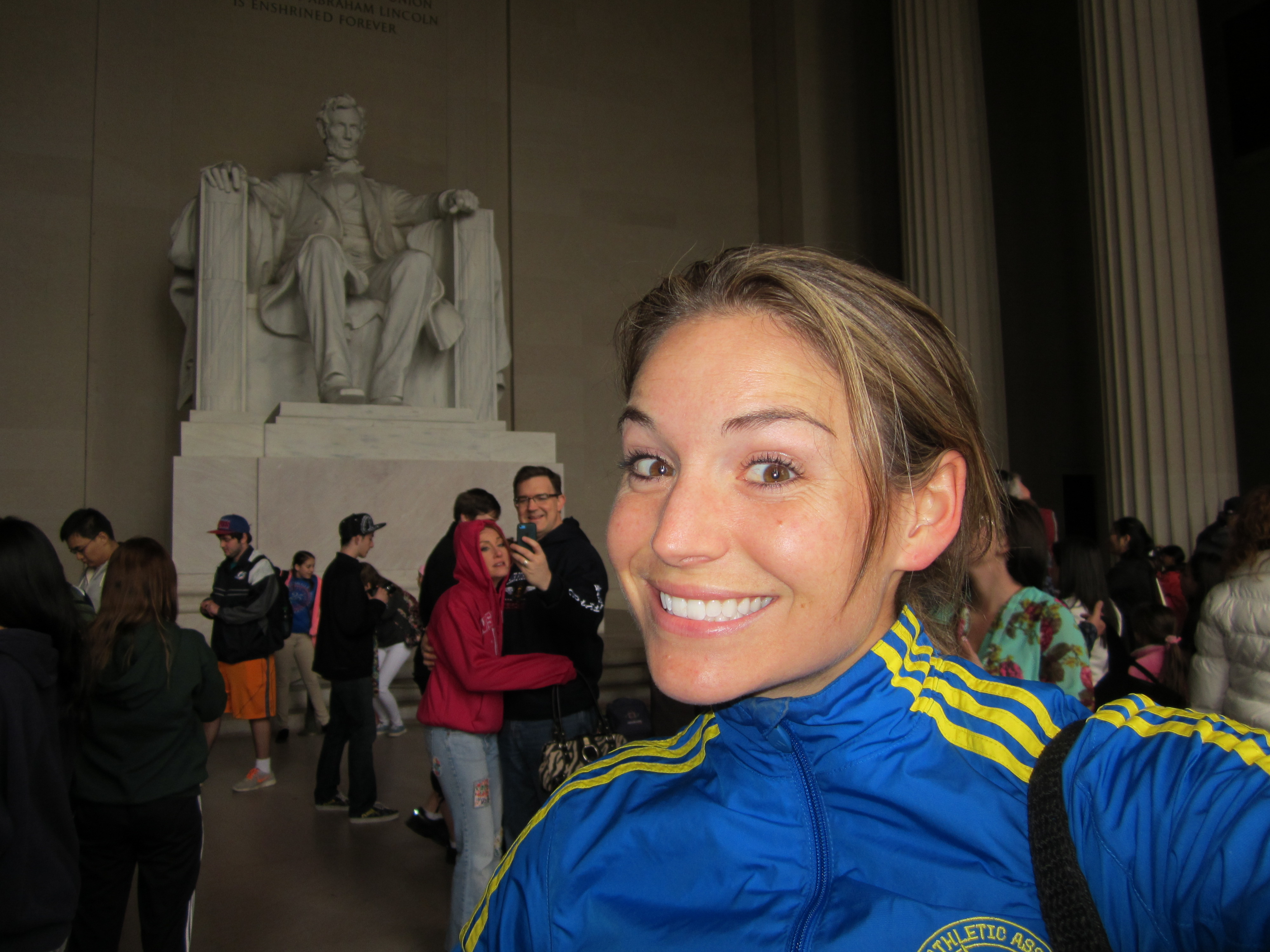
With Honest Abe

With Honest Abe

I then made a decision I had never made before – I decided not to run. Battling sickness over and over again has put me in the position where I need to make smart choices. I should also mention that at the start of the race, temperature was locked in at a cold 34 degrees. I hadn’t brought Winter running gear, as the weekend forecast when I had packed was calling for mid-40s to 50s for race morning. Running in my non-Winter race gear, while sucking in icy air sounded like a stupid move for someone sick.

While part of me was bummed to miss out on a race I’d not only gotten in through the lottery on the first try, I had qualified for a seeded spot, I was also excited to run through the Nation’s Capital. However, a lesson I have learned, that perhaps is a lesson all runners must learn – its silly and often stupid to risk health for one race. Cherry Blossom will be there in future years. Risking my health for the next few weeks simply wasn’t worth it.

Race wall of porta potties!

Race wall of porta potties!

This is a lesson all of us runners must learn at some point. There will be those races where lacing up and heading to the starting line just isn’t smart. Perhaps its a nagging injury, being under trained, or being sick. It’s in our nature as runners to tough it out, push through discomfort and take that gamble. However, if you run for fun – are you going to have fun while running ill, injured, or under prepared? The answer is “no.” If you are running to better your race time, the odds you’ll achieve that while ill, injured or under prepared are slim – so why tough it out when in the big picture its one race.

If you end up in a position like I did this past weekend, remind yourself that not racing won’t disappoint or let down your friends, family or team mates. You aren’t a wimp or a weakling, you are smart. It’s hard to remember that, especially as toughing it out is often part of running culture.

Washington Monument

Washington Monument

As I leave DC and write this blog on the train, I am disappointed that the weekend turned out the way it did. I love this sport, and I love being a part of it. But a few weeks from now I’ll be focused on other goals, and prepping to pace a runner on his 26.2 mile journey at the New Jersey Marathon. I am hoping my decision today will help kick this sickness roller coaster for good. And if it doesn’t, at least I know I am doing the best I can and making choices that are proactive towards getting healthy.

Remember, if you are smart and lucky, you will have years of being healthy and running many miles in your future.

New Website and New Offerings

img_6984-editGreetings runners and fitness enthusiasts! As you can see, “Coach Corky Runs” got something of a face-lift over the weekend. I hope you like the new website. A few more things will be added and changed in the next week or so. Feel free to bop around it and give me some feedback. Something you want me to add? Something that’s hard to find? Something you love? I welcome your comments!

I’m planning to add more to my “resources” tab, with links to sports doctors, massage therapists, local running stores, etc. So if YOU offer a service geared toward athletes, send me an email and we can talk about adding your link to my “resources” page!

A tab with links to all of my publications will be added.

I’ll be adding more “news” about my own upcoming goals and training, fitness modeling work, and my clients’ recent achievements!

As Spring is finally starting to slowly show her face here in NYC, Coach Corky is offering group classes! For more info, see the tab at the bottom of the page. I don’t know about you, but I am REALLY excited about that one!

You can also anticipate a few guest blog entries from one of my runners, as she’s preparing for her first marathon! I know she has a lot to share, and unlike many of my athletes, she lives 1500 miles away! She also happens to be my little sister. I think her perspective on running, things she’s learned and tips she can share will be especially beneficial for newbies and folks thinking about their first marathon! I am incredibly proud of how far she’s come in the last year of running, and she hasn’t even hit the marathon starting line yet.

I am *hoping* to start working on a book – but don’t hold me to it. I’m so busy running around that it might not be finished for a few years. I am also thinking about working on a podcast or weekly/biweekly vlogs. I’d love to share more info with all of you, and have on some amazing guest speakers!

Happy running!

Coach Corky