Tips on what can make/break a runner

This week’s blog is about the best and the worst. As an athlete and a coach I have experienced and witnessed countless smart and poor choices in both training and racing. We often learn from expert advice or from our own experience, and so in hopes this blog helps you avoid bad choices and make many good ones, here are some of my favorite good/bad decisions a runner can make.

The Good:

  • Track your training. If you use a GPS device, this is quite easy. Track the miles, effort, and pace. This information is incredibly valuable. Many runners I know have data from the last 5-10 years!
  • If you are seriously training for a goal race, you need to keep a watchful eye on the forecast. Adjust training days or expectations for weather. There’s absolutely no excuse for missing a long run because it rained on Saturday. Plan to move your long run to Sunday or get creative.
  • Train with purpose. This sometimes means running or training LESS. If you don’t know the reason for your training that day, you should question why you are doing it.
  • Treat yourself like an athlete. This means eating, sleeping, and drinking like one. Set yourself up for success.
  • Be cautious. If something feels injured, DO NOT continue to run through it. Overtraining and injuries can usually be avoided. You are not brave, tough, or dedicated if you train through injuries. You are stupid.
  • Show up early to races. My athletes who achieve their race day goals usually get there early, and give themselves ample time to warmup, relax, hydrate, and prepare in every way necessary. Showing up frazzled and last-minute is usually the recipe for disaster. Respect your goals.
  • Learn how to fuel your body. Our bodies are pretty smart, and usually give us clue, cues and advice as to what works and what doesn’t. Like your training, make note of your fueling needs, schedule, etc.
  • Communicate with your coach! Though your coach can’t be a mindreader or do the work for you, they are there to support you. It’s impossible to be supportive when the coach doesn’t know how to help you. If you don’t have a coach, rely on your team or running buddies for support. The running community can be extremely knowledgable and supportive!

The Bad:

  • Skipping the taper or recovery. Elite athletes know to respect these important steps to training, so why are any of us the exception to this step? Respecting the taper doesn’t mean pausing all training, either. I’ve had plenty a runner “not run” during the taper, which is almost as bad as blowing through the taper at high speed. Training cycles exist for a reason. If you don’t understand them, do some research or ask a coach.
  • I have never heard a runner say “I shouldn’t have listened to my coach,” but I hear “I should have listened to my coach” all the time. If you hired a coach, there’s probably good reason for it. Trust that person you are paying good money to guide you!
  • Eating something new the night before or morning of a race or long run. This rarely ends well.
  • Trying new socks, shoes, or a new outfit for a marathon. Your long runs are dress rehearsals for everything – including wardrobe. Trying something new risks blisters, chafing, bloody nipples, and general discomfort – none of which are supportive of a successful race.
  • Winging it on race day. While plans don’t always pan out, having no plan at all is like dancing with the devil. Study the race course, and have a plan on pacing, fueling, and how you are mentally breaking up the race distance.
  • Giving up before you begin. It’s impossible to have a good run or race if you doom it before you start. Yes, speed workouts, long runs and races usually hurt. But dooming yourself sets you up for failure.
  • Just as one good race or workout doesn’t define you as an athlete or human being, neither does one bad one. The athletes who learn to really care about their goals but also keep a healthy perspective are usually the ones who succeed and enjoy running for life.
Race Report: Pocono Marathon

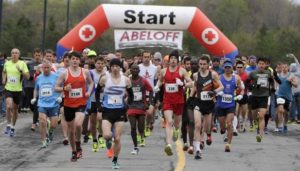
PH-515009996On May 15th I ran my first solo marathon since Boston 2015. My goal was simple: lock in a BQ. While I felt pretty confident I’d complete a 3:15-3:30 marathon, a whole lot can happen in the course of 26.2 miles. Plus, this marathon was a short two weeks since my “A” race for 2016, the Broad Street Run.

I’d never run the Pocono Marathon before, but I signed up for it for a few reasons: the time of year sounded pretty optimal for my qualifier – still cool mornings and with plenty of time for me to recover before tackling training for Berlin Marathon. The course is over 1000 feet net downhill, which also sounded pretty darn appealing. Add the location, less than two hours from NYC, and it was the best fit. It sounded so good that my training partner and fellow Mile High Run Club Coach, Vinnie Miliano decided to join in the fun.

Here are a few things I loved about race weekend:

  • Having the school open and runners hang out there pre-race was awesome. It was unseasonably cold (felt like 30 degrees at the start!), and so having a warm building with tons of public rest rooms was amazing. A huge perk. Can you imagine the difference this would have made in the rain? Game changer.
  • The volunteers were awesome, and there was hydration/restrooms every 2 miles. This is a VERY rural race, and so the little support (no real spectators) made a huge difference. You always knew water and a smiling face was a few miles away.
  • Post-race support. For a race that caps the marathon at 1600 runners, there were bagged sandwiches, muffins, orange slices, chocolate milk, bananas and water.
  • The course. Though the back 10K is TOUGH (like REALLY fucking tough!!!!), I enjoyed the quiet, beautiful course until the back 10K. The 1000 feet downhill gave you some “free” miles, and the ups were often a nice change. I don’t know if I’d call the marathon course “fast,” but the half marathon course has PR written all over it.

Here are a few things I didn’t love about the weekend:

  • On a point-to-point course, there is always transportation (shuttles) to the starting line from the finish line. Apparently this race was the exception to the rule. This meant runners hustled to book cabs from hotels to the starting line. There aren’t a ton of cab companies up in the Poconos, but I got lucky and booked one that we split with a few other runners. I booked a hotel walking distance from the finish line specifically for the reason of ending at the finish. There’s absolutely no way I was going to take a shuttle to the starting line and then drive my car BACK to my hotel after running a very hilly marathon. That was the current arrangement for this race, apparently. No good.
  • Plastic cups on the race course. NOOOOO. The first cup I grabbed slipped out of my hand and spilled cold water all over me. I mentioned it was 30 degrees, right? The second cup didn’t slip, but it’s pretty impossible to fold a plastic cup and drink. Waxed paper cups are the only cups that belong on a race course – easy to grab, easy to fold, and easy to toss – in my humble opinion. This race made hydration a struggle.
  • The course. Again, I LOVED the first 20 miles. And I don’t hate hills. But the inclines were pretty insane for the final 10K, and the road was open to traffic, which made it that much more of a struggle to focus when you weren’t sure where the next car would come from. I’d highly recommend one lane be totally closed and coned off for the runners.

At the end of the day, I ran my second-fastest marathon to date! I finished 5th overall woman, 1st in my AG, in the official time of 3:11:07. I clenched my Boston Qualifier by over 20 minutes. I’m pretty pleased with how my body held up, considering those final hills two weeks after my goal race. I am very hopeful for my goals in Berlin, and going into those goals with some confidence. Now it’s time for me to take my own advice and focus on some rest and recovery.

Would I run Pocono Marathon again? Probably not. But I’d definitely consider the half marathon for a PR course!

Building Base for a Better Race

Models: Pipko and Jasmina, Assisted by Jesse Rosenthal and Andrea HeapIt’s the time of year when runners signing up and tackling Autumn half marathons and marathons are thinking about their training and goals. It’s an exciting time. The impossible could become possible. Minds and bodies are fresh. You are likely pumped and ready to dive into training!

There are a few important things to consider before you get to “official” training – the 16-20 weeks pre-race.

  • For 3-6 weeks, carefully and methodically build base mileage. The miles should be taken at a comfortable, conversational pace. There are no “long runs” yet, and you are not clocking speedy track workouts or hill repeats. That will come with time. Base mileage is necessary for priming and preparing the body for the demands and stress of those intense workouts. Skipping base mileage will raise injury risk.
  • If you are planning to lose any weight between now and your Autumn race, tackle those pesky pounds now – not while in the trenches of training. While it could be tempting to try to drop weight when mileage is high and peaked, that’s also when your body will need and use every calorie you consume. Skimping on calories and nutrition during hard training can raise injury risk, lower your immune system, and leave your training feeling slow and sluggish.
  • If you are looking to add strength training, cross training, or any other forms of physical activities to aid your race goals, get that started during base mileage. That way you aren’t tossing the new stress of weight training and track workouts to your body at the same time.
  • Get a physical. It’s optimal to check your health and lab work at this time. This way if you feel ill during training, you know what you started with and have a comparison.
  • Take a vacation. You’ll go into training rested. it’s a challenge to train well while on a vacation. Try to also eliminate any huge stresses you foresee occurring during training.

Remember that while big goals are awesome and hugely motivating, it’s risky to put all your eggs in one basket. Be sure to have an A, B, and C goal for that big day. That way if things unravel, you can keep your focus on the course. It’s never too early to think about those goals, how attainable they may be, and how you’ll get there!

Spring Fever

img_6789-edit-682x1024It’s been a hot second since my last blog post. I feel like I blinked, and we went from the end of 2015 to Spring 2016. My apologies, fellow runners and devote readers! I promise my posts will be back on track. There have been some big changes here – both personal and professional. If you are a New Yorker, you know that moving is perhaps the worst thing ever. Well, I’m happy to say I have found an amazing apartment, but am now in the downsizing and packing process. I am reminded when stress strikes to take a deep breath and go for a run. I always feel better. So if you are dealing with life stress, remember that 30-60 minutes to go clock some miles will always do your body, brain and happiness some good.

Anyway, enough personal stuff. Let’s get to the fun and the RUNNING!!!! As of May 1st, 2016, Coach Corky is a full-time employee at Mile High Run Club. This means you can find me on the schedule at least 15 classes per week. You can find me at both the NOMAD and NOHO locations, teaching all three classes – Dash 28, High 45, and The Distance.

Hopping into a full time position doesn’t mean Coach Corky Runs, LLC is slowing down at all. In fact, it’s that time of year where my athletes heading to Brooklyn Half Marathon are tapering, and runners with Autumn goals (RnR BK Half, NYC Marathon, Chicago Marathon, Philly Marathon) – I’m looking at you – are reaching out for training plans and one-on-one coaching. It is insanely busy in the best way possible! I am truly humbled by the humans I coach.

Aside from the coaching, this little lady has been getting her legs back to the starting line of some races! It’s been a process to regain speed after some serious time spent on Ultra Marathons, but I’ve successfully found my groove and podium again. In fact, in my first three races of 2016, I finished in the top 3. That streak obviously couldn’t last, and didn’t when I toed the line with 30,000+ runners for the Broad Street Run. While I missed my goal for my A race for Spring, I am trying to not beat myself up and take the advice I’d give my runners after a bad race – but that advice is easier to give than receive.

As you ease into your Summer training and Autumn goals, please be mindful of the importance of building base mileage. This is a very important step in training, and one we often gloss over as we are eager to jump into the intense work. Skipping this step can raise risk of injury. Base mileage for 3-6 weeks will lend itself well to your training and race day fitness.

Setting New Goals for a New Year, Successfully!

corky-2816As one calendar year is about to come to a close and we look to the New Year, fitness and health frequently take center stage. This is often a time of reflection on the previous year – races, health, nutrition, happiness, and a time of anticipation and dreams for the future – getting health or weight on track, attempting your first race, working to set new personal race records, trying a new sport, dropping a dress size, sweating on a daily basis, gaining muscle, eating a balanced diet – the dreams and possibilities are endless!

While sorting through your goals, I recommend you do a few things in order to better your odds of succeeding:

  • Be honest about your level of dedication/commitment to change – and what kind of change. It may be a million times easier to achieve a 30 minute walk per day for you, than to consume over 10 servings of fruits/veggies per day – for example.
  • Be patient, and take your goals one day at a time. You are a human being, so expecting a perfect track record is dooming yourself off the bat. While focusing on each day, do have a clear goal for a few weeks, months or years from now. Each day of success will take you a step closer towards that goal or milestone.
  • Ask for help. Very few humans can hold themselves 100% accountable for real change. Rely on a friend, hire a coach/trainer, or use social media or a journal to help your accountability. Meetup groups can also be helpful.
  • Change takes time. Don’t expect to see or feel a huge difference within a day or week. However, you’ll be surprised the difference you’ll notice in a month or two!
  • Trying something new may not be right for you. Or perhaps what you try won’t be the right fit. Perhaps kickboxing is a better fit than ballroom dancing, for example. We are all different, so don’t feel bad if what you initially try isn’t the right thing! Move on and be fearless in what you try.
  • When creating a race goal, be sure to give yourself enough time to be successful! Also be sure any additional races you add to your schedule are supportive of that big goal and not destructive. A big PR in a marathon you flop on your schedule for 12 weeks from now is not wise. Understand your goals the time and work they’ll require.
  • Laugh, have fun and get creative with your goals. Not every day will be easy or fun, but I’m a firm believer that we stick to something we like, and that brings positive change to our lives. Life is too short to be unhappy or dissatisfied. See the humor and fun in everything you can!
  • Toss out the negative. Recognize triggers, and kick them to a curb. Perhaps it’s your daily mid-morning baked good from the office kitchen, or that friend who guilts you into ditching your run for happy hour each week. Everything is a choice, but you can make those choices easier by breaking bad habits, relationships and influences.

If or when you fall off your goals (remember – you are human!), simply pick yourself back up and try again. Just be sure to not do the same thing and expect a different result. You don’t need a New Year to spring into your goals. Tomorrow is just as good as January 1st.