The Runner and the Gym

img_6834-editIf you are avid runner, there’s a good chance that all you do is run – little or no time is spent stretching, weight training, or cross training. And let’s face it – when you are short on time, it’s common to only get done what feels necessary – for many of us that means those miles towards race training. The old school thought was that runners simply needed to run in order to improve. Some coaches and runners still practice that method, but many of us are fans of runners doing other things too. In this blog I am going to give you the rundown on why I as a coach and athlete am a fan in runners weight training, stretching and cross training. I am going to ask you to be open-minded and to remember that no two bodies are the same.

  • In order to improve as a runner, you must run. There is no real substitute for running, and so you will spend most of your training time pounding the pavement.
  • Runners often develop extremely strong bodies, but rarely balanced. This imbalance is often what leads to injury.
  • Running tends to tighten the human body’s hips, muscles, and sometimes compromises range of motion. Even if you don’t notice your range of motion changing, a tight hip may slightly change your stride, causing potential pain or problems anywhere in the body from your hip to your toes. We are rarely designed to be 100% even on both sides, and very few of us are ambidextrous. We usually favor one side of our bodies. When doing something extremely repetitive like running, those imperfections often come out.
  • Our arms counter our legs as we run, and can be a huge source of power and strength on the race course. Totally ignoring your upper body means your arms won’t be as strong as they could be, or in balance with our heavy, strong legs. Weight training and strengthening your body from the waist and up will give you the strength and power you’ll need for PRs.
  • Our arms and legs swing from our core. Ignoring your core (front and back) means you won’t have a strong anchor. With a strong core, your entire body will feel like a harmonious running machine. You’ll be less likely to sink into your hips, collapse your shoulders, and fall apart on the race course.
  • Weight training should work in harmony with your training. Lift heavy, 2-3 times per week, ideally on your hard run days, a few hours after your hard run. Be sure to refuel with a protein-dense snack after your workout.
  • Weight training your legs will give you power, and ideally balance your body. That forward motion with running doesn’t tax or legs evenly. Becoming strong all the way around will prevent injuries due to imbalance in strength.
  • Cross training is a great way to get in some active recovery. Swap in some time cross training (swim, bike, row, stair climb, elliptical) for an easy run day. Some time away from the pavement, while flushing out your legs is a great way to prevent minor aches and pains from getting worse.
  • Every runner is different. Some runners can simply go out and run, and never experience pain, injuries or weakness. Many of us, however, benefit from not only running, but instead focusing on total body strength and wellness.

Think of the big picture – not just this season. In a prefect world, you want to stay injury-free for decades of running.
Run a Race!

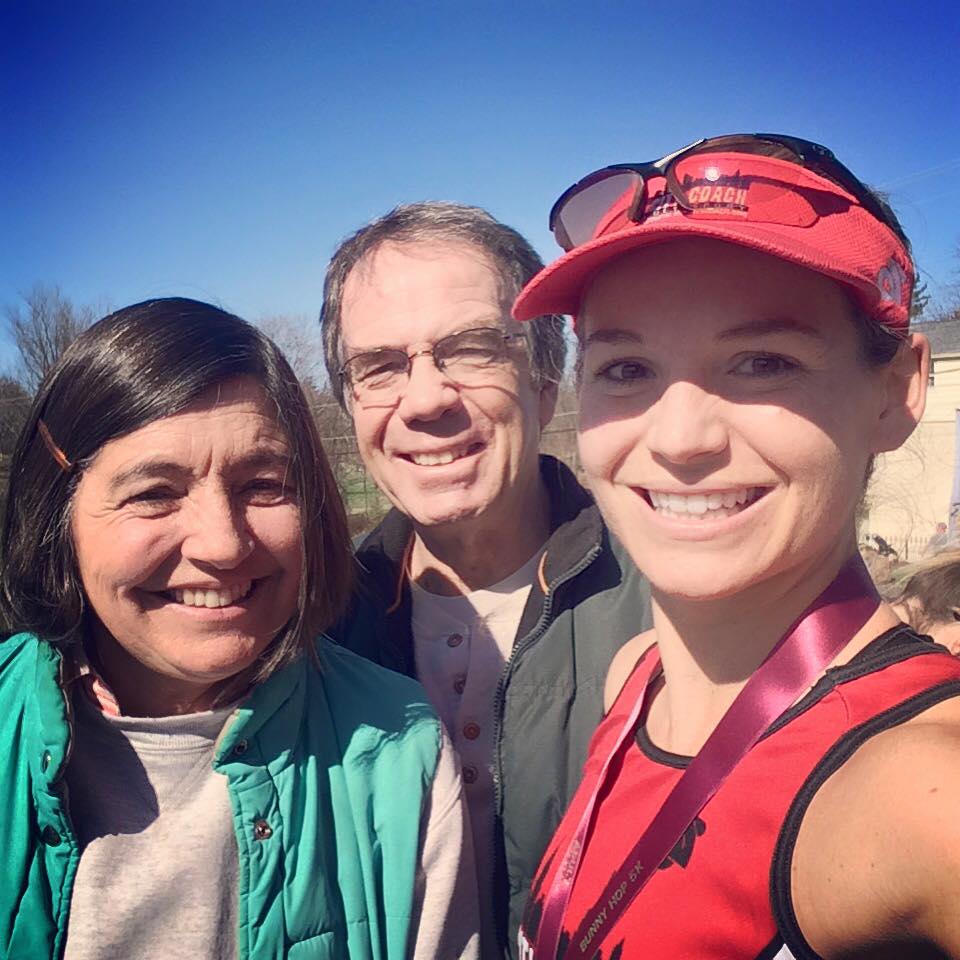
10358729_796133213815647_6984393093090976025_nI am a big fan or runners hopping into races during their training for a big goal. While the races need to be carefully timed and chosen, they are a fun way to mix up training, assess current fitness, and practice race morning routines. For many of my athletes, we’ll sue a short race in place of a speed workout. If you are itching to sign up for some races, and are wondering how to choose and how to structure your season, I am sharing a few tips with you below:

  • Choose a distance that benefits your goal race. For example, a speedy 5K can be a great workout for a runner heading to a 10K-Half Marathon race. A 5K may not be a huge asset to a marathoner unless some additional mileage is added to the day. Then again, if you are a marathoner who struggles with committing to speed workouts on your own, a 5K may be your excuse to get in speed. A half marathon, when scheduled appropriately, can be the perfect quality long run for someone in the throes of marathon training. I would race a Half Marathon no closer to a marathon than 3-4 weeks out.
  • Pick a course you like, or that offers benefit to your big goals. For example, a fast and flat 10K may be the perfect fitness assessment and speed workout for someone targeting a flat Half Marathon. A hilly Half Marathon would be perfect for preparing for a hilly marathon, like NYC Marathon.
  • Be sure to adjust your schedule that week for your race, especially if you are swapping a short and speedy race for a long run. For example, I hopped into a 5K this past Sunday as a speed workout. I usually do a speed run twice per week – Monday and Thursday, so this week I am not running speed work again until Thursday, and won’t be running long since this is a taper week for Boston. But Boston isn’t my goal race, so I am only giving myself a mini taper and focusing on the speed workouts, in preparation for my goal race a few weeks away.
  • Set goals that make sense. It’s a little unrealistic to set the goal of crushing every race – especially the ones you are using as a workout or assessment. Set a goal that makes sense and supports your big goal. For example, you may set the goal or even pacing, and learning to not be pulled by folks around you. This weekend, I set the goal of a negative-split 5K. This forced me to settle into the very hilly first mile and then shave away time in mile 2 and 3. Maybe practice fueling on your feet, using new gear, running without music – the goal doesn’t have to be time related.
  • Have fun. If this isn’t your goal race, there is no reason to take it too seriously. Yes, training races can be painful, hard, and sometimes terrible. But learn something from it, have a laugh and move on. Save that intensity and focus for the big goals. If running and racing isn’t fun, most of us shouldn’t be doing it.
  • If you live in a city like NYC, most races attract thousands of runners. Even little 4-milers in Central Park can draw 7000 runners. It’s really nice change to go hop into a small race sponsored by a small organization. You will have far less runners (easily the low hundreds, and sometimes less than 100 runners!), and you may have the opportunity to be a hot-shot and place in your age group or overall. Those little boosts of confidence can go a long way.

With Spring weather here, there will be races hosted all over the place every weekend between now and October. Enjoy them! And if you are traveling, do a little research and hop into the local race. It’s a great way to enjoy a new place, and get in some quality miles.

5 Tips for Running Etiquette and Safety

DSC_0154It’s the time of the year where runners are slowly coming out of hibernation, and folks perhaps new to running are joining the mix. Welcome – I think we are a pretty awesome group of people. In hopes to keep everyone happy and safe, I am outlining some guidelines for being a courteous and safe runner. After all, you may be sharing the road or track with lots of other runners, pedestrians or cars. Let’s all do our part to have a great season outside.

  1. When running on the road, always run against traffic – the opposite of what cyclists do. This way you can see oncoming cars. This is especially important if you are running on a road without a sidewalk or much of a shoulder. Be sure to also wear bright colors or reflective gear. You want folks driving to see you. While running/car accidents are fairly rare, they do happen and often end in critical injury or fatality.

  2. Share your space. Go run with your friends, but be aware that running 2-4 people across on a path is rude and inconsiderate to other runners. Share the road and be aware of how much space you are taking up – especially if you live and train in a city or a shared space with tourists and cyclists.

  3. Before spitting or blowing a snot rocket (gross but part of running!), LOOK to make sure you aren’t going to assault someone with your bodily fluids. This may seem like a no-brainer in a race, but be aware on training runs too.

  4. Use proper track etiquette. Always run counterclockwise, warmup/cool down in the outer lanes and save lane 1 and lane 2 for speed work. Be aware of your space and listen for runners coming up behind you. You should only use your running shoes on the track – no bikes, strollers, scooters, Rollerblade and wagons. (Yes, I’ve seen all of those before.)

  5. When on a bike/run path, stay to your far right side. This is both for your safety and consideration for cyclists. Stay right, pass on the left. If you need to pass a slower runner/walker, always check to make sure a cyclist or runner isn’t coming up behind you.

Many new runners feel intimidated to go out and join the fun, or are tempted to never try a new route. Relax, be safe and courteous, and go have some adventures. One of the best things about running is it can take you to new neighborhoods, paths, views and experiences. Go explore!

Body Image in Athletics

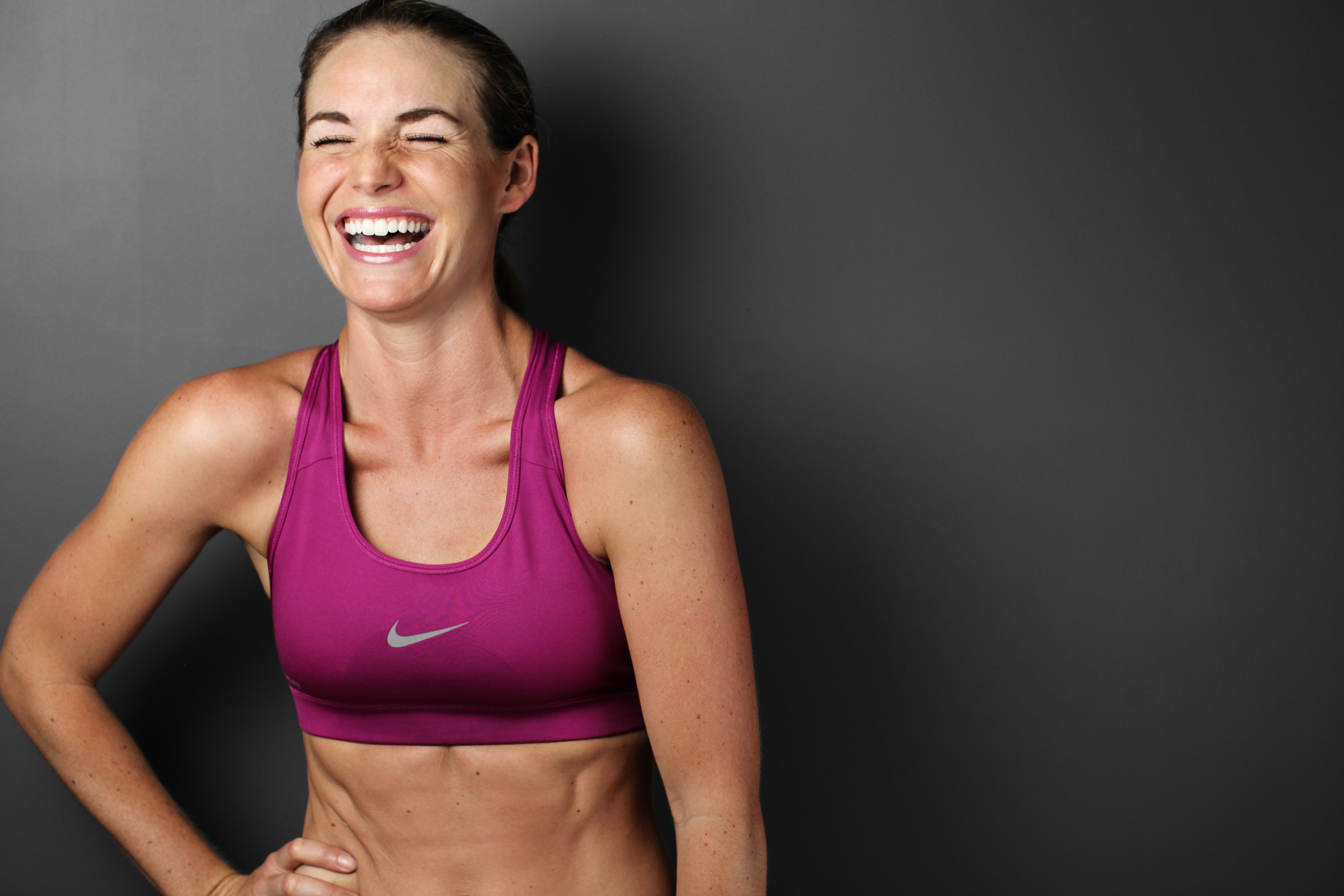
img_6222-editPeople come in all shapes and sizes. Athletes come in all shapes and sizes. It’s often an odd transition viewing yourself as an athlete, but I ask all my clients to do so. When you slightly change your perspective of yourself, you’ll view your nutrition choices, sleep, training, priorities, and life differently. I find this shift is extremely important for folks who struggle with nutrition/weight and with time-management and sleep. Instead of viewing food as “good” or “bad,” you start to think about your training, and what choices will properly aid you in pre-run fuel, post-run recovery, or general nutrition. Suddenly you won’t feel “bad” about a food choice, because your perspective of you as a human being will be different. The same is true with sleep – you’ll suddenly be aware of how it’s an important component of training – and that if you want to train harder and improve, you’ll need to get more Zzz’s.

I remember when I personally went through the shift, and how I finally felt settled and had an “identity” as far as food goes. I’ve been pretty open about my relationship with food and body image in the past, and I know I am not the only person who has struggled with it. But running and training for challenging race goals gave my body a purpose, a hunger for achievement, and I became excited and dedicated to doing what it took to morph my body for those goals. I too referred to myself as “not a real runner” for a long time – dismissing my involvement in this sport because I wasn’t professional, fast, or taking it seriously.

Over the last 5 years, my body has changed a lot. There have been years where I was curvier, years where I was rail-thin and friends voiced concerns, and years where I have been muscular with relatively low body fat. My size has swung from 6-0 and everywhere in between, and changes depending on what I am training for, how hard I am training, and honestly how I am feeling. There are some months where all I want to do is eat, and I need to pull myself up off the couch and into the gym or the park. There are other months where I feel so motivated and energized, I forget to eat and am struggling to take in enough calories. As you can imagine, this changes my body. And though I hate to admit it, it changes how I feel about myself.

What’s interesting is how I am perceived – often by strangers, casting directors, acquaintances, and friends I haven’t seen in a long time. I must always look “athletic,” because the topic usually comes up in conversation. I have had casting directors and the like ask if I am a gymnast, yogi, dancer, Pilates instructor, CrossFit activist – the list goes on. Ironically, few guess “runner.” Perhaps, to be fair, this is because runners come in all shapes and sizes. But to hear “Really? You don’t look like a runner -” it somehow feels like a stab in the gut. I usually am quick defend myself, saying I am not a sprinter (so I am not rocking large powerful muscles and very low body fat), and I am also not an elite middle or long distance runner – folks who are often associated with looking unhealthy, waif-like, and gaunt. Here’s the thing: while I am indeed a runner, I am not a professional athlete. Folks expect to see the stereotype on magazines, winning marathons or track events – not the folks who are “better than average” but also are not training full-time.

I assume if I struggle with being judged, and often have to defend my body and my choices, that other folks out there do too. Unfortunately, females are judged based on how they look before they can even open their mouths. And while I shouldn’t assume this is only a female thing, being female myself, I can only speak for the ladies.

To the folks who judge – I say go watch a race. You will see all body types cross that finish line – 5K through Marathon. You will see the elite runners you expect us all to resemble, you will also see body types doing amazing things that will honestly catch you by surprise. Don’t judge, be inspired. After all, they are the ones training and clocking miles while you sit there on your ass and point a finger.

And while some folks are probably not aware that making assumptions or judgements about a person’s body and sport can be hurtful, we should all remember to think before we speak. It’s the same with fat shaming, or assuming someone’s life is easy because they look like our idea of a “model.” You have no idea how hard someone might work for their sport, or to maintain a healthy weight. You also probably don’t know how hard that person has worked to achieve where they are today.

Being an athlete is hard. It’s a huge time commitment, which makes it a big part of your identity – whether you realize it or not. Wear that identity with pride. Train for your sport and your body will reflect your hard work, and hopefully give you the result you want. There is no perfect body or size. What’s perfect for you is what will help you achieve your goals and feel your best. If I was told gaining 10lbs. would make me faster and set crazy PRs, I’d be the first in line to pack on those additional pounds – assuming it wouldn’t hurt my health, of course. Sadly, that’s not true. Your body is your tool in this world, and we are only given one. What we do with it is our choice.

Recently when given the whole “Really? You’re a runner?!” response, I carefully explain that indeed I am – and that runners come in all shapes and sizes, and their bodies will usually be different depending on the distance and pace one runs. I figure if I cannot stop that awkward comment from arising, perhaps I can educate the person asking and they’ll think twice before assuming something about body types in the future. And for the record, I have never taken one yoga, Pilates, CrossFit or gymnastics classes – so all of those guesses are WRONG. Go figure, right? And while I used to be a dancer, it has been a few years since I have been in class. Again, proof that many snap judgements are totally off-base. I am ever going to look like Shalane Flanagan? Nope. Am I ever going to be as fast as Shalane Flanagan? Nope. And that’s OKAY!!!!!

I hope if you are struggling with your own relationship with food, body image, weight, or role in your sport that you are kind to yourself. Don’t let a stranger’s uneducated opinion sway how you feel. And if you are looking to become lighter and leaner, remember that there is no quick fix – it’s a process. You don’t owe anyone anything. But you do owe it to yourself to be happy in your skin.

Training Specificity

img_6298-editWhen planning your running season, it’s tempting to choose a bunch of varying goals. I love when runners have an array of goals and events. The challenge is often spacing them out in a way that is safe and realistic. Most of us are running for personal glory or fun, not a qualifying time or prize at the finish line. However, it can become quite hard to plan a season when it involves broad goals.

I LOVE when runners come to me with a variety of goals: PRs in the 1 mile and Half Marathon within the year, for example. Are those two VERY different goals? Absolutely! Will they need different kinds of preparation? Yes. Is it impossible? No.

Here’s the thing: the better you want to get at one distance, the more you need to structure your training for that goal. Specificity and reason for training become crucial when targeting a goal. But when you have multiple goals, it’s often necessary to slightly release on the gas for that first goal in order to accommodate the other goals. Many times you will be successful at nailing multiple goals if they complement one another.

For example, say you really want to focus on the 5K this year and want to shave down some considerable time. Placing some 10K races or 1-mile races into the calendar can be of benefit to that 5K goal, all while having fun and going out to race. The bonus is that you may find you also PR in the 1-mile and 10K, because the speed training for a 5K will probably benefit those distances, too. But trying to PR a 5K in the same season you want to tackle a 100-miler – now that’s where things get tricky. For one thing, injury risk will usually go up when you start combining very high mileage and speed workouts into every week. Not that it can’t be done, but for many of us these waters are hard to navigate.

The important thing for most runners to keep in mind and think about is how to achieve their goals while staying healthy, and to list which races are the priority that season. If you stay healthy, perhaps some goals need to be held off for the following year. We need to remember to look at the big picture: races will be there. You can be too, if you don’t do something stupid and put yourself on the injured list.

This is often where a coach comes in handy. It also becomes necessary to be honest with yourself. You know how you recover. You also know if your body naturally prefers certain distances or types of training over others. You should use your years of experience to help access and navigate what’s best for you. Take a look at the entire calendar year, and be sure to budget time for rest and recovery before hopping into training for the next goal the minute to cross the finish line.