Race Report: Oddessey Half Marathon

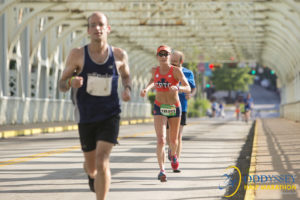
Around mile 10.5, coming over Falls Bridge.

Around mile 10.5, coming over Falls Bridge.

As my first of 16 weeks into marathon training came to an end, I decided to take my first long run to a race course. My program called for a 13-miler, with the final 5 miles at Marathon Goal Pace. Negative-split runs aren’t easy, especially long runs. With other runs out there, and fluid stations every 1-2 miles, I decided a race would be a slightly easier way to focus on this first long run, practice hydrating with cups, and pacing myself amongst a crowd. So I hopped into the Oddessey Half Marathon, in Fairmount Park, Philadelphia.

The Oddessey Half is a race capped at about 3000 runners. It’s well organized, clearly marked, and there’s a pretty great Beer Garden at the finish line – courtesy of Sly Fox Brewing Company. The course has some pancake-flat miles, and some super extreme hills. It offers a little bit of everything. It also offered soup-like humidity. The predicted thunderstorms for Saturday night that would have swept the humidity away never showed, so when I stepped outside at 5am, it was a sticky,80+ degrees, with humidity over 75%. An additional challenge.

It was a good thing the race started at 7am, as every minute counted – temperature and sun intensified with every mile. While some miles had ample tree coverage and shade, other miles were in full-blown sunshine.

With the extreme humidity, I made an executive decision to adjust my plan and run the 5 marathon-paced miles at the beginning of the run. This turned out to be a smart move. I maintained Marathon Goal Pace for about 8 miles because I was feeling really good, and then allowed my body to slow down a bit. The humidity began to grind at my gears, and so I willingly let pace go. After all, this was supposed to be a long run and not my race.

Running with other runners is always an education. I’ve learned so much about myself as an athlete, being patient on the course, and how to run and race smart. I used the athletes around me to push the pace in the humidity for those first 5 miles, and then I willingly allowed runners to drop me and make their own choices while I did my own thing. Instead I focused on my form and efficiency, and spent moments observing other runners out there. I did more passing between miles 4-10 then I expected, including about a half dozen ladies who had gone out fast. As I gained on them, I could tell they were hurting. You can learn so much by a runner’s stride, form, and breathing. You can tell if that person will try to hang onto you or willingly let you go. I passed my final female around mile 9, putting me in 4th position. I never saw another lady out there for the remainder of the race.

Humidity is extremely humbling. Few runners handle it well, and for me it’s usually a matter of time before my body crumbles. Around mile 10, I remember my head feeling hot. I also remember my pace drastically dropping by about 15-25 seconds per mile. My quads began to feel like cement bricks, and my feet began to lose their quick and powerful contact with the ground. Instead I could feel every stride becoming heavy and slow. Dehydration was becoming an issue, and I was ready to be done. That final 5K was a grind, and some of it in full sunshine. The final mile of the Oddessey is a pretty epic climb – you run down it around mile 3, so you know what you have in your future. That hill had no shade. When I finally made the turn off of MLK Drive and to the hill, I was glad to be so close to the finish, but also dreading the abuse my tanked quads would take. I tried to relax, but even as my pace slowed, it was a struggle. My right calf felt as though it was going to cramp a few times, which is rare for me. So I did something I rarely do – I walked part of the hill. Yes, I stopped running and power-walked up part of the hill. I didn’t care if 10 females were about to pass me. I kept telling myself to be smart. This was a training run. I had a track workout on my calendar for 48 hours in the future. I needed to make good choices. So I did a walk/run negotiation, which probably was not expected for 4th Place Female, but there you have it.

The final quarter mile is flat, and I just let my body lead. A runner near me asked to kick with him, and though tempted, I refused and told him to drop the hammer. Again, not my race. Just a run. A run I was VERY happy to be finished with. I crossed the finish line tired, dehydrated, and happy at my pacing and decisions.

I waited at the Beer Garden, drinking a few pints and chatting with runners as we cheered in other finishers. Multiple runners collapsed on the final stretch, needing medical attention. Two were taken away in ambulances. On the course a runner dropped out and needed medical attention near me around mile 5. Watching runners in serious destress made me even happier with my decision to run smart, hydrate often, and respect the weather. Some days we learn lessons the hard way. I’m glad this was I day I didn’t need to.
Tips on what can make/break a runner

This week’s blog is about the best and the worst. As an athlete and a coach I have experienced and witnessed countless smart and poor choices in both training and racing. We often learn from expert advice or from our own experience, and so in hopes this blog helps you avoid bad choices and make many good ones, here are some of my favorite good/bad decisions a runner can make.

The Good:

  • Track your training. If you use a GPS device, this is quite easy. Track the miles, effort, and pace. This information is incredibly valuable. Many runners I know have data from the last 5-10 years!
  • If you are seriously training for a goal race, you need to keep a watchful eye on the forecast. Adjust training days or expectations for weather. There’s absolutely no excuse for missing a long run because it rained on Saturday. Plan to move your long run to Sunday or get creative.
  • Train with purpose. This sometimes means running or training LESS. If you don’t know the reason for your training that day, you should question why you are doing it.
  • Treat yourself like an athlete. This means eating, sleeping, and drinking like one. Set yourself up for success.
  • Be cautious. If something feels injured, DO NOT continue to run through it. Overtraining and injuries can usually be avoided. You are not brave, tough, or dedicated if you train through injuries. You are stupid.
  • Show up early to races. My athletes who achieve their race day goals usually get there early, and give themselves ample time to warmup, relax, hydrate, and prepare in every way necessary. Showing up frazzled and last-minute is usually the recipe for disaster. Respect your goals.
  • Learn how to fuel your body. Our bodies are pretty smart, and usually give us clue, cues and advice as to what works and what doesn’t. Like your training, make note of your fueling needs, schedule, etc.
  • Communicate with your coach! Though your coach can’t be a mindreader or do the work for you, they are there to support you. It’s impossible to be supportive when the coach doesn’t know how to help you. If you don’t have a coach, rely on your team or running buddies for support. The running community can be extremely knowledgable and supportive!

The Bad:

  • Skipping the taper or recovery. Elite athletes know to respect these important steps to training, so why are any of us the exception to this step? Respecting the taper doesn’t mean pausing all training, either. I’ve had plenty a runner “not run” during the taper, which is almost as bad as blowing through the taper at high speed. Training cycles exist for a reason. If you don’t understand them, do some research or ask a coach.
  • I have never heard a runner say “I shouldn’t have listened to my coach,” but I hear “I should have listened to my coach” all the time. If you hired a coach, there’s probably good reason for it. Trust that person you are paying good money to guide you!
  • Eating something new the night before or morning of a race or long run. This rarely ends well.
  • Trying new socks, shoes, or a new outfit for a marathon. Your long runs are dress rehearsals for everything – including wardrobe. Trying something new risks blisters, chafing, bloody nipples, and general discomfort – none of which are supportive of a successful race.
  • Winging it on race day. While plans don’t always pan out, having no plan at all is like dancing with the devil. Study the race course, and have a plan on pacing, fueling, and how you are mentally breaking up the race distance.
  • Giving up before you begin. It’s impossible to have a good run or race if you doom it before you start. Yes, speed workouts, long runs and races usually hurt. But dooming yourself sets you up for failure.
  • Just as one good race or workout doesn’t define you as an athlete or human being, neither does one bad one. The athletes who learn to really care about their goals but also keep a healthy perspective are usually the ones who succeed and enjoy running for life.

Spring Fever

img_6789-edit-682x1024It’s been a hot second since my last blog post. I feel like I blinked, and we went from the end of 2015 to Spring 2016. My apologies, fellow runners and devote readers! I promise my posts will be back on track. There have been some big changes here – both personal and professional. If you are a New Yorker, you know that moving is perhaps the worst thing ever. Well, I’m happy to say I have found an amazing apartment, but am now in the downsizing and packing process. I am reminded when stress strikes to take a deep breath and go for a run. I always feel better. So if you are dealing with life stress, remember that 30-60 minutes to go clock some miles will always do your body, brain and happiness some good.

Anyway, enough personal stuff. Let’s get to the fun and the RUNNING!!!! As of May 1st, 2016, Coach Corky is a full-time employee at Mile High Run Club. This means you can find me on the schedule at least 15 classes per week. You can find me at both the NOMAD and NOHO locations, teaching all three classes – Dash 28, High 45, and The Distance.

Hopping into a full time position doesn’t mean Coach Corky Runs, LLC is slowing down at all. In fact, it’s that time of year where my athletes heading to Brooklyn Half Marathon are tapering, and runners with Autumn goals (RnR BK Half, NYC Marathon, Chicago Marathon, Philly Marathon) – I’m looking at you – are reaching out for training plans and one-on-one coaching. It is insanely busy in the best way possible! I am truly humbled by the humans I coach.

Aside from the coaching, this little lady has been getting her legs back to the starting line of some races! It’s been a process to regain speed after some serious time spent on Ultra Marathons, but I’ve successfully found my groove and podium again. In fact, in my first three races of 2016, I finished in the top 3. That streak obviously couldn’t last, and didn’t when I toed the line with 30,000+ runners for the Broad Street Run. While I missed my goal for my A race for Spring, I am trying to not beat myself up and take the advice I’d give my runners after a bad race – but that advice is easier to give than receive.

As you ease into your Summer training and Autumn goals, please be mindful of the importance of building base mileage. This is a very important step in training, and one we often gloss over as we are eager to jump into the intense work. Skipping this step can raise risk of injury. Base mileage for 3-6 weeks will lend itself well to your training and race day fitness.

Setting New Goals for a New Year, Successfully!

corky-2816As one calendar year is about to come to a close and we look to the New Year, fitness and health frequently take center stage. This is often a time of reflection on the previous year – races, health, nutrition, happiness, and a time of anticipation and dreams for the future – getting health or weight on track, attempting your first race, working to set new personal race records, trying a new sport, dropping a dress size, sweating on a daily basis, gaining muscle, eating a balanced diet – the dreams and possibilities are endless!
While sorting through your goals, I recommend you do a few things in order to better your odds of succeeding:

  • Be honest about your level of dedication/commitment to change – and what kind of change. It may be a million times easier to achieve a 30 minute walk per day for you, than to consume over 10 servings of fruits/veggies per day – for example.
  • Be patient, and take your goals one day at a time. You are a human being, so expecting a perfect track record is dooming yourself off the bat. While focusing on each day, do have a clear goal for a few weeks, months or years from now. Each day of success will take you a step closer towards that goal or milestone.
  • Ask for help. Very few humans can hold themselves 100% accountable for real change. Rely on a friend, hire a coach/trainer, or use social media or a journal to help your accountability. Meetup groups can also be helpful.
  • Change takes time. Don’t expect to see or feel a huge difference within a day or week. However, you’ll be surprised the difference you’ll notice in a month or two!
  • Trying something new may not be right for you. Or perhaps what you try won’t be the right fit. Perhaps kickboxing is a better fit than ballroom dancing, for example. We are all different, so don’t feel bad if what you initially try isn’t the right thing! Move on and be fearless in what you try.
  • When creating a race goal, be sure to give yourself enough time to be successful! Also be sure any additional races you add to your schedule are supportive of that big goal and not destructive. A big PR in a marathon you flop on your schedule for 12 weeks from now is not wise. Understand your goals the time and work they’ll require.
  • Laugh, have fun and get creative with your goals. Not every day will be easy or fun, but I’m a firm believer that we stick to something we like, and that brings positive change to our lives. Life is too short to be unhappy or dissatisfied. See the humor and fun in everything you can!
  • Toss out the negative. Recognize triggers, and kick them to a curb. Perhaps it’s your daily mid-morning baked good from the office kitchen, or that friend who guilts you into ditching your run for happy hour each week. Everything is a choice, but you can make those choices easier by breaking bad habits, relationships and influences.

If or when you fall off your goals (remember – you are human!), simply pick yourself back up and try again. Just be sure to not do the same thing and expect a different result. You don’t need a New Year to spring into your goals. Tomorrow is just as good as January 1st.

Practice Makes Perfect

I am asked all the time if it is a challenge to coach others and still train for my own goals. Yes, it is. It’s very hard, and every decision I make affects my own training. Some weeks I am 100% selfless, and cancel my own training to run beside my athletes. Other times I try my best to find a balance, but even then it’s pretty tough. Would I change my job in order to protect my own aspirations? Nope. Not a chance. Being a coach is truly the best. And let’s face it, it’s not like I am sacrificing the potential to make it to the Olympic Trials.

However, I have recently had to luxury and good fortune to hop into a few races. Again, it’s rare that my weekend mileage isn’t determined by coaching or pacing. It has been a really nice treat to be back at the starting line. The two races I recently ran were used as practice as I work towards my own goal race, the RnR Vegas Half Marathon on November 15th. Going through the motion of race morning is fantastic practice.

12039026_10103157728468773_5793624531359026666_o

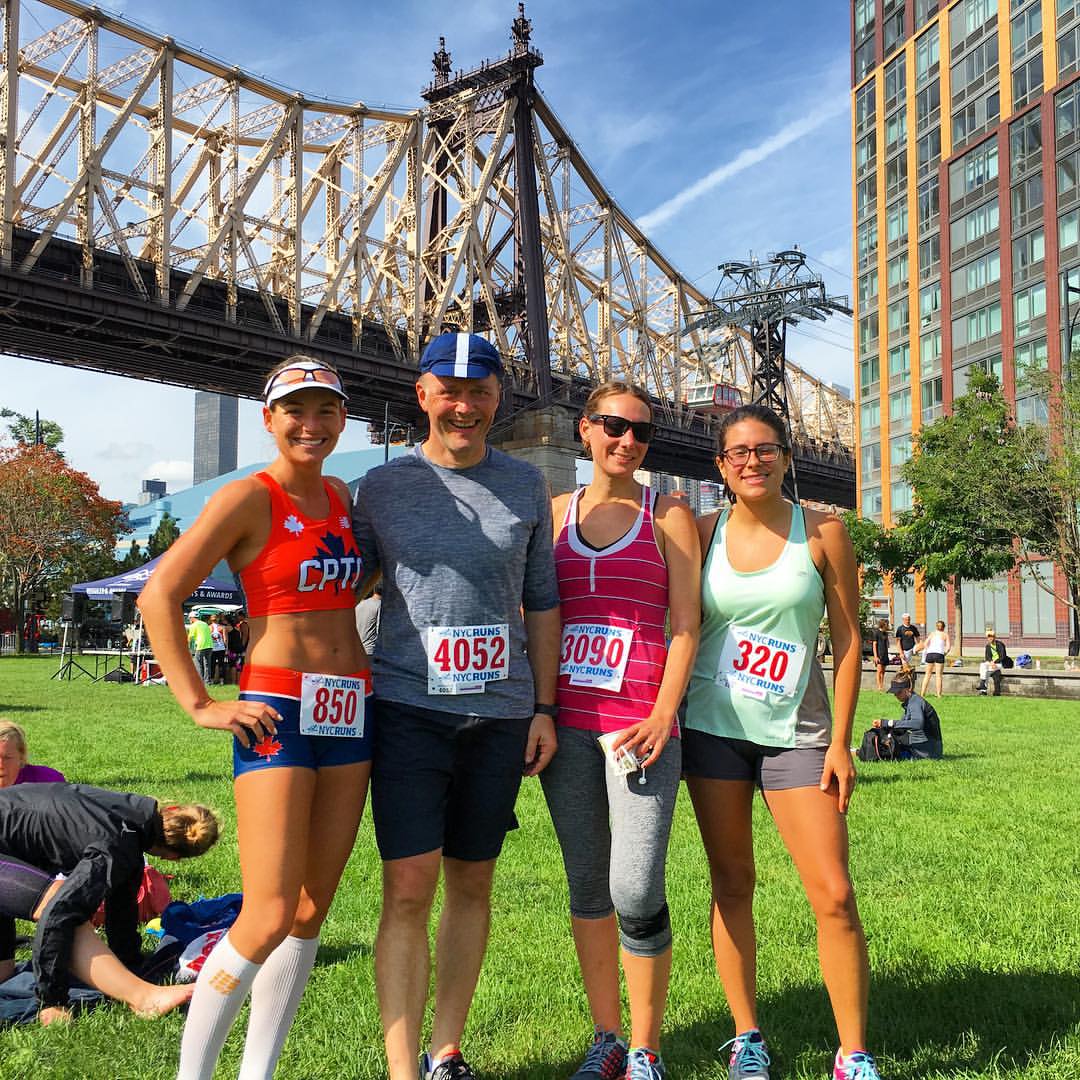
Post-race with some of my City Harvest Charity Team runners.

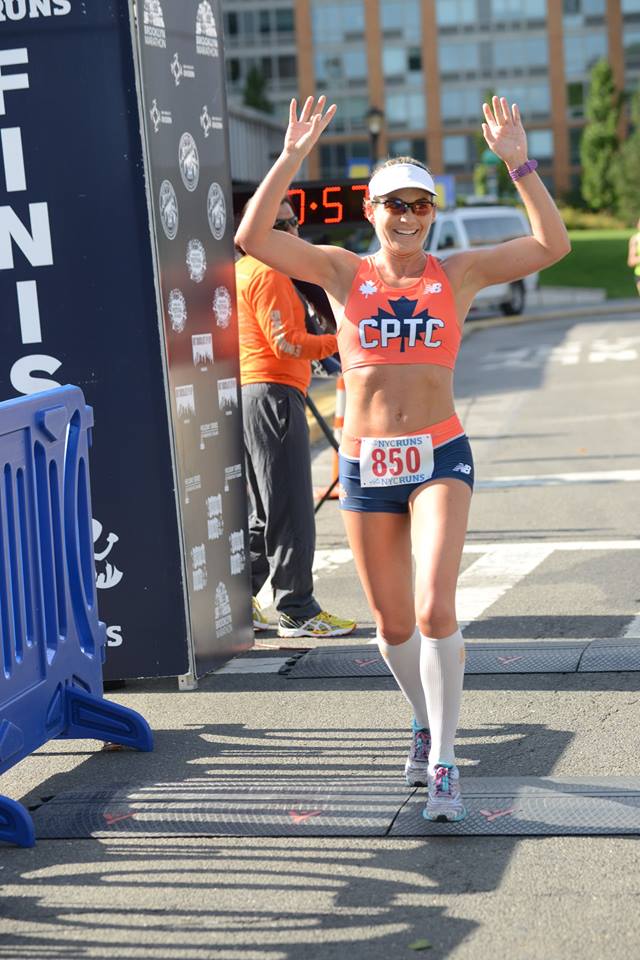
The first race of Autumn was the NYCRuns Squirrel Stampede 10K on September 26th. I am terrible at 10K races, and usually avoid them like the plague. But I had organized for some of my charity runners to run the race as practice for NYC Marathon, and figured I should run the race too. Turns out I won the race, breaking the tape for the first time in my life. Ever. I’ve won races before, but they never put the tape back out for 1st Female. That was really fun! I also won $100.00 – not enough to go pro! Ha! And I ran 6:36 minute miles, which was pretty much my goal for that day – lock in my hopeful goal race for RnR Half. The cherry on top of that day was cheering in and high-fiving friends, private clients and my charity runners as they finished. I was more excited for them than what I’d achieved. Turns out I ran a 10K PR that day, which is easy to do when you rarely run 10Ks! I’ve still run a 10K faster – in the middle of a 10 Miler. Funny how that works.

The second race was the Brooklyn Greenway Half Marathon on October 18th, My goals for this race were a little different and I had two goals: 1) run 6:50-7:00 minute miles – no faster! and 2) don’t abandon goal #1, especially if and when the lead females take off. I am happy to say I ran an average of 6:49s (so close to 6:50s!), and even when I was dropped from 2nd female to 4th female, I held back and never once pulled ahead or tried to break those runners. While the competitor in me was a little bummed to finish 4th female and 1st in my AG, I was also thrilled that I stuck to my plan. My weakness has often been going out too fast, and the last few years I have really tried to break that habit and when I’ve succeeded, it’s usually a great race.

Both races were pretty small, and I was alone on the course and barely able to see the runner ahead of me at times. Mentally, I find that tough. I also find it tough to run without music while folks fly by with their ear buds in, breathing heavily. But I tell myself in those situations that the mental focus it requires to stay calm and grind away at the course will be helpful, and hopefully in a large race I won’t need to mentally work quite so hard. However, in a large race there are other challenges. Racing is fun, and I want to find a way to get back to using races for some quality runs and fitness tests more frequently in the next year.

Winning the Squirrel Stampede 10K

Winning the Squirrel Stampede 10K

On deck, I am clocking 26.2 miles at the NYC Marathon with one of my clients. Then two weeks later, it’s RnR Vegas Half. That’s the big goal race. I know in order to achieve my goal time, I will need to be aggressive but smart. There will be some risk, and it may backfire. However, I am willing to gamble. I am willing to go out hard (not sprinting) and see what I can do. Worst case is I don’t achieve my goal time but learn something from my mistakes. Best case – I walk away with a cool new PR and a satisfying sense of achievement. No matter what, I will show up to do my best, leave it all out on the course, and try to walk away from the finish line with a smile on my face. This sport can really hurt and humble you, but I refuse to lose sight of my love for it.