Long Run, Dress Rehearsal

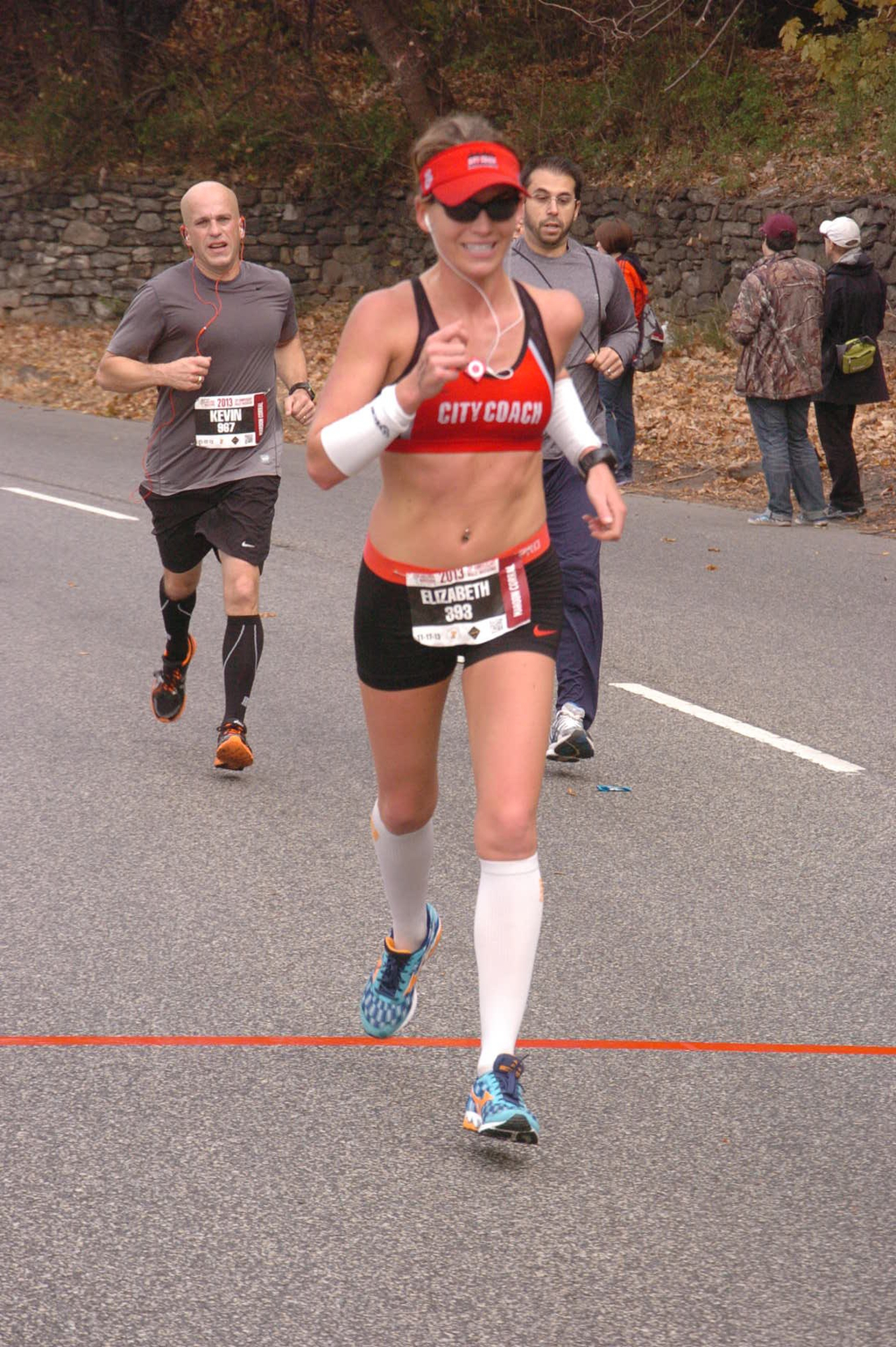
Over 30 miles into an Ultra Marathon in July 2012.

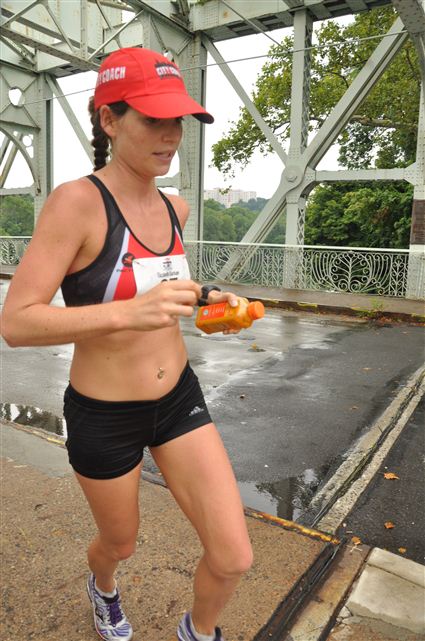
Over 30 miles into an Ultra Marathon in July 2012.

The long run. Often intimidating. Rarely easy. It’s the keystone to training for a marathon or half marathon. It’s also the run most folks training get wrong. Here are some things you can do to better your long run, your overall training, and the reasons why you should handle your long runs certain ways.

  • Think of your long runs as dress rehearsals for race day. This means you should practice eating dinner and breakfast the way you would before your race. it also means you should plan mid-run fueling as you would for race day. If you decide to “wing it” on race day, you are foolish. You have weekly long runs between now and race day. Use them as practice.
  • Don’t be scared of bombing a long run. If something goes wrong, LEARN from it. Perhaps you will need to cut the run short due to dehydration, chafing, or take a detour or a bathroom break. Or perhaps you need a walking/stretching break. Or you lose your mental focus and cannot get it back. IT’S OKAY. Figure out why these things are happening, and then we can fix them and never make those mistakes again. A bad long run isn’t a bad thing if you can learn from it.
  • Test out your fueling options. Some folks can take any kind of nutrition on the run and feel great. Other’s find almost every endurance fuel out there leads them to racing for the bathroom. There are dozens of fueling options. Find what feels best for you. Do you love caffeine GU? Do you need to avoid caffeine at all cost? Do you love your nutrition in liquid-form like Gatorade? What kind of Gatorade? Again, the long runs are rehearsals.
  • Take your pace easier than race day on your long runs. This is a hard concept for many runners planning for a marathon. The logic is often that you want to run at marathon goal pace so you know you can. Let go of that ideal. In fact, plan to run most long runs at marathon goal pace PLUS :15-45 seconds PER MILE. Why? Well here’s the short answer: to reduce injury risk. Think about it – when you finally run your 26.2 mile journey, it will be after a taper and you will plan to take at least a week off from running post-marathon. So HOW can you expect to run a 20-miler at your marathon pace and be recovered to run your speed workout a few days later? You cannot. Well you can, but your risk of injury is stupid high. Plus, if you are running speed workouts, running a “fast” long run has no real benefit. If you are sticking to a plan that includes speed workout and easy long runs, the combination will have you prepared for marathon day. I swear. I have yet to meet a coach who recommends you run your long runs at your goal race pace.
  • There are a few times when progressive long runs are beneficial. These should be handled with caution and are only ideal for experienced marathoners. Progressive long runs can vary in formula, but always end with finishing the long run faster than you started. Some will end with the runner finishing the final miles at marathon goal pace. Again, only for the experienced marathoner and with the advice of a coach.
  • Long runs are about time on your feet more than pace.
  • Regardless of pace, cap long runs at 2:30-3 hours. Reason being, injury risk goes up as the hours pile up. Again, totally understandable that a runner aiming for a 4 hour marathon wants to clock long runs of 4 hours, but hang in there. Instead, cap long runs at 2:30-3 hours and perhaps go for a second run within the weekend, perhaps within 24-36 hours – giving your legs the experience of running on tired legs but with the benefit of some recovery.
  • Long runs also give you the opportunity to practice recovery. Take the opportunity to figure out how you feel, what you need to eat and drink, and how your body reacts to the stress of the long run. Some runners are nauseous for hours post-run, while other runners want to eat everything in sight. Some runners have a hard time stretching, foam rolling and taking care of themselves, others are on it like rock stars. We can always make improvements, so budget time to handle yourself as needed after you clock that big run.
  • The long run is also a rehearsal for what to wear on race day. While seasons may change in the course of your training, try to wear what you may want to race in for some of those final long runs. Weather should be pretty accurate, as should your size and how clothes will fit you. Take note of any problem areas with chafing, and if you simply feel good or bad in what you wear.
  • If the long run is mentally intimidating, break it up into smaller sections. Taking on a 20-miler can seem like the worst thing ever, but 4 5-milers, refueling with GU every 5 miles suddenly doesn’t sound so hard. Remember that some miles will feel better than others, and often those middle miles are the hardest to grind through. Once you see mile 17 of 20, the light at the end of the tunnel is in sight.

Lastly, be sure to write down or remember what worked and what didn’t. That information can be priceless. How long did you eat before your run? Were you hydrated enough? How much sleep did you get? What fuel did you use and what was the outcome? Do you love or hate a certain training route? Were there mental roadblocks and what tricks got you past them? These are all clues that can lead you towards a successful marathon.


Self-esteem and Expectations

80878c12b0a0c28265093158861948c8This week I’d like to talk about body image. While many of my clients are driven by race-day goals, PRs, and breaking through their athletic barriers, I have some clients who are also driven by toning up, feeling confident in their skin, and sometimes simply dropping pounds – ranging from 10lbs. to 50lbs. While I absolutely love helping my clients with their goals, sometimes my heart breaks for those who they compare themselves to or how bad they feel about themselves. Having a client want to lose 15lbs. by next week is like having a new runner expect they can race a 5K tomorrow – it’s unrealistic. Not to say those goals aren’t achievable, they may absolutely be, but tomorrow. Change takes time.

I am a firm believer that everyone deserves to feel good in their own skin – and is capable of achieving that. For some of us, it takes longer than others. One thing that often sabotages folks is their expectations. And who can blame them – we are bombarded by “standards” every single day. Thanks to Hollywood’s standards, our concept of beauty, aging, and fitness are completely unrealistic. Courteney Cox, Marisa Tomei, Sandra Bullock, Demi Moore – do these look like 50-year-old women in your life? Nope. Not unless you live in Miami or LA. Yet that’s a standard thrown upon us and one we assume upon ourselves. We are dooming ourselves to fail.

Personally, my self-esteem finally changed when I stopped reading tabloid magazines and watching Hollywood-related news. I couldn’t let go of the images I’d see, and the “secret diet” of some star. Or watching celebrity after celebrity in interviews or on the red carpet credit their genetics and a healthy lifestyle for their appearance. I call bullshit. They should be thanking the folks truly responsible for their appearance: their personal trainers, nutritionists and chefs, makeup and hair stylists, dermatologists and cosmetic surgeons. I don’t doubt some have good genetics, but good genetics alone aren’t responsible for most of what we see – or are told we should try to attain.

So if you are struggling with your goals and your self-esteem, please be kind to yourself. We cannot change Hollywood standards, but we can change our expectations of ourselves. Compare yourself to you, and no one else. Mark your progress by you and your starting point, no one else’s. Once you let go of all that pressure, success is that much closer.

Fad Frenzy and Detox Domination

28200_574974599374_24301763_33376923_2796281_nThe New Year always brings with it an odd array of health choices. My twitter, FB and Instagram accounts are flooded with the good, the bad and the ugly. I’ve blogged about the topic of fads, detox supplements, and all that loony business, but apparently America is still full of suckers willing to drop their dime on any possible “too good to be true” gimmick. America, STOP IT. Seriously. You are smarter than this. I totally understand wanting to buy into Dr. Oz’s newest “miracle whatever,” or some Buzzfeed trend started by someone who received some sort of Nutrition Certification online, and therefore is “the voice of science.” Again, STOP IT. Do I need to reach through my computer and shake you?!?

Okay, so some of you are shouting “yes, Coach Corky – preach!!!,” while the rest of you are like “but I read somewhere, or so-and-so swears by…., etc.” Take a deep breath. I am going to assume that you are all intelligent people. I am also going to assume that you work hard for your dollars and are not looking to go out of your way to waste your hard-earned cash. Let’s also just agree that the health/fitness/weight loss industries are multibillion dollar industries. Because that’s true. And that’s a lot of dollar bills.

Let me also just remind you all that for YEARS, I was one of those Americans after the quick fix, and would drop money on anything promising a miracle. I cannot tell you how much money I spent on diet pills in college. College. When I was super poor. Or the money spent of different colon cleanses, detoxes, juice cleanses – you name it, I probably bought into it. If a talk show doctor mentioned some miracle whatever, I was that hopeful person that thought maybe this was the answer I’d been searching for. Why? Because I was unhappy with my body and had zero self-confidence. I also thought that anything “detox” or “cleanse” was truly beneficial and healthy. When you are desperate, you will grasp at straws. So please understand when I say I have been that desperate American who tossed science and logic aside when tempted by trends, and I didn’t care to stop and question what was being promoted. Truthfully, a small part of me wanted to assume that not everyone would sell lies – something being marketed had to be the real deal, right?!?

Okay, so back to today. If you are tempted to try a juice fast, oil pulling, no GMO, sugar-free diet, etc., be the smart person that you are and DO YOUR RESEARCH. And I don’t mean “go find websites that back up what you want to hear.” No. I mean look for medical journals, articles posted by doctors (NOT celebrity doctors!), and reach multiple sources. Anybody can post their thoughts and theories on the internet. It’s your job to be skeptical and play Devil’s Advocate. If I wrote an article swearing by the “Ice Cream Diet,” gave reasons why it worked, and then listed my credentials, it could very possibly become the next fad. Which obviously is ridiculous, right? Right. But come on, that would sound amazing. If you are still confused, pick up an anatomy book. If you knew anything about the body, you’d know toxins aren’t something you can “detox” with a cleanse – you have organs in your body that do a brilliant job keeping your body clean and healthy without your insane desire to interfere. Your personal doctor is the only one qualified to suggest you interfere or change your body’s natural process.

Okay, so now some of you are going to swear that your detox, oil pulling, cayenne pepper, juicing, whatever is making you feel like a million bucks! You have more energy, your skin is softer, you have lost weight, etc. – you will swear your magical new lifestyle is working. Guess what? It probably isn’t. What are you experiencing? One of a few things. The placebo effect should not be underestimated. You WANT your product or new lifestyle to work, so you are already looking for every possible sign that pill is what’s making something better. Or you are losing water and poop weight (sorry, it’s true!) if you are on a cleanse of some kind, so obviously with less stuff in your gut you’ll weigh less. This is temporary. And if you are in fact, actually feeling better, it probably isn’t due to the one thing you are doing but how that shift in choices is altering the rest of your life. For example, if you are juicing for breakfast, perhaps that is replacing your typical breakfast of processed junk – so of COURSE you are going to feel better – you are starting your day with something nutrient-dense instead of empty. Most people also find that if they make smart and healthy choices for breakfast, they are more likely to eat healthy the rest of the day.

I implore that instead of funding the fads and trends of the health/fitness/weight loss world, toss your money where you KNOW it will do good. Eat a balanced diet filled with fresh fruits and vegetables. Go to the gym and be active every day. Get 8 hours of sleep per night. Drink lots of water. Despite what everyone out there in the media wants you to think, there is never a quick fix that will give you longterm results.

In the end, you’ll just end up frustrated and with less $$$$ in your pockets if you chase after the fads. Instead, always seek out the advice of a professional you trust. And there is absolutely no reason why a smart person should trust the likes of Dr. Oz or anyone in his circle and making money off our desperation. Your best resource is a doctor or nutritionist you trust, who doesn’t have endorsements, a book, or other financial incentives to swing their advice.

Accessing you mental toughness

635204708462443579It’s interesting to see and hear what my clients succeed and struggle with, and how that relates to my own struggles as an athlete. One thing a few athletes voiced struggling with in 2014 was mental toughness, which is a topic many of us know all too well. I’ve been thinking about my own relationship with it, and think I may have some ideas, tips and experiences that may help you and your running goals – especially in the marathon.

We are all incredibly strong. Sure, we have varying degrees of the tough stuff, but very few people are truly weak. However many people perceive themselves that way. The good news is that we can always change how we handle those hard moments and our perception. In running, clocking long miles like a marathon tend to really test our mental toughness. Mentally, I think anyone can get through a 5K. I can talk myself into doing anything painful or taxing for 15-25 minutes. Mentally, I’ve got that. That doesn’t mean I won’t hurt, fight towards the finish line and feel mentally spent at the end – because all of those things will definitely happen. But mentally I can always get myself around a 5K. A marathon is a whole different game. And here’s where we get personal:

I am going to assume that every poor soul taking the time to read my blog as experienced some form of hardship in their lives – maybe many. I’m talking the dark, ugly, painful shit. Divorce, loss of a loved one, being bullied, fighting substance abuse, physical setbacks, being mentally or physically abused, experiencing a horrific trauma and suffering from PTSD, rising above prejudices, or simply being told your entire life that you were weak. If you haven’t experienced any of that, you are extremely lucky and should probably start buying lottery tickets. For the rest of us, we have all had to cope with that crap at some point or another, most likely multiple times. Hopefully you have all processed these things in a healthy way. If you haven’t, talk to someone. Anyway, I’m not a therapist, but I do know the power of rising above bad experiences. If you are planning to run or race a marathon, or a distance that is new and/or terrifying to you, use those bad experiences. Why? Because you have forged your way through them and are here today and ready to run. That takes guts. And a hell of a strong brain. That strength is your ace in the marathon.

Personally, I’ll freely admit my triggers. For my first marathon, I used the determination to prove to myself and every girl who bullied me in high school that I was a strong fighter, and a Boston Qualifier. I wanted to prove them wrong. I wanted to prove to myself I could survive an ugly divorce, a sexual assault, and a suicide attempt. I wanted to prove to the world that I was no longer weak, unstable, unhappy, or capable of crumbling when shit got hard. And so I trained hard. I trained with fire in my heart and blinders on my eyes. I trained through plantar pain, long work hours, and rain storms. When I’d reach mile 16-20 of my long runs, I’d fight through to mile 22-23. No, I was not training to be a pro or win awards, but I knew my goal was there if I worked hard for it. When I crossed that first marathon finish line, I wanted to shout up to the clouds all kinds of happy profanities. Not because I had surpassed my time goal, but because I had proved to myself that the weak, uncomfortable, insecure me was gone. Gone forever.

Now I realize that I had a list of really shitty things to propel that first marathon (blessing in disguise?), but use what you have. Dig deep, and find that strength. If you dealt with a messy breakup, had to balls to walk out of a bad relationship, use the strength that action took. If you were ill and needed surgery and pushed through the recovery and rehab, use that. Whatever you have surpassed, overcome, walked away from, fought head on – access that. Don’t be scared of it. Use your demons, and suddenly a marathon doesn’t seem so daunting. I mean yes, you still have to do the work and it’s a LONG ways, but I think you get it.

So if you experienced a long distance race that fizzled thanks to your mental state, go back to the drawing board on those long runs. Truthfully, even the most conditioned athlete can fall apart in the marathon if they lose their head. I’ve seen ladies who finish 7 hour marathons, putting one foot in front of the other slow and steady, refusing to quit. I’ve also seen ladies who aim to run a 2:45 marathon, lose their heads and throw in the towel. What we have going on in our brains has nothing to do with our physical strength, though we are at our best when our brains and bodies are both trained for race day – whatever that means for you.

You are stronger than you realize. All you have to do is accept that and dig deep to that place of strength. It takes practice to access it, so hop to it.

How to pick a race

There are thousands of races offered every year. Trails, roads, flat, high elevation, themed, large, small, competitive, relaxed – and all over the globe. So many options out there is a wonderful thing, but it also can be overwhelming. I have some tips to help you pick your races.

  • Look at your calendar and be realistic with when would be a good time to race. For example, many runners interested in a marathon need 3-6 months of time to train, depending on their current fitness/weekly mileage, how ambitious their goals are, etc. Also consider the weather at that time of the year.
  • Find a course you want to run. If you have your eye on a flat, fast race, be sure to do some research on prospective races. The last thing you want is to assume that a race will be flat, only to find mid-race that you underestimated what that race director’s idea of “flat and fast course” may be.
  • Race experiences can vary greatly by the size of said race. An intimate marathon with 2,000-7,000 runners is going to be completely different from one with 40,000 runners.
  • Small races are great confidence boosters. You may wind up on the podium for an age award – which is always fun.
  • Consider the start time and location of the race. Logistics on race morning can make or break your race experience.
  • If you are considering a few big goal races, do some research. Runners are often passionate about blogging their experiences. Do a little reading and you may come across some helpful tips about a specific race.
  • When considering a destination race, do a lot of research on that race, the town, where to eat – everything. I also highly recommend you plan a trip so that the race is at the beginning of your vacation. That way you can really enjoy your time after your race, and not have to think about your nutrition or sleep for race morning.
  • In general, don’t plan multiple races within a week or two of each other. The longer the race or the harder you exert yourself in a long race, the more recovery you will need. Just as you would plan your hard workouts and taper, you also need to plan your recovery.
  • When putting together your calendar, you may benefit from planning to run races for different reasons. Perhaps plan to truly race a few, use some as training runs, and plan to run some for fun – perhaps with friends, in a costume, whatever – with the goal simply to have fun.
  • Don’t be afraid to try something new. A new distance, getting off the road and onto the track or trails, being part of a relay – mix it up and keep it fresh.
  • Remember that you cannot run every race on your dream list within one year. It’s incredibly risky and usually not possible for a marathoner to run Berlin, Chicago, and NYC -three marathons within 10 weeks, in three cities in different time zones – it’s not in the cards. Sure, you might be able to go complete all three, but not at your best pace and you certainly would be risking injury. Pick and choose. Stay injury-free and you will have years of running all over the globe in your future.

It’s great to be ambitious – just be careful with your ambition and don’t take on too much. Be honest with yourself about your goals, calendar, likes, dislikes, and start piecing together your new year!