Tackling Track Etiquette, Rules, and Benefits

Coach086-460x306Running coaches and experienced runners have a few weapons of choice for improving running. Luckily, some of these tools benefit all runners, veteran and novice alike. One of my favorite weapons of choice: track work.

Okay, so you may be assuming that only track athletes belong on the track. You know who they are. They are strong, powerful and confident. They make many of us look and feel like tortoises. You might think if you aren’t a sprinter that there is no reason to ever set foot on a track. You may not even know how to use a track, or wonder about track etiquette. Never fear, I have some basic track rules, tips, reasons why you should use the track, and more!

Regardless of running experience, reasons you run, or race goals (if any), running fast once per week benefits all runners. Running hard calls to action fast-twitch muscles, spikes metabolism, increases cardiovascular strength, and often improves running form. Running fast is also FUN. Yes, its hard, but feeling like you are flying, even if the track athlete next to you whizzes by with ease, will make you feel accomplished, strong, and badass at the end of your workout. Plus, over time you will see incredible improvement in running performance in every road distance from the mile to the marathon.

Hopefully I have peaked your curiosity, and you now want to know any rules for using the track. Great. Here are some basic tips:

  • Run counter-clockwise. Everyone on the track should be going in the same direction.
  • Share the space.
  • Most outdoor tracks are 400 meters once around, if run in Lane 1. Many indoor tracks are 200 meters.
  • Lane 1 (the inner lane), is often the speed lane. If you are running hard, feel free to hop in lane 1. If you are taking a recovery lap, warming up, or cooling down, be courteous and move into the outer-most lane. Just be sure to check over your shoulder before changing lanes.
  • If you are in Lane 1 and need to pass a runner who is also in Lane 1, you can choose to go around them by cutting into Lane 2, or you can try to stay in Lane 1 and yell “Lane 1″ or “Track!.” If the runner you are gaining on hears you and knows track etiquette, they will move out of your way and into Lane 2 so that you don’t have to work hard to pass them.
  • If you are in Lane 1 and hear someone shout “Track!” or “Lane 1″ behind you, glance over your shoulder and move out of their way into lane 2 so they can pass you. Then move back into Lane 1.
  • Do not walk or take recovery jogs in Lane 1, as you’ll probably be in the way of someone doing speedy repeats.
  • Do feel free to tell other runners that they look strong.
  • If your track doesn’t have a water fountain, bringing a water bottle and dropping it somewhere along the track is a good solution.
  • Many tracks have restroom facilities. Some may also have lockers.
  • If you prefer to be on the track when it’s least crowded, avoid “after school hours,” when many school teams will be using the track for practice.
  • Most tracks are open to the public. If you use a track on a school campus, look into if there are any hours the track is not open to the public.
  • Do go to the track with a workout plan. Going to the track and winging it will leave you without much focus.

Runners new to track workouts don’t know what they should be doing on the track. I suggest only going to the track once per week, for your speed session. If you go to the track for all of your training, you will feel like a mindless hamster. You will also fall into a rut. Keep the track for those hard workouts, where you leave all distractions behind and simply focus on the track.

As a coach, I tailor my track workouts to my runners and their race goals. However, you can certainly make up your own workouts! Some popular track workouts: 8X400, 8X800, 4X1200, 3X1600 – you can mix and match and combine all kinds of variations. A general guideline: if your goal is speed and shorter distances (for example, a 5K race), 400s are a great distance for repeats. If you are gearing up for a Half Marathon or Marathon, 800s-1600s will benefit your training.

What the above examples mean in non-track terms: 8X400 @ 5K race pace = run 400 meter repeats 8 times at your goal 5K race pace, with a recovery between each repeat. The recovery times are up to you, but it’s usually beneficial to recover for half the distance of the repeat (in this case, 200 meters), at a SUPER easy jog.

Or say you decide to run 2X400, 2X1200, 2X400 @10K race pace in a workout – that would mean you’d recover with 200s between the 400 repeats, and 600s between the 1200 repeats. Once again, you can mix and match as you choose, depending on your strengths, weaknesses, and goals.

It’s always important to warmup and cool down when hitting the track. While running hard is fun and great for your training, you need to be careful and make sure to not go from 0-60 without waking up your legs. Take your warmup and cool down at super easy paces, in the outside lane.

If you are still intimidated to try out the track, bring a running buddy. Not only will your nerves calm, but you will both probably work harder if you are running together and pushing each other. So find a buddy, bite the bullet, and head to your local track. You’ll realize after your first workout that it really isn’t so scary, and its a training weapon that just might lead to some big person bests this season!

Go, Go, Garmin Gadget!

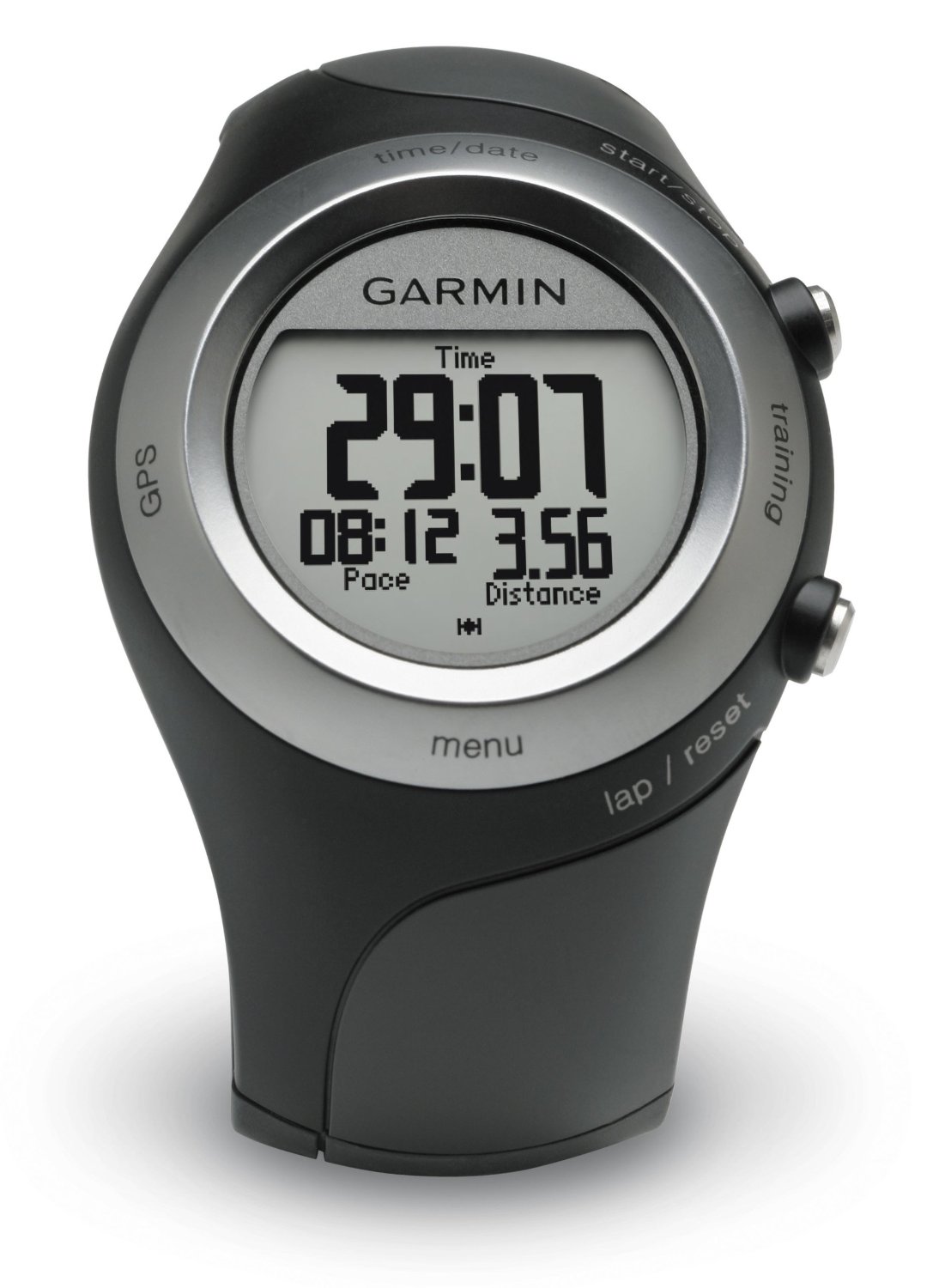
81J8WsZmJoL._SL1500_When I first started marathon training, I bought myself a Garmin 405. With a time-specific goal, I wanted a tool that would keep me honest, accountable, and aware of my progress. At the time, a $300 “investment” in my training seemed a bit steep. I was a full time actor in NYC, and when you don’t know when your next paycheck will arrive, or if you’ll even love running marathons, $300 was quite the expense for my running quest.

Since that purchase in July 2010, my trusty Garmin has gone through a lot. Humid summers, rain showers, snow and ice storms. Training in NYC, Philly and LA. Races all over the country. Thousands of training miles, dozens of marathons, half marathons, and countless other races. Moments of pure bliss and triumph – big PRS, overcoming what I thought was possible, and some wins. Moments of complete agony – injuries on race courses, DNFs, the trauma of the Boston Marathon in 2013 – My Garmin was there on my left wrist for all of it.

All of those miles have turned my once perfect and shiny Garmin into an old, weathered-looking device. The band has been held together with black tape for months, and there have been times where the device has completely malfunctioned, or rebooted mid-race. But like a trusty friend, these errors were forgiven.

Sure, newer models have come and gone within the last few years. Friends have tempted me to upgrade, but why? My Garmin worked just fine. Call me old fashioned, but why replace something when what you have does quite a good job? But over the last few months, it became clear that our daily journeys were going to have to come to an end.

With mixed emotions, I recently purchased a new Garmin – to 220. Part of me was excited. A new running toy, oh boy! It’s pretty and purple, and has new technology my old 405 couldn’t dream of! This new Garmin can literally be a tracking device – which is awesome for safety reasons but also means that I’ll always have a back-up tracker at races – which is pretty darn sweet! The new model does a done of other new things, that I have yet to fully explore.

While my old 405 will be “retired” as far as daily responsibility, I’ll be holding on to the old guy for as long as he decides. He’ll be my backup buddy for my Ultra in July, and will be swapped in when the new Garmin needs to be charged. I’m sure he and I will still go on other journeys too. I know my watch is an inanimate object, and so to be attached to the old ticker is silly. But the person and athlete I have morphed into during my journey with that piece of technology is unbelievable.

Which made me think – do you have a training device or tool that you have stuck to for years? Any part of your running ensemble that you feel incomplete without? If you have never run with a watch, I recommend it. Sure, you can drag your phone along with you and use a running app, but I love that I don’t have to carry a heavy device, my hands are free, and I have some time to myself that isn’t interrupted with emails, phone calls, updates, etc. from my phone. I encourage you to look at all your options. There are dozens of brands out there, and devices that cater to different kinds of athletes.

I should probably mention here that I have no incredible loyalty to the Garmin brand. I am not sponsored by them, and am only writing about my watch because it was meaningful to me. Personally, I go to different brands for different things. I have never found one brand that fulfills my every need as a runner. my watch is a Garmin, my shoes are Mizuno, my sports bras are Nike, most of my apparel is a mix of different brands – chosen based on how they fit me and feel, not on the logo. But hey, if the folks at Garmin want to sponsor me, I wouldn’t object!

Looking back, I’d say that Garmin 405 was the best $300 I’ve spent in a long time. I’ve certainly gotten my money’s worth!

Staying Motivated

img_8482aweb-320x444Its the time of year where many people find themselves in a rut. Perhaps Winter has been grinding on you with arctic blasts, or you’ve lost the momentum you charged into 2014 with back on New Years Eve. Fear not, I have a few suggestions and tips that can get you out of your rut and having fun!

Consider signing up last-minute for a local race. Hopping into an event with no expectations but to have fun and see what happens mixes up our routines. You may surprise yourself with your fitness level, and cross the line with a PR! You may also find the company of a couple hundred fellow runners reignites your reasons for running. With weather being unpredictable, signing up last-minute also means you can pick and choose your race with the forecast in mind. If nothing else, a short race is a great speed workout.

Perhaps you don’t want to participate in an event as an athlete but still want to be involved. Volunteering always feels good, and you’ll be greeted and thanked by the warriors on the course. As a volunteer, you’ll see every runner go by – from the speedy leaders to the back of the packers and everyone in between. If seeing folks of all shapes and sizes out there pushing themselves to the best of their abilities doesn’t motivate you, I don’t know what will.

I love grocery shopping. I find that if my nutrition habits start slipping, heading to the store and stocking up on healthy options makes me excited to cook and eat yummy things! Looking for new recipes and trying them out is always fun.

Arrange a social event with athletic and fit friends. The social event doesn’t have to be athletic at all. Being around positive, supportive and active people can motivate you to get back to your routine. If fitness and/or training comes up in conversation, reach out and ask for support. Having a running buddy or fellow gym-goer makes the commitment one thousand times easier! I promise that your friends have all gone through training ruts at some point themselves. They won’t view you as weak, but simply as human.

If you have a goal race or fitness goal on your calendar but feel unmotivated to train, force yourself to figure out why. Denial is common, but doesn’t fix anything. Get real. Perhaps this isn’t the time to be committing to a race and you should bag the idea until a later date. Perhaps your diet goals were simply too ambitious but can be tweaked to guarantee success in the big picture. Maybe you need to reconfigure your schedule to make time for training. Sometimes watching a running movie or going to a race website is enough to get your training mojo back. Whatever you do, take an active approach to figuring out why you are in a slump.

We all fall off the wagon now and then. As long as we get back up, we are back in the game.

“HOW TO START RUNNING NOW: 7 TIPS TO GET YOU ON YOUR WAY”

img_6834-editA few weeks ago I was interviewed for Bustle.com‘s article on tips for getting started with running.

I thought some of you may perhaps benefit from some of the questions I answered.

If you are new to running, perhaps you have found other tricks and tips that have worked for you! While we are all different, it’s important to always begin slowly and to build mileage gradually. Before you know it, you’ll be running harder and further than before!

Have a tip I didn’t mention in the article? Please share it with the class in the comments!

Back on My Feet: Road to 100

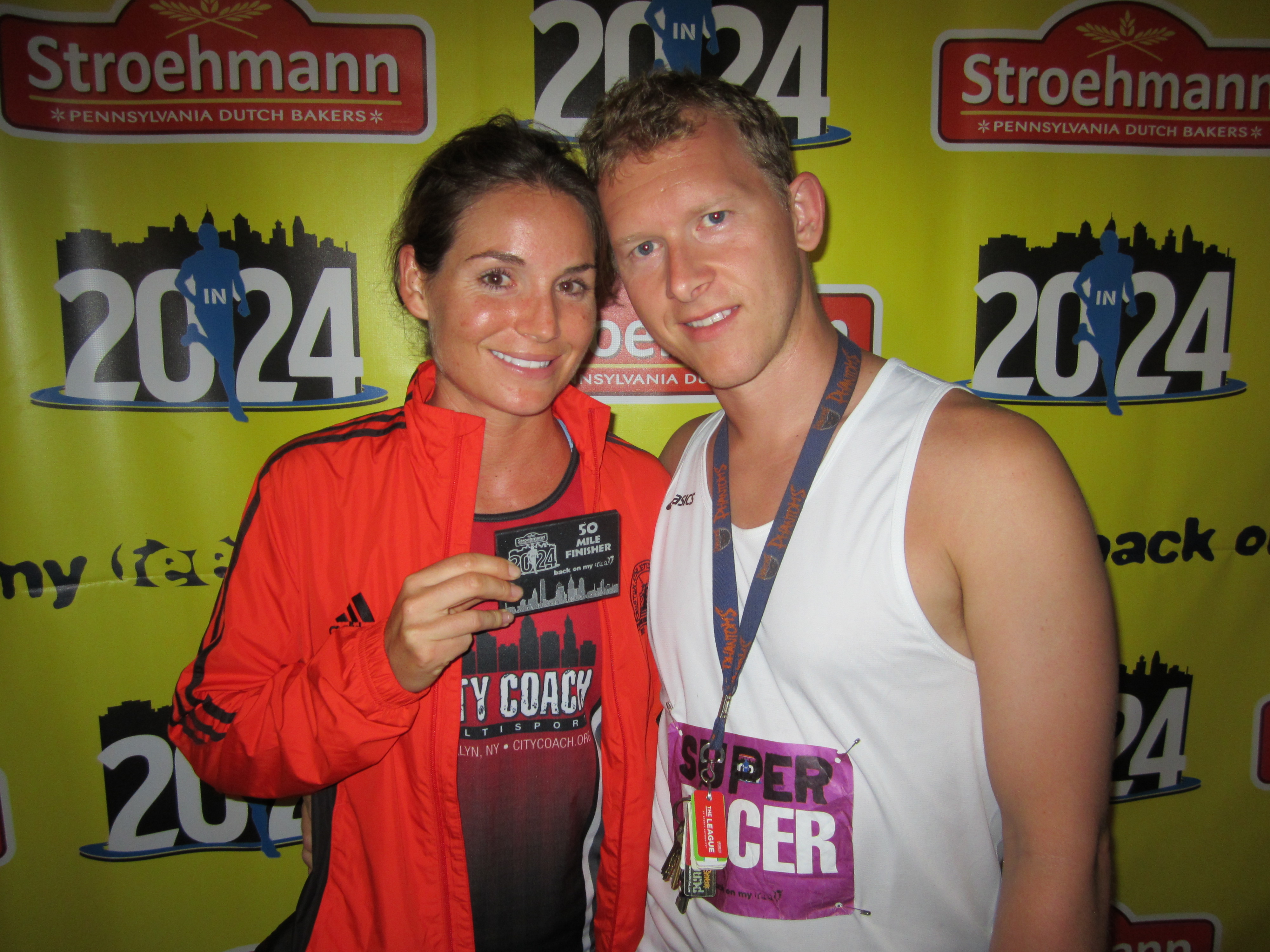
After my 68 miles and out of the medical tent, with Chris.

After my 68 miles and out of the medical tent, with Chris.

After a whole lot of thought and consideration, this coach has decided to attempt a second go at the Back On My Feet 24-Hour Ultra. There are a bunch of reasons why I am taking a second go at it, and why I’ve decided this is the right year to do it.

Here’s a little back-story, in case you have no idea what I’m taking about: In July 2012, I attempted the 24-hour Ultra with the goal of achieving 100 miles. Yes, that’s pretty darn insane. Yes, it requires a lot of training. And yes, even under the best conditions, 100 miles is a LONG day at the office. If you’d like more details about my first experience with the Back On My Feet race, here is the blog I wrote about that. The abridged version is this: I made it 68 miles and was pulled off the course by the medical team and not allowed to continue do to extreme dehydration and compromised kidney function. With 10 hours left of the race, and currently the 3rd place female, I was not allowed to continue. Yes, this was for my own good and yes I was physically very beat up. It was a long day and I learned a lot about myself mentally, physically, and what I did right and what I could have done better to have achieved my goal.

For a while I swore I would never go back. First off, I’m not a crazy person and so I can totally relate to what you are thinking. Why the hell would you put yourself through something like that – on a humid July weekend, no less? The answer is simple: to prove to myself I can. As a person, I thrive on challenge and when someone tells me I’m not capable of something or not good enough, it lights this fire in my gut and this drive to prove them wrong. As a coach, I want to do it to prove to every single person who reads my blog or coach that if I can do this, you can achieve your goals. I am just a human being. I’m not a super human. I want to be a living example that with enough training, determination, and a smart plan – you can do anything. Friends and family who witnessed what happened back in 2012 will no doubt have their concerns. I have concerns too. However, I learned a whole lot about what I need to do different, and am confident I can set out to do what I failed to achieve in 2012.

A few things I have learned:

– I sweat a LOT when I run in summer. Like, a whole lot. Even though I remember dumping bottles of water, gatorade, mango smoothies and salt pills into my system in 2012, it was NOT ENOUGH. This time around, I need hydration to be my priority over everything else.

– I cannot run the race like a race. It sounds silly, but I didn’t pace myself mentally for an Ultra. I was still thinking like a competitor out there, and barely took any breaks. Stopping to dump in calories, stretch and take note of any danger signs could have really helped me. I also need to ignore the announcer who would announce which “place” I was in every time I ran through base camp. For the entire 14 hours out there, I was the 2nd or 3rd place female. That messed with my head.

– When you try your best, that has to be enough. Yes, I was disappointed that I didn’t make it to my goal, but I achieved more that race day than ever before.

– I need to reduce the amount of “goals” for this year. In 2012, not only did I set my 100-mile goal, but I also set the goal of PRs in the 5K, 10-Miler, Half Marathon, and Marathon. I achieved all but the 100-miler and the Marathon, where I injured halfway through and was forced to take 8 weeks off from running. Avoiding injury is my greatest priority.

– I need to limit my amount of speed work in the months leading up to race day, when mileage will be at its highest.

– Having pacers and support was extremely helpful the first time around, and I certainly would not have gotten as far or have had so much fun without them. Asking for support again needs to happen.

– If I want to see the sun rise on the second morning, I need to be smart on race day and adjust plans for the weather and my body.

I had originally thought this idea of redemption would fit into my life in a few years – perhaps 2015 or 2016. However, with all of the easy miles I now clock as a coach pacing my runners, I feel like my training for the Ultra is already halfway there. So, why not take it a step farther and have this be the year? Yes, training for an Ultra is time-consuming. Its also hard on the body. I also remember spending so much time when I wasn’t running focusing on refueling. Pouring water, electrolytes and calories into my depleted body was almost a full time job. But I don’t know what my life will be life in a few years. Perhaps I’ll be running tons of Ultras by then (I doubt that!), or maybe I won’t be living on the east coast, or I’ll have a family, or I’ll be too focused on my clients, or on speed work. I just don’t know, so I figure if I can keep myself healthy, then this is the year.

Part of me is super excited for a second go at this race. What I am most excited about was the sense of support and love from my support team, pacers, and friends and family near and far. The experience made running bigger than one person. My goal in 2012 turned out to be an impossible feat, but the determination and fight to try came from my support team as much as from me. While I don’t see my future years of running to include many Ultras (perhaps how you may feel about marathons!), crossing the finish line of this race is something I need to do.

Post-Ultra swollen feet, days later.

Post-Ultra swollen feet, days later.