Marathon Preparation – what to do now

img_7073Marathon season is in full swing. Whether you are preparing for your first marathon, your one-hundredth marathon, or a goal personal best, there are a few things you should start to practice and plan NOW so that race day goes smoothly!

  • Finalize accommodations. Race weekend can become stressful. You will naturally be a bit anxious or excited. Having your plans for the weekend – including where you are going to eat, stay and how you will get to/from the race ironed out now will equal minimal chance for added stress on race weekend.
  • Practice in what you’ll wear. Everything from your shoes to your hat – wear your “race outfit” for a few long runs. This will minimize the risk of blisters, chafing, overheating, or simply annoying or uncomfortable race-day issues. If you plan to buy new shoes for your marathon, buy them and break them in on a few long runs in the weeks leading up to the big day.
  • Practice how you will fuel on race day. Everything from what you’ll eat the night before and morning of to how often you will refuel with water or GU on the course. Leaving nutrition to chance is a good way to guarantee you’ll take a tour of the porta-potties mid-race.
  • Start looking at your race course and elevation. Make note of landmarks, turns, water stations, and other useful points on the course. You don’t want to feel “lost” on race day. Know the course, and you’ll be prepared for success.
  • Set a few race-day goals. It’s impossible to predict what will happen with 26.2 miles of running, and setting one ambitious best-case scenario goal may set you up for a whole lot of heart ache. A few goals means you may have fall-back goals you can still achieve if the star’s don’t align.
  • Look at your training paces and come to terms with your strengths and weaknesses. Runners who know themselves often have a better chance of handling the tough moments and getting back on track. Revisiting your training should also give you some confidence. The proof is in the numbers, and so try not to doubt your training while you taper.
  • If you are going to have friends/family cheering on the race course, discuss ahead of time exactly where they will be. It takes a lot of energy to search a crowded block while trying to stick to your paces. Knowing they will be on the northwest corner of Chestnut Street, wearing blue and holding a sign is a million times easier than looking for someone “at the intersection of Chestnut Street.”
  • Make clear and definitive plans for what to do and how to get home, to the hotel, or to find family post-race. Be realistic and give yourself extra time. Marathoners move notoriously slow post-race.

No matter how your race weekend goes, try to have some fun and relax. There is always something positive to take away and learn from every race. If things don’t go your way, at least you know you were prepared. That should narrow the possibilities for making the same mistake twice – and hopefully you’ll have a kick ass race and will cross the finish line with a smile from ear to ear, feeling awesome.

Endurance Nutrition

Post-run pancakes, pumpkin butter, maple syrup, and beer.

Post-run pancakes, pumpkin butter, maple syrup, and beer.

During marathon season, many questions come up regarding nutrition. Today I’d like to go over some nutrition tips for marathon season, including basic nutrition, mid-run fueling, and pre-run/post-run nutrition.

It’s no secret that running a marathon is a pretty easy way to lose weight. You simply are burning thousands more calories than the person sitting on the couch. I am frequently asked about how to diet while marathon training. For most runners, this is not a smart idea. Your body and brain are put through a lot of stress during marathon training months, and depriving yourself serious calories can leave you feeling tired. You can also accidentally cut nutrition you need, leaving your body weak and unable to improve for your task at hand – 26.2 miles. Therefore, I suggest eating a sensible and well-balanced diet while training, and any extra body fat will probably disappear due to training, as long as you aren’t suddenly overeating. Instead of going on a diet, think of your body as your machine and yourself as an athlete – because you are. It doesn’t matter how fast you are going to run on race day, you are preparing your body for a marathon. Eat nutrient-dense foods. Foods that give you the fuel and nutrients you need to feel good, energized, and fueled for training. Fresh fruits and veggies, lean proteins, complex carbs and lots of water should make up most of your diet. Focus on eating well and don’t make anything off-limits.

For your long runs and race day, nutrition can be what makes or breaks your morning. Mid-run fueling can be tricky, as everyone has different sweat-rates, and everyone’s stomach and nutrition needs are different. Personally, if I am running a 3:00-3:30 marathon, I’ll consume 1 GU every 30-40 minutes (usually 4 GU per marathon), and I grab a cup of water every 20 minutes and take a few sips. For me, this is usually enough to get me through a marathon without feeling too zapped, but also not water-logged or sick. If conditions aren’t ideal, I may take more nutrition. I’ve sometimes used GU with caffeine and other times without. Whatever I end up training with most is what I go with on race day. That’s one example. The longer your out there for your race, the more fuel you’ll need. Other runners prefer Gatorade or Blocks over Gu-like products. On your training run, try to practice what you’ll do on race day. Nutrition is recommended for runs lasting about 90 minutes or more. Any runs of less time shouldn’t require mid-race fueling as long as you are hydrated pre-run and refuel after your workout is complete.

  • A word about mid-run nutrition – yes, there are calories in nutrition – about 100 calories per serving. These calories are very much-needed on your long runs, so DO NOT skip them because you are watching your figure. However, if you are using GU for every run you do, even easy 3-5 milers, you may end up gaining weight. Those supplements simply aren’t necessary for short runs and are therefore empty calories.

What you eat before your long run can lend itself to a successful run – or can make you suffer. Just as you should think about your general nutrition fueling your body as an athlete, you need to be aware of what you are consuming pre-long run. You don’t need to go crazy with the carbs (your body can only store so much glycogen, and the rest will simply be wasted), but you DO want to make sure you eat simple carbs. The night before a long run, I may eat pasta, pizza, rice, or potatoes. The morning of my run, I eat a bagel or toast with a little peanut butter, a banana with oatmeal, or pancakes. Just give yourself a few hours between your meal and your run. How much time you’ll need is going to vary per person. It is also very important to be consuming water the day before and the day of your long run. Just as it takes a little time to digest and process carbs into glycogen, it takes our bodies some time to hydrate. Chugging a liter right before your run will not help you.

Post-run, it’s important to get nutrition into your system as quickly as possible. Your body, depleted of nutrition, will go into recovery-mode soon after you finish your run. Therefore, consuming something with carbs and protein and some sugar is great. You will also need to drink some water and perhaps a bottle of Gatorade. Personally, I love a tall glass of chocolate milk, a bottle of Gatorade, and a big glass of water as soon as I’m finished my long run. After that, I’ll eat a meal. Unlike some runners, my stomach is rarely a mess post-run and I always have an appetite. I’ll eat anything from a burger with fries and a beer to a big salad topped with some form of protein. Other times I’ll opt for a big plate of pancakes or a bagel with cream cheese and lox. I go with what I’m craving. If your stomach is sensitive and you don’t have an appetite, at least get water and something like chocolate milk into your system. That’s far better than nothing. Remember, in order for your legs to recover as quickly as possible, you need nutrients to do so.

Again, this is just a starting point. I could dive into the different components of endurance nutrition in a far more detailed and nerdy way, but at least you hopefully have some sort of understanding of why certain choices should and shouldn’t be made. Remember that what works for one runner may not work for the next, and so you should always use your long runs as your “dress rehearsals” for race day. Good luck, and happy running!


Ultra Training Update and Summer Training Tips

With special guest Chris, we discuss my training 6 weeks out from race day and our plan for a successful race weekend. Tips on hydration, heat, sweat rate, and other difficulties summer training and racing – and how your bathroom scale can be a handy training tool. Thanks for your support as I continue on this journey! July 19-20th will be here before we know it. Happy running!

Report from the Trenches: NJ Marathon

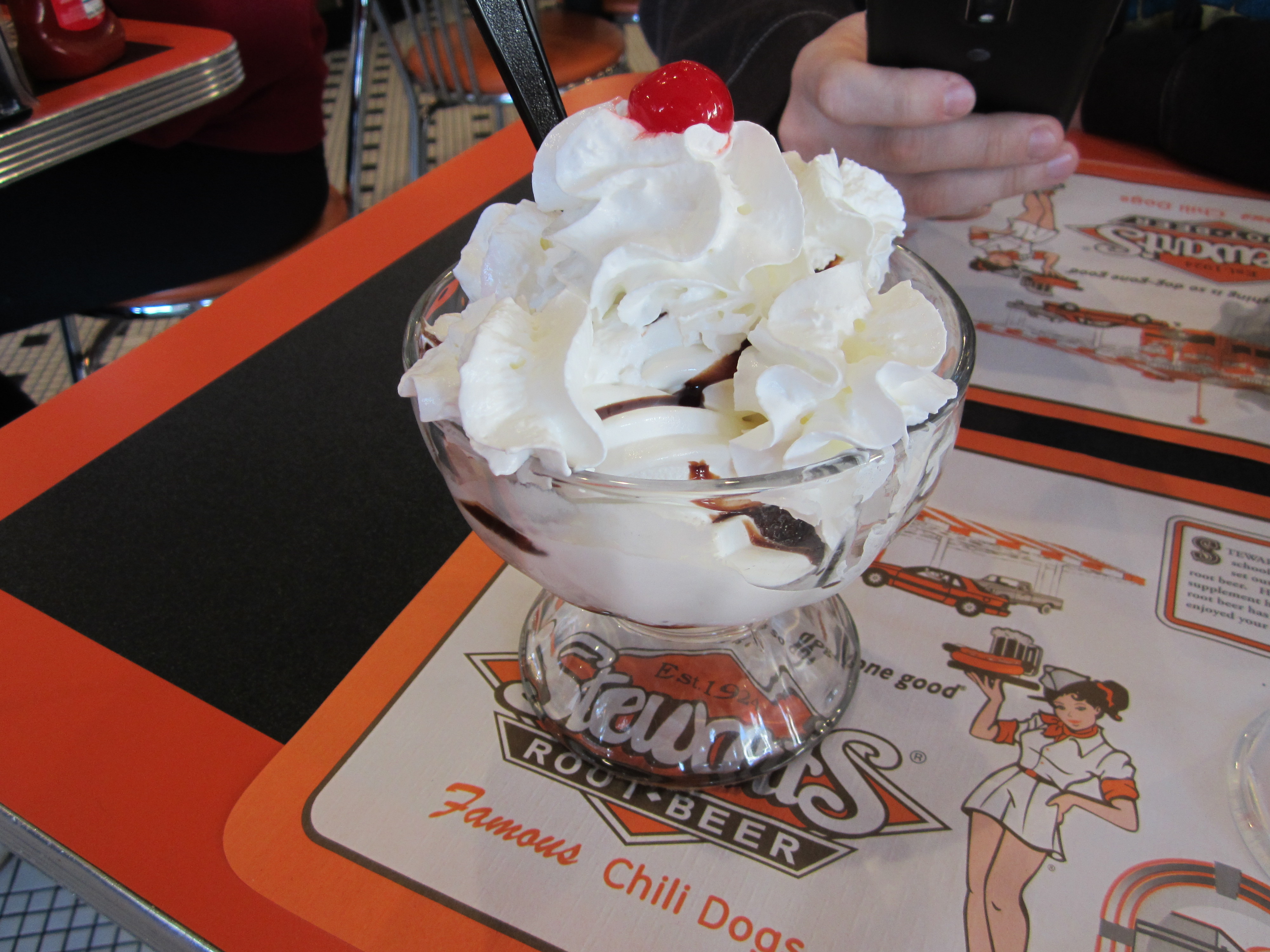
Carb-loading with a sundae and a side of fries for lunch!

Carb-loading with a sundae and a side of fries for lunch!

Over the weekend of April 26-27th, I packed my bags and hopped the train to Long Branch, NJ. I was en route to this cute beach town to pace one of my athletes during his marathon debut. The NJ Marathon and Half Marathon runs through residential neighborhoods with many twists and turns, with the marathon heading on an out-and-back to Asbury Park, ending with a mile or so run along the beach and what would have been the boardwalk if Hurricane Sandy hadn’t destroyed it, finishing with the ocean on your right and screaming crowds and hotels and condos on your left.

If you are looking for a springtime race, this might be one to add to your calendar. The weather turned out to be practically perfect. Cool and sunny, low humidity thanks to rain showers the night before, and minimal gusty winds as beach marathons go. The Half Marathon started 75 minutes before the Marathon, giving way to a race course that never felt crowded after the first mile. The race is small by city marathon standards, and so logistics were easy. Instead of navigating race morning around 20,000+ runners, only 2113 runners completed the marathon.

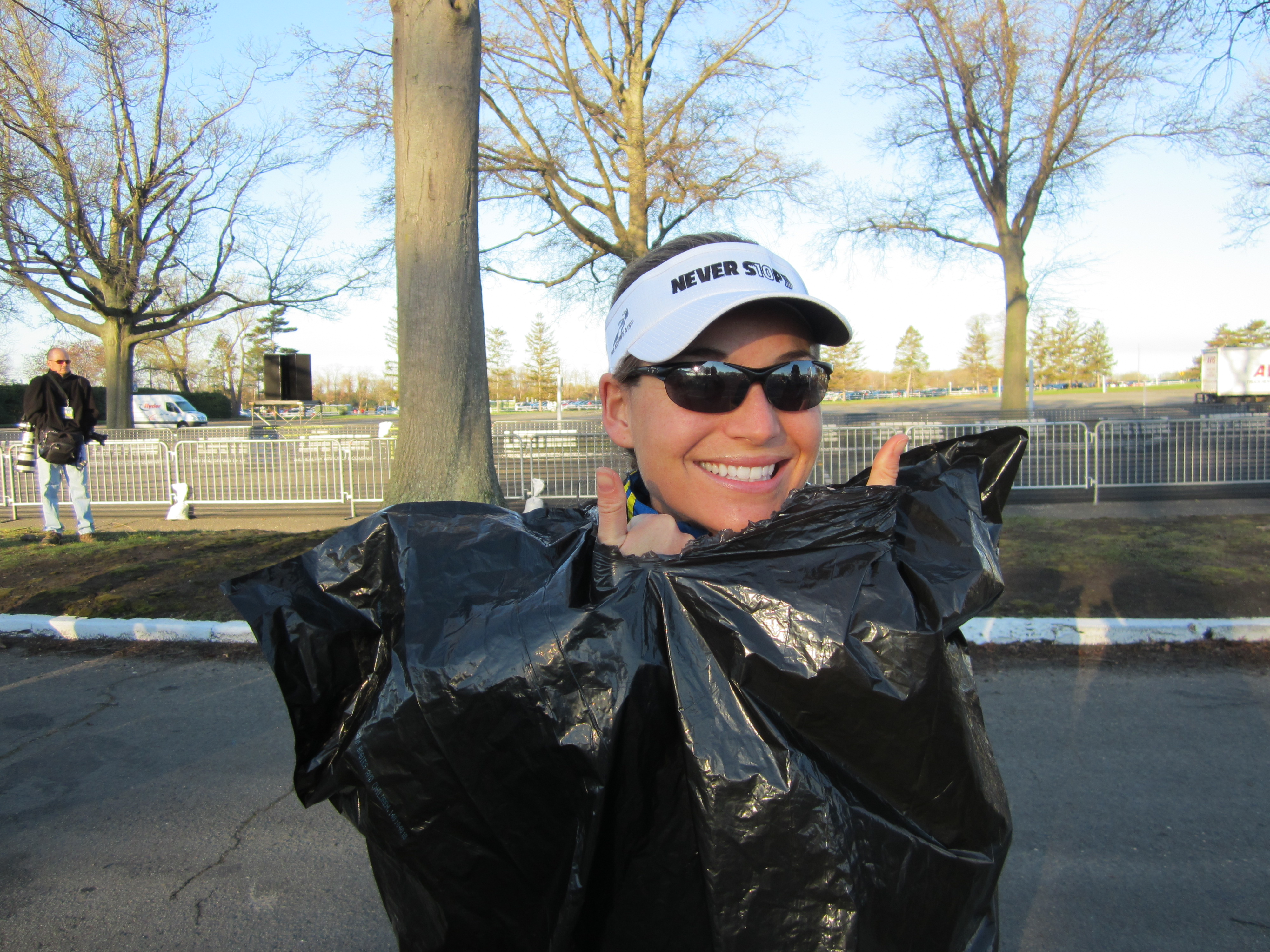
Wearing a trash bag pre-race to keep warm. Yes, its ghetto. But it works.

Wearing a trash bag pre-race to keep warm. Yes, its ghetto. But it works.

The race course was very flat, with only a few very tiny elevation changes in the first 10K. Bag check, parking, and porta potty lines were never very crowded. The race expo was also never very crowded, and easy and free parking made the process a breeze. The race organization also sent emails (I think I received 10 emails?!?) with race-day information as things changed, and in an effort to guarantee a great race weekend for everyone.

There are a few restaurants in Long Branch serving the needs of carb-loading marathoners, but the Italian restaurant we chose filled up quickly after 6pm. Luckily we sat down right before the restaurant got slammed, so consider this when strategizing meals. I find its often best to eat an early dinner the night before a race, as this gives you the opportunity to rest, sleep and digest without feeling rushed or full when trying to sleep.

The volunteers were great, but if you are looking for a race with lots of energetic spectators, this isn’t a big city race and doesn’t have those big city crowds. There were many quiet miles, though the folks who were out and cheering were much appreciated by the runners. Both the Marathon and the Half offered pacers, a tool many runners take advantage of, especially when they have a specific time goal. If a small, flat, no-nonsense and fanfare race is what you crave, I highly recommend NJ Marathon.

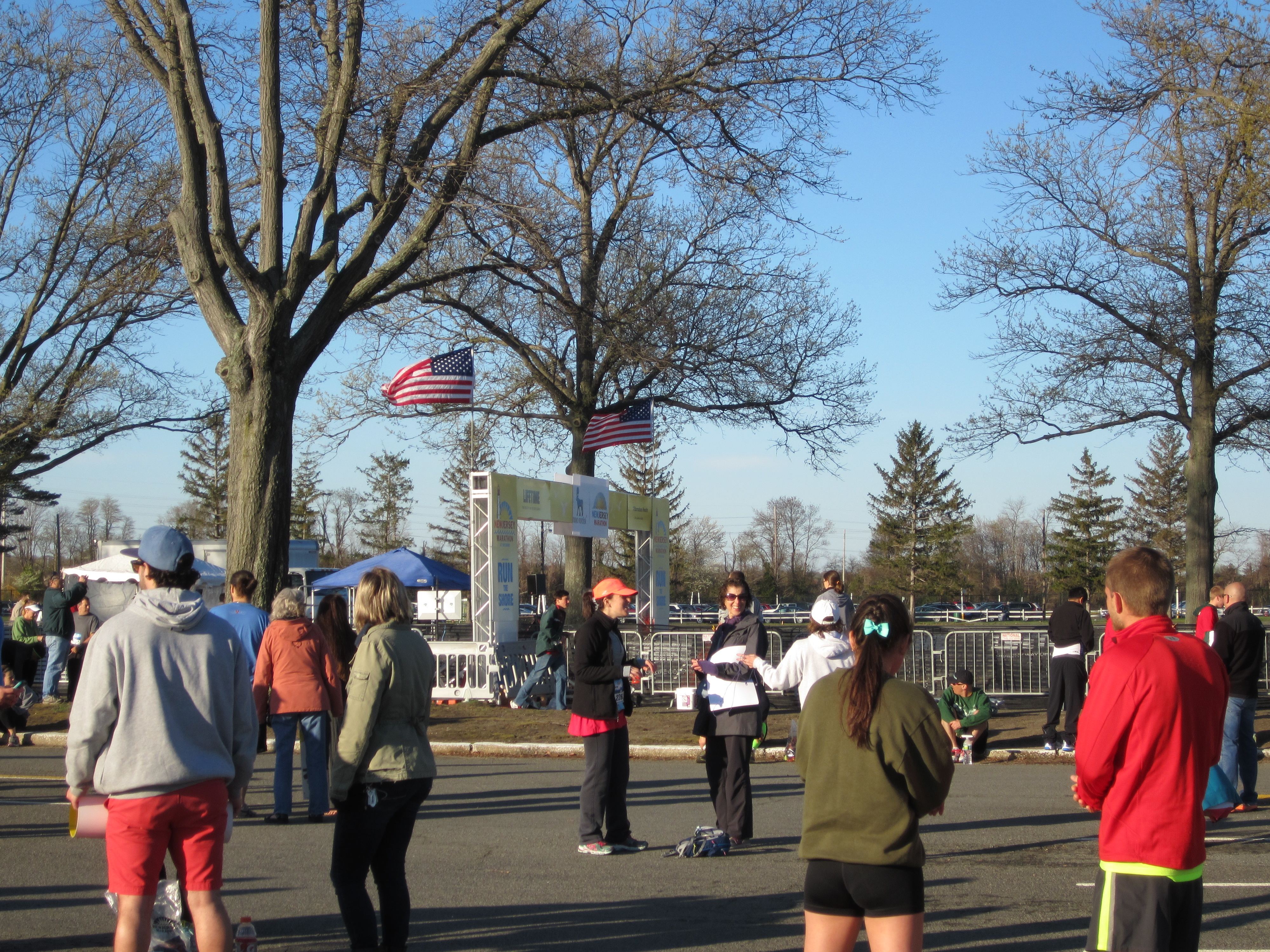
Starting line. A thin crowd 40 minutes before the start.

Starting line. A thin crowd 40 minutes before the start.

One Year Since Boston

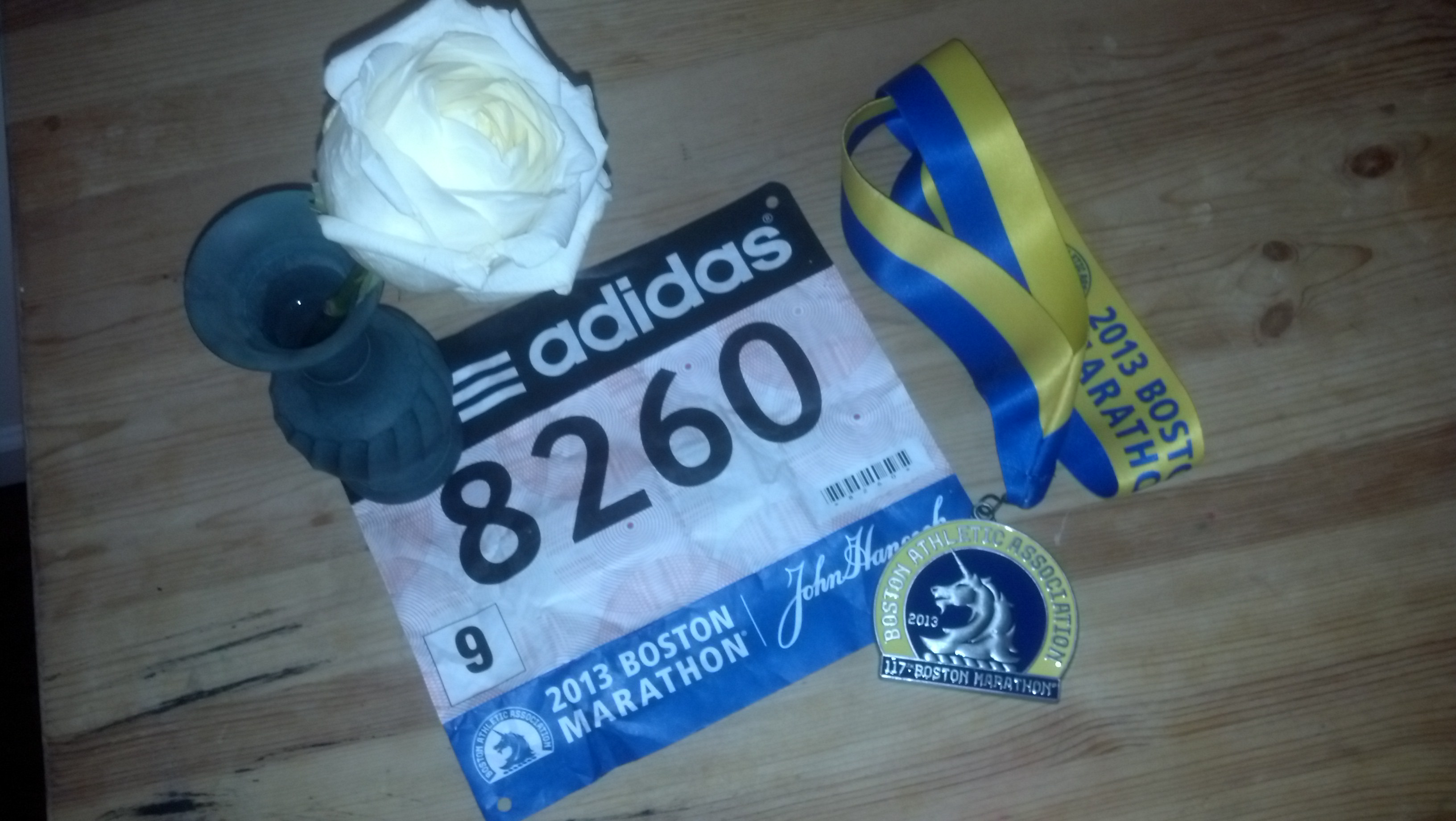
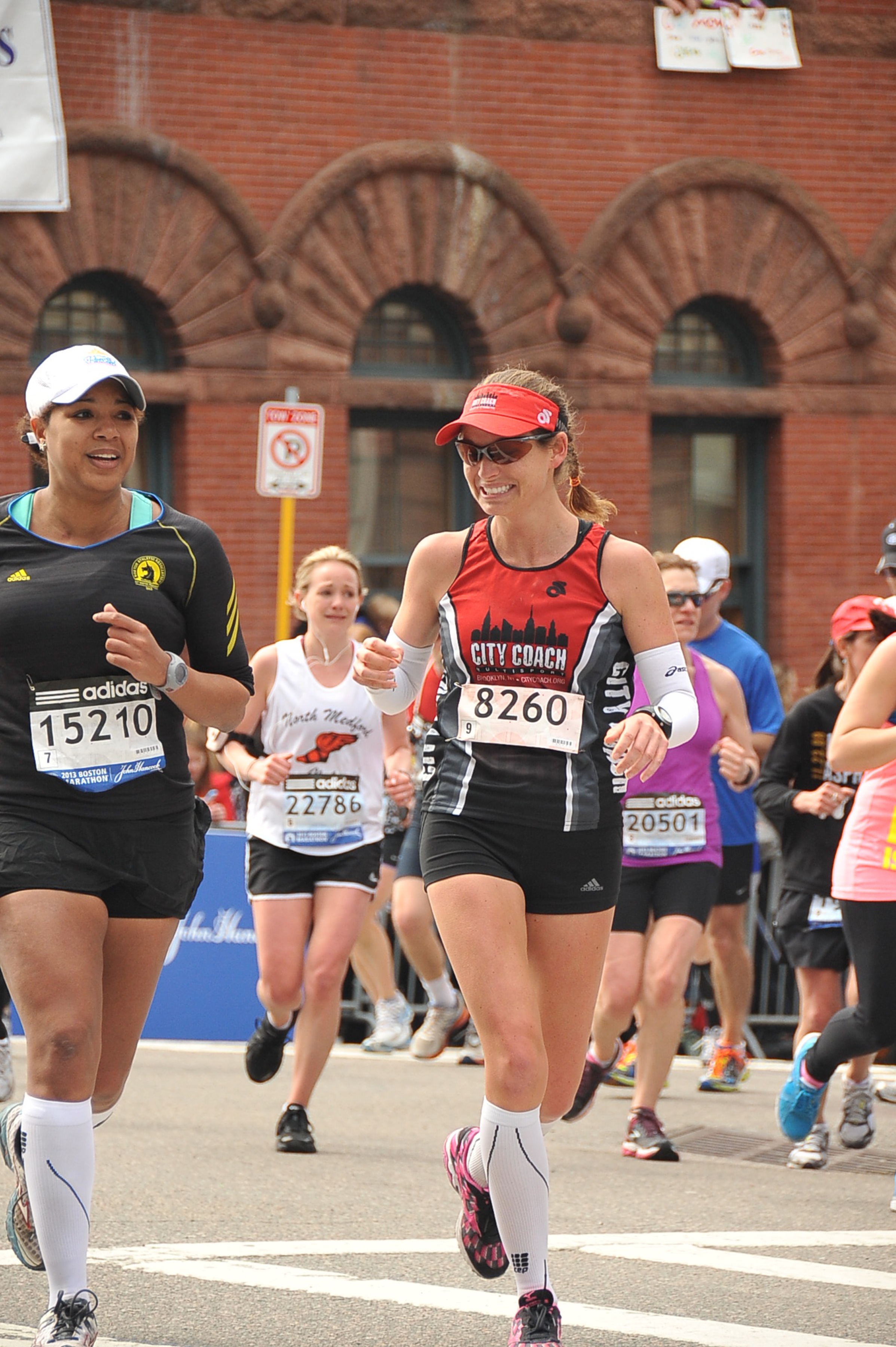
A race I will never forget.

A race I will never forget.

It has been a year since the Boston Marathon bombings. A year since the shocking and unthinkable became reality in front of my eyes. I realize of course, that I am far luckier than many people who were at the finish line that day. My scars are purely mental and emotional, and my life has arguably been far better than it could have been. I am very lucky.

For many, many days and nights my mind was plagued by flashbacks. Sleepless nights, and shooting out of bed when a siren broke the silence became routine. I lost my love for running, and in general for most people. I lost my sense of self, my outlook on life, and my ability to control my emotions. Over time, PTSD is no longer part of my daily life. It slips in here and there, and I do my best to handle it.

I suppose on some level, my struggles to cope post-Boston are similar to the grueling mental demands of the marathon itself. When your legs hit mile 17-22, and your legs are screaming to stop, it is your mental strength that forces you to forge on towards the finish line and to never give up. Many people use the saying “Life is a marathon, not a sprint.” Let me tell you, my last year has been a marathon. The good miles where you cannot help but smile and run with such joy and focus, and the miles where you do all you can to hang on.

This year I have many friends and team mates who will toe the line in Hopkinton and take their journey on the best marathon course in the world, crossing the iconic finish line on Boylston Street. Part of me wishes so badly I were ready to go back. I want to be there to cheer. But I also know I am not ready. The scars are too deep, and I know going back would most likely lead to a mental spiral into PTSD. I want so badly to be stronger than that and to share the “Boston Strong” chorus every runner has decided to sing. But I can’t. Not yet. Unlike most of those runners, it was personal. Really personal. While so many runners wanted to make it about themselves and our “running community” as they watched the news from the safety of their own homes, I would have given anything to have been anywhere else. But we don’t get to make those decisions.

Socially, my life has changed a lot in the last year. Many friends who I used to consider close, or part of my social circle have dropped off and stopped including me. I get it. I have turned inward at times and perhaps repelled acts of concern. But honestly, most haven’t stepped up or cared enough to realize that this year was the year I needed friendship the most. Sure, it hurts. But I keep my big girl pants on and remind myself that sometimes events like this show you who your real friends are. That being said, other people in my life have stepped up and been incredibly supportive, when I know it took extra effort on their part to break me down. I am eternally grateful to those people. On my own, I probably would have gone crazy. Even the smallest gesture of a caring text message goes a very long way. To those who have made the effort, know that it means the world to me.

729950-1045-0028sI recently looked at photos from my race last year, and reread the three-part blog for the first time in over six months. Just rereading my own words made me feel ill. It also made me feel excitement and gratitude as I read about the great moments that day, the moments before the blasts. I am hopeful that I will be strong enough to take my spot in the 2015 race. I know that there’s a good chance I’ll emotionally fall apart on the course, or have to fight off panic attacks, since that has been my race norm this year. But I am going to do my best to overcome those mental hurdles. I know if I can train and race marathons that test every fiber of my mental and physical being, I can run Boston again. Logically I know that. Putting it into practice is the hard part. Thankfully, I have another whole year to work on healing.

In an attempt to not have this blog be a total downer, I hope that those of you training for a race do it with joy. Running is perhaps the simplest, most organic full-body expression of happiness. It doesn’t matter if you run fast or slow. If you do with with joy in your heart and a smile on your face, you are doing something right. Be grateful you have a body physically capable of running and celebrate that. While we all run and train for different reasons, at the core there has to be a love for the act or running, or why do it? Your relationship with running may eb and flow like the tide, and that’s perfectly okay. If you love it, the tide will change in time and you’ll never lose your love for the sport. On days where running wears me down, I remember that. I got into this sport because I loved it, and I will continue to be part of this sport as long as I love it – and hopefully share my love and inspire other runners along the way. Just put one foot in front the the other. Simple.