Pacing in the NYC Marathon

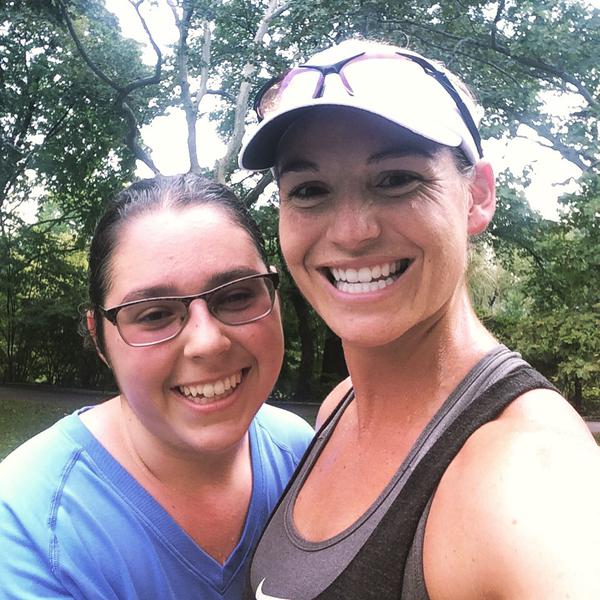
On a very humid training run with Shira in July as she prepared for NYC Marathon.

On a very humid training run with Shira in July as she prepared for NYC Marathon.

One of the greatest joys of my job is watching my athletes succeed. I get to watch them from the first day of training all the way through to their goals, witnessing the transformation that the months of hard work, dedication, and drive always deliver. On Sunday, November 2nd, between private clients, the City Harvest Charity Team, and runners who have been sweating it out at Mile High Run Club, I had over 100 runners stepping up to the starting line of the NYC Marathon. Many times, my work is done come race morning. I am left to frantically track my runners via numerous laptops and phones, or on the course cheering as my runners pass by. This year my work was a little different – I had the responsibility of pacing one of my private clients for her 26.2 mile journey.

As one might imagine, pacing a runner to their goals is a huge responsibility. It is also an honor. And it’s a completely different game to pace a pace group – simply locking in and holding a pace. When with one runner, you are with them through good and bad, needing to make modifications, judgement calls, and offer a ton of emotional support. Sometimes you need to talk them through the wall, force them to a medical tent, give them a shoulder to literally lean on, take walking breaks, try to make them laugh and think of happy thoughts, share their tears of pain and frustration. It’s always a journey of highs and lows, and you hope the highs outweigh the lows.

On Sunday, I had the job of pacing a first-time marathoner. She is only be 20 years old. I don’t know about you, but I know very few 20-year olds who run marathons. She also earned her way into the marathon via NYRR’s 9+1. She also happens to have a cognitive disability. She is incredible, and trained incredibly hard to get to Sunday’s starting line.

When I arrived at her door, I was greeted with the biggest hug and lots of excitement. Imagine a child on Christmas morning or at Disney World, and that’s perhaps close to the enthusiasm Shira had for race morning. I wish every runner was as excited to run 26.2 miles as this young lady!

Unfortunately, the day faced us with some really tough challenges: a delay on the Staten Island Ferry, a HUGE delay with the shuttle from the ferry to Athlete’s Village – so much so that we barely had time to get to our corral before it closed. Because of the delays, we both missed our opportunities to grab bagels, or even find the special tent we had been granted access to. Our very long and delayed trip to the starting line was overwhelming, and that caused the wheels to come off during the race. However, some fantastic support out there from Shira’s parents, relatives, teachers and friends were exactly what we needed to continue moving forward. At times we ran. At times we walked. We stopped for bananas twice, because Shira was starving. We stopped at a medical tent so that a medic could massage Shira’s tight quad. We stopped when we saw her family, so that she could facetime with her sister who was in Israel on Sunday. Through highs and lows, the miles ticked by.

What struck me the most was the support of the other runners out there. They were so supportive of her, often cheering her on, echoing my encouraging words, and giving her high-fives. While the crowded course for the first few miles was very overwhelming (I do not recommend someone with special needs to be in the last wave – it was too much for her), the runners around us were sometimes what got her through to the next mile.

Despite the difficulties, the minute we crossed the finish line after 5 hours and 38 minutes of being on our feet, Shira was elated. She was so proud of herself – and rightly so! Her strength is an inspiration to me and everyone who knows her.

Here are a few of my observations from the 2015 NYC Marathon:

  • In wave 4 (cannot speak for the other waves), many runners stop with their phones and selfie sticks for photos along the course – especially within the first mile as we go up and over the bridge. This was not only extremely frustrating, but also dangerous. In my humble opinion, cell phones have negatively impacted the race experience. Make memories and let the race photographers handle the photos.
  • Runners with special needs should not take the ferry – our morning included: a subway, a shuttle (subway had construction), a ferry, a shuttle, a walk. That’s a LOT of logistics/stress to handle. That wasn’t fair for Shira.
  • The race starts with cannons. If you were at the finish line of the Boston Marathon in 2013 and happened to forget that NYC marathon begins with cannons, you might jump out of your skin. You can guess how hard it was for me to keep my cool when that happened. I almost threw up.
  • There were hardly any porta-potty lines in our corral. That was pretty amazing.
  • Bagels/refreshments were nowhere near our village/corral. This was pretty awful.
  • The volunteers along the course were supportive and energetic.
  • At the finish line, we had a wrist band and permission to exit where the elite runners and Achilles athletes exit at west 72nd street. The NYRR staff would not allow us to exit, which was unfortunate considering all the extra work we had put into making Shira’s day as comfortable as possible – which had included months of correspondence with the folks at NYRR.
  • New Yorker’s are the nicest, most considerate people on marathon day. Suddenly everyone is supportive, smiling, and ready to help a runner any way possible. I wish that humanity would carry through the rest of the year.

Kathrine Switzer once was quoted saying “If you ever lose sight in human nature, go out and watch a marathon.” I agree. You see people at their most raw. You see blood, sweat and tears, and the will to push forward. You see human beings at their best and their worst – sometimes all at the same moment. If you ever feel dull and have the desire to feel “alive,” train and run a marathon.

After I left Shira’s apartment and headed towards an after party with my charity team, I was slowly able to start the process of checking results for all my other runners. My phone was flooded with emails, texts, missed calls, instagram photos, twitter updates – all from my athletes. It was amazing. The marathon is bigger than any one person, and perhaps that’s part of what makes it so epic.
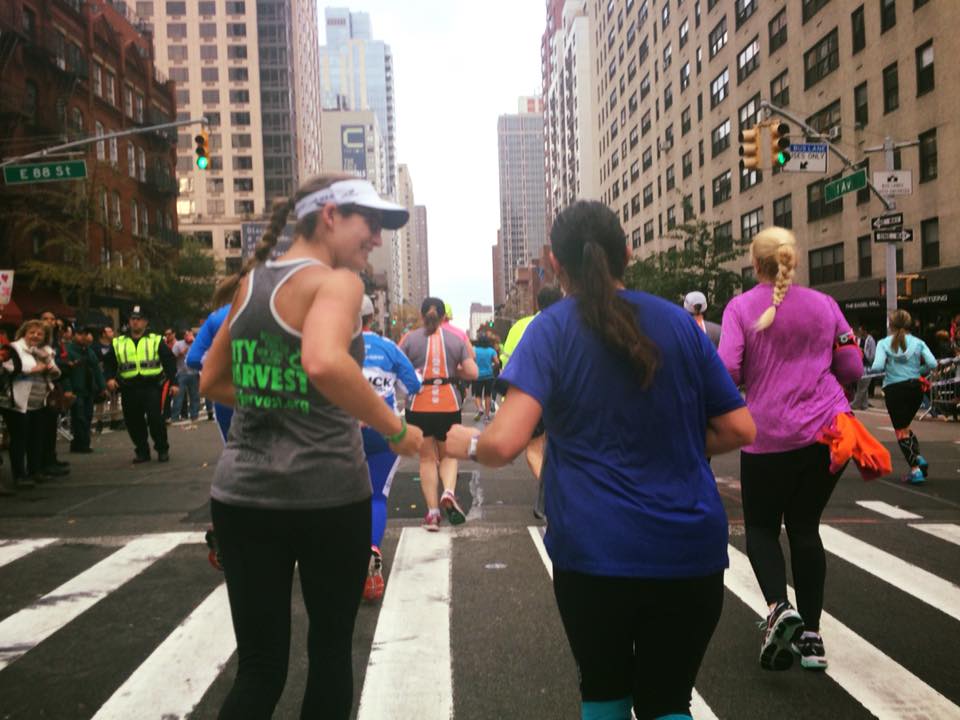
Mile 18 of the 2015 NYC Marathon, pacing Shira.
Mile 18 of the 2015 NYC Marathon, pacing Shira.

Practice Makes Perfect

I am asked all the time if it is a challenge to coach others and still train for my own goals. Yes, it is. It’s very hard, and every decision I make affects my own training. Some weeks I am 100% selfless, and cancel my own training to run beside my athletes. Other times I try my best to find a balance, but even then it’s pretty tough. Would I change my job in order to protect my own aspirations? Nope. Not a chance. Being a coach is truly the best. And let’s face it, it’s not like I am sacrificing the potential to make it to the Olympic Trials.

However, I have recently had to luxury and good fortune to hop into a few races. Again, it’s rare that my weekend mileage isn’t determined by coaching or pacing. It has been a really nice treat to be back at the starting line. The two races I recently ran were used as practice as I work towards my own goal race, the RnR Vegas Half Marathon on November 15th. Going through the motion of race morning is fantastic practice.

12039026_10103157728468773_5793624531359026666_o

Post-race with some of my City Harvest Charity Team runners.

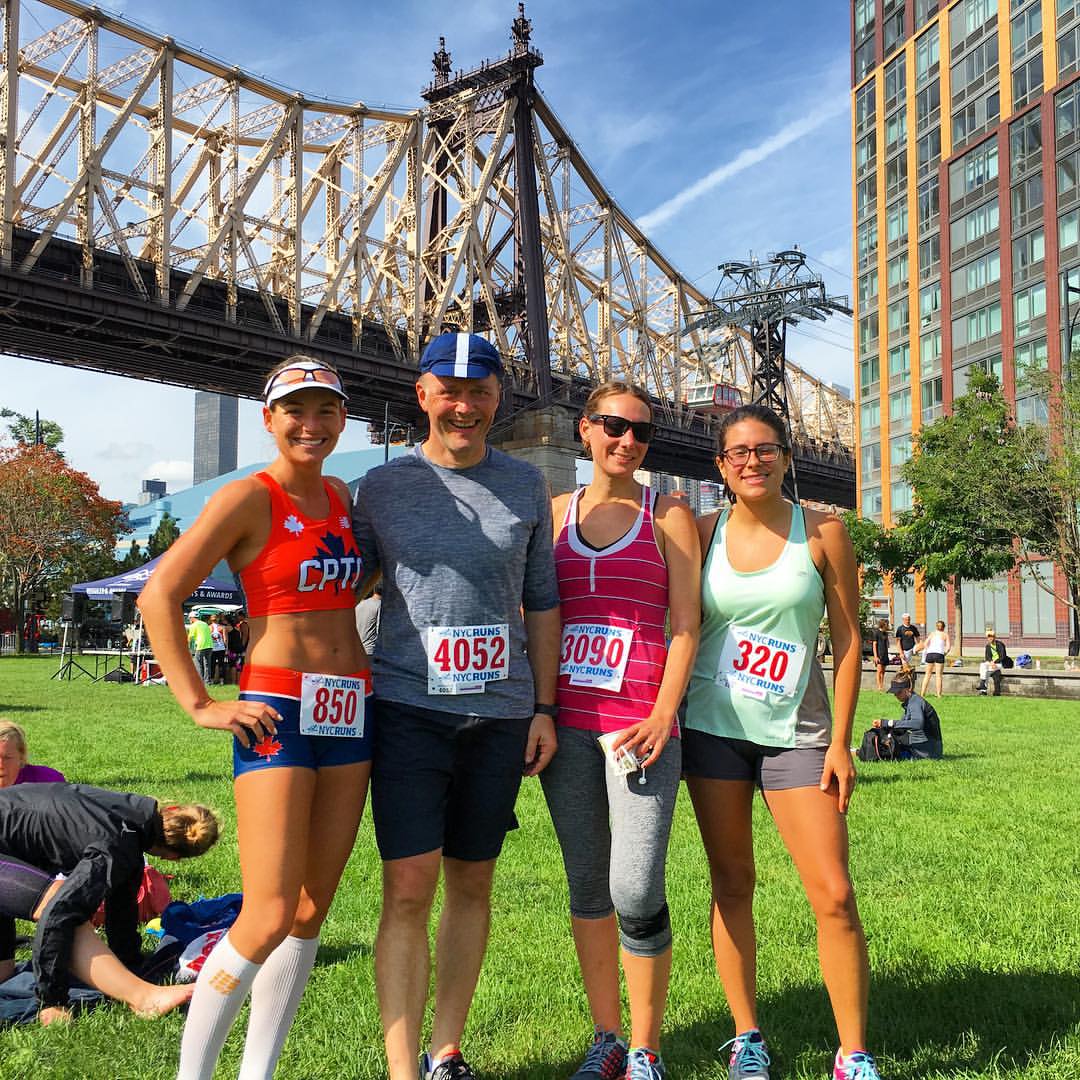
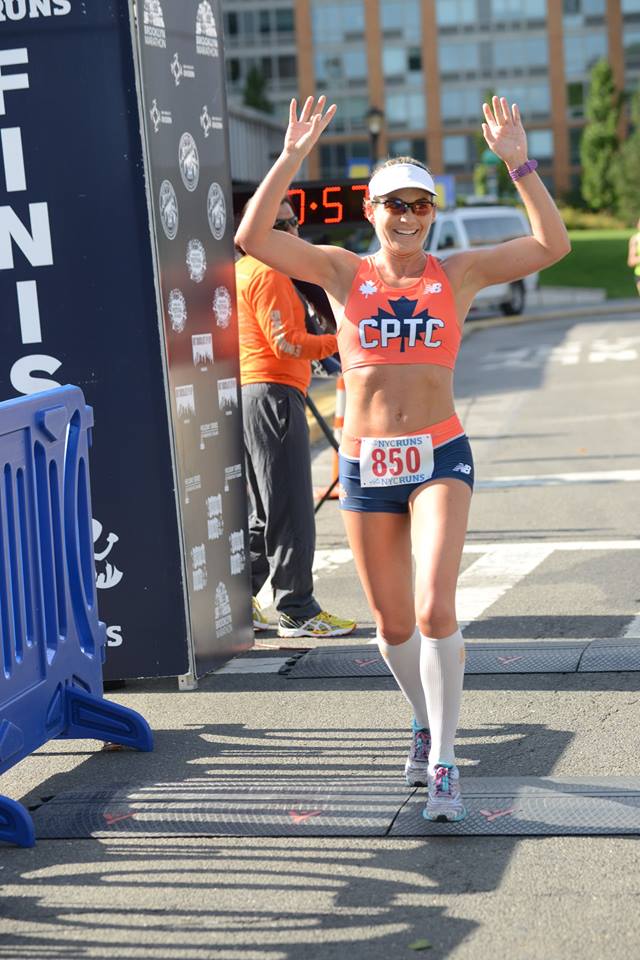
The first race of Autumn was the NYCRuns Squirrel Stampede 10K on September 26th. I am terrible at 10K races, and usually avoid them like the plague. But I had organized for some of my charity runners to run the race as practice for NYC Marathon, and figured I should run the race too. Turns out I won the race, breaking the tape for the first time in my life. Ever. I’ve won races before, but they never put the tape back out for 1st Female. That was really fun! I also won $100.00 – not enough to go pro! Ha! And I ran 6:36 minute miles, which was pretty much my goal for that day – lock in my hopeful goal race for RnR Half. The cherry on top of that day was cheering in and high-fiving friends, private clients and my charity runners as they finished. I was more excited for them than what I’d achieved. Turns out I ran a 10K PR that day, which is easy to do when you rarely run 10Ks! I’ve still run a 10K faster – in the middle of a 10 Miler. Funny how that works.

The second race was the Brooklyn Greenway Half Marathon on October 18th, My goals for this race were a little different and I had two goals: 1) run 6:50-7:00 minute miles – no faster! and 2) don’t abandon goal #1, especially if and when the lead females take off. I am happy to say I ran an average of 6:49s (so close to 6:50s!), and even when I was dropped from 2nd female to 4th female, I held back and never once pulled ahead or tried to break those runners. While the competitor in me was a little bummed to finish 4th female and 1st in my AG, I was also thrilled that I stuck to my plan. My weakness has often been going out too fast, and the last few years I have really tried to break that habit and when I’ve succeeded, it’s usually a great race.

Both races were pretty small, and I was alone on the course and barely able to see the runner ahead of me at times. Mentally, I find that tough. I also find it tough to run without music while folks fly by with their ear buds in, breathing heavily. But I tell myself in those situations that the mental focus it requires to stay calm and grind away at the course will be helpful, and hopefully in a large race I won’t need to mentally work quite so hard. However, in a large race there are other challenges. Racing is fun, and I want to find a way to get back to using races for some quality runs and fitness tests more frequently in the next year.

Winning the Squirrel Stampede 10K

Winning the Squirrel Stampede 10K

On deck, I am clocking 26.2 miles at the NYC Marathon with one of my clients. Then two weeks later, it’s RnR Vegas Half. That’s the big goal race. I know in order to achieve my goal time, I will need to be aggressive but smart. There will be some risk, and it may backfire. However, I am willing to gamble. I am willing to go out hard (not sprinting) and see what I can do. Worst case is I don’t achieve my goal time but learn something from my mistakes. Best case – I walk away with a cool new PR and a satisfying sense of achievement. No matter what, I will show up to do my best, leave it all out on the course, and try to walk away from the finish line with a smile on my face. This sport can really hurt and humble you, but I refuse to lose sight of my love for it.

Unplug Your Potential!

Corky_Fitness-2642finalwsharpeningflatwebMany of us runners train and race with technology. Be it a GPS watch, an app on a phone, music, many of us are hitting buttons of some kind out there on the run. I am going to encourage you to leave technology at home every once in a while – or to have a running buddy or coach keep an eye on pace.

Most of us assume we know our potential, and have some idea of what number we should see on a watch for that specific workout. However, I have found time and again that when I am with a runner who doesn’t know their time but is running 100% based on effort, they are capable of pushing the pace faster than they thought. Obviously if someone is blowing their paces out of the water, especially early into a run, I am going to tell them to relax and settle a bit. But towards the end of a run, when I usually want my runners working hardest, it’s amazing what can happen when that athlete is unplugged. Being unplugged, especially from music, means you can really listen to your body and the signals it may give you.

It can take some time to get comfortable running unplugged. Try it, and see what you can gain. I challenge you to try. I’ll admit that I rarely run unplugged. My GPS watch feels like it’s part of me on every run. The handful of times I’ve had to race without my watch (I HATE waiting for the gun to go off with my naked left wrist!), I have almost always set a new personal record. Even on a hot summer morning for a Half Marathon, I set a PR. I promise you that if I’d had my watch, I would have been listening to my watch for pacing in such extreme conditions, than to let it go and go 100% by feel.

So mix up your routine, leave your devices at home or hand the pacing over to a running buddy – and see what you’ve got!


Learn Lessons from Bad Races

11950466_10103132667311533_506708373736007979_o

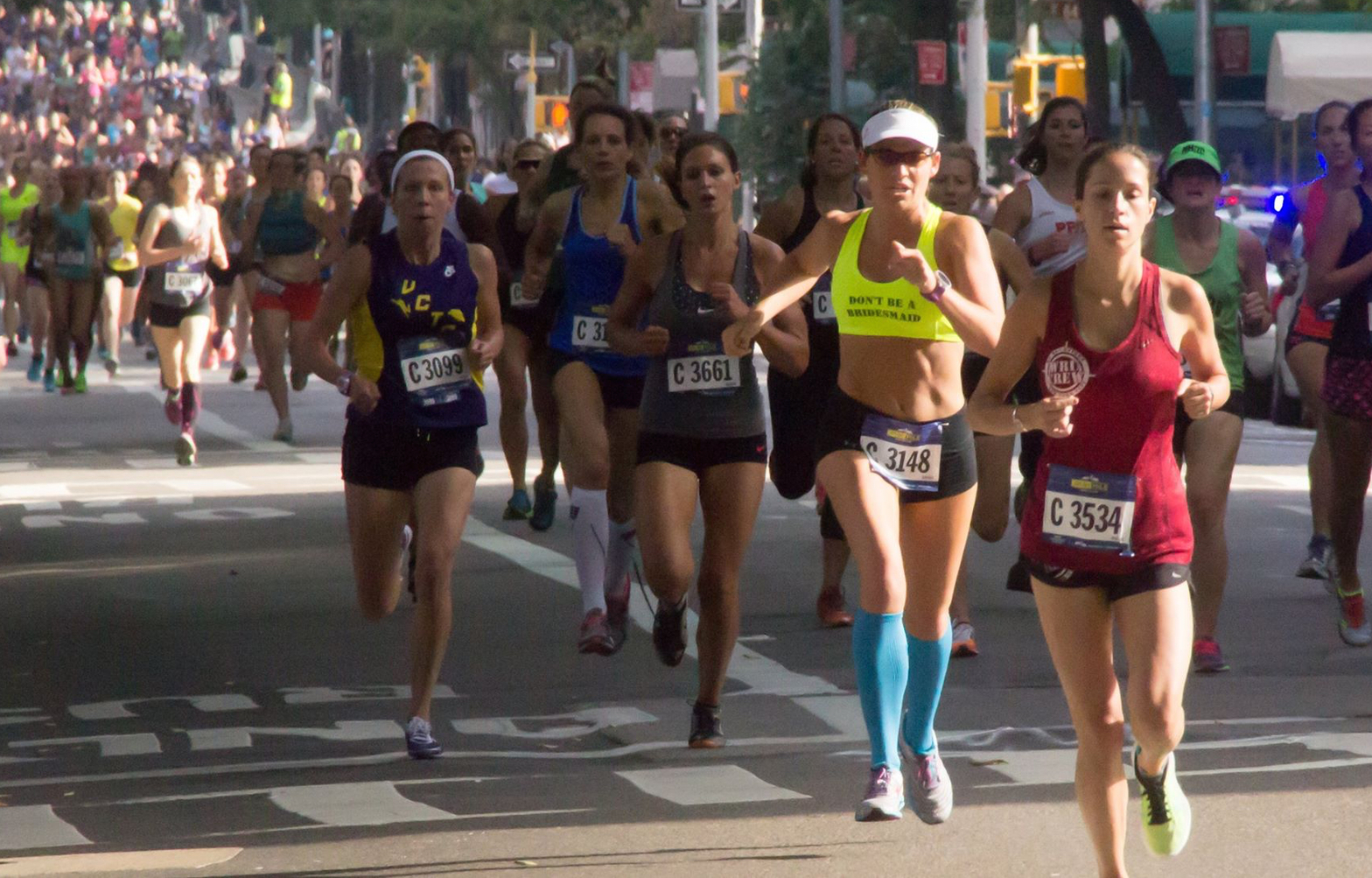
With being “unattached” for this race, it was the perfect opportunity to wear Danielle Sepulveres’ “Don’t Be A Bridesmaid” sports bra.

Today’s blog is all about mistakes, and learning from them. I happen to believe and preach to my athletes that there is no such thing as a bad run or race, as long as we learn from it. Yes, we all will experience runs and races we’d define as terrible. Chin up, they happen. But if you learn something – be it pacing, mental focus, what to wear, eat, whatever – those lessons prepare you for better runs and races in the future. Sadly, those lessons are rarely fun and usually are often the clearest on bad runs and races. Funny how the good races don’t teach us half the lessons as the bad ones.

This weekend, Corky had a bad race. Yes, I could get pissed, embarrassed, and admit to myself how bummed I am. Cause I am bummed. I knew on a good day, that fast mile down Fifth Avenue was mine to screw up – I am stronger and mentally more focused now than I have been in a long time – but  we are also sometimes our own demise. Perhaps being a coach has forced me to really grow up and take every experience in stride, maybe I’m simply older and wiser and have learned to not sweat the small stuff. Either way, I am choosing to take this disappointing race as an example of what you should not do, and what you should do.

On Friday evening, I felt a little tickle in my throat. You know that feeling, the “Oh no, here comes a cold” feeling. I was en route to see Hedwig and the Angry Inch on Broadway (hello, Taye Diggs!), and so I powered through the night. I crashed out as soon as I got home, hopeful that catching up on sleep would help. Unfortunately, Saturday I awoke feeling worse. Even 11 hours of sleep couldn’t knock this bug out. I didn’t feel terrible, just a little ill. I coached, worked on training plans, and did my best to power through the day. By 7 pm, I felt pretty terrible. At that time I made a bad decision. I ordered Chinese food (hot and sour soup sounded like a good idea), made some tea, and took NyQuil – thinking I’d be fine with a race over 13 hours away. Wrong.

Lesson learned: DO NOT take NyQuil the night before a race – ever. Yes, I slept like a baby. I also felt almost drunk when my alarm went off at 7:30am. I ate a banana and drank some water, hoping that would help. No luck. When we left our apartment for the race at 8:15am, I told myself to relax – I had almost another whole hour to feel normal before my heat in the Fifth Ave Mile. No better. I jogged the mile up to the starting line, pausing to chat with a few familiar faces. You know how sometimes you are feeling a bit tipsy at a party and you do your best to cover it up? Yeah, that’s how I felt. My head was in a fog and my body felt completely disconnected from my head.

At the starting line, I had enough sense to get up towards the front. I tried to tell myself to focus, put on those race blinders, and run really hard for one mile. One mile – that’s all I needed to will my body to do! It sounded so simple. When the gun went off, I knew I was in trouble. Those first few steps felt like I was running through cement. My legs almost hurt, they felt so heavy – and not in the track workout legs-on-fire hurt – this is was odd and foreign. My mouth felt like cotton from the first breath, even though I had just sipped water prior to the start. Looking back, I hardly remember that mile. I do remember feeling absolutely no control over my body, no mental will to push, and total separation between body and foggy brain. My drive to run hard – couldn’t find it. Though I know I worked out there, I don’t recall my lungs working hard or my legs burning from speed. When I crossed the finish line in my slowest mile ever (5:47), I didn’t even feel disappointment. I didn’t feel tired. I didn’t feel.

If you are sick for a race, that’s a tough place to be in. My advice is to be VERY cautious when thinking about medicating. Our bodies can be extremely sensitive. When sick, you also need to change your race day goals, which is really hard. Did I know a PR was out of the cards this morning – yes, I felt it. But did I secretly hold onto hope I could magically pull through? Yes, I sure did. This isn’t because I am delusional or an optimist with blinders – but it’s because I know in order to achieve your goals, you need to believe you can. Plus with strength training this past 6 months my lower body, I knew I was stepping up to the line with some additional power. But I should have changed my goals the minute I woke up this morning. And I should never have taken NyQuil.

So if you are sick the weekend of a race, there are a few things you can do:

  • Get sleep
  • Stay hydrated
  • Modify race goals
  • Be honest with your expectations and potential on race day
  • Remind yourself that just getting out there when sick can be a victory

And there are some things you should not do:

  • Expect a PR or refuse to modify goals
  • Take medication without being sure how it will affect you and your performance
  • Consume alcohol or anything that could dehydrate you
  • Beat yourself up if your goals are not attainable

And remember, if you stay healthy you will have many more races in the future. A bad race here or there does not define you as a person or an athlete, so learn from your mistakes and move on. As for me, I’ll never take medication the night before a race ever again.

Acting and Racing Parallels

Corky_Fitness-2829finalflatwebDuring my assessment meetings, new clients usually ask how I became a coach and how that journey progressed. It’s no secret that I fell into running “later in life” (not until after college), and that until 2012, I made most of my income and spent most of my time focused on work and training as an actor. While that “career” is on the back burner (I still pick up auditions  and bookings here and there but I would say I am not actively pursuing it or paying my bills with my acting chops), there are a lot of tools, lessons learned, and industry similarities between acting and running/coaching. So today I thought I’d share how some of those skills cross over. You may find that perhaps your jobs, interests and hobbies also cross over a bit – and maybe this blog will even shed some light on that.

  • Runners obviously rely on their bodies to run and race. The skills developed while training for a race are similar to the rehearsals an actor would be in while learning choreography for a musical. While every race is different (weather, terrain, distance, goals), shows will vary in style, the size of the stage, athleticism and skills required, and obviously muscle memory. Like a marathoner out there knocking out 20 milers in preparation for race day, a dancer may spend hours per day learning and perfecting the choreography. With years of wearing the dancer and sometimes choreographer hat, I always think of my long runs as “dress rehearsals” for race day.
  • A bad rehearsal can make for a great opening night – and a bad long run can prepare you for a great race! Bad long runs can be extremely frustrating, but it’s better to iron out any kinks in practice and not on race day, and to learn from mistakes. Actors learn this lesson and don’t let it shake them.
  • Improvisation sometimes happens on the race course. Even an actor who is not improv-trained has had to improvise on stage at some point. When you need to go off script, it is perhaps the most spine-tingling, raw and risky moment you can have on stage. If you are a stage actor, you’ve done it and survived to tell the tale. Though we never want to improvise on race day, run races long enough and it will happen to you. Maybe your Garmin will decide to reset itself in the middle of a marathon, or something in your tummy suddenly feels terrible. Being able to stay mentally cool and improvise your original plan can save your race. Thankfully, us actors usually make really good improvisers in every other aspect of life – including races. I always tell my athletes that if/when something doesn’t go according to plan on race day, DO NOT PANIC.
  • Unlike acting, you usually get when you put into training. Things can certainly go wrong on race day, but there are few factors out of a runner’s control. As an actor, when you walk into a casting, all you can control is how you look that day, feel, and how prepared you are to sing, dance or act. Unfortunately, there are many more factors than talent that go into being cast. Costume size, height, age, how do you physically fit with the other cast members, voice, head shot, do you remind that casting director of an ex-girlfriend, do they happen to hate your wardrobe choice or song choice – being “prepared” only takes you so far. But in running, being prepared is so much of the success.
  • An actor’s body is her instrument. Her voice and body is the vessel in which characters come to life. When injured or ill, the performance or audition suffers. Having attended a music conservatory (one of the best in the country, actually!), vocal health was extremely important. Like that performer, a runner’s body is their instrument. Caring for it and tending to minor and major issues needs to be something the athlete is proactive about. I’d like to think that much of what I learned and was instilled in me as a vocalist and dancer has made me a wiser runner than I’d be without those years of becoming very physically self-aware.
  • Actors and athletes are both judged by appearance. In an audition, you’ll often feel eyes on you in the holding room, as your competition sizes you up. To be fair, we all know that looks are one of the factors in the casting process (as mentioned above). I’ve also found runners and their potential is often judged by how fit they are, or what they are wearing in a race. I’d be the first to admit that if a gal shows up in racing briefs, I expect her to be FAST. Personally, I don’t think I have any business wearing racing briefs – I stick to short racing shorts – as racing briefs, in my opinion, are for the folks out their smoking the competition. Then again, I have been smoked by gals in loose and long running shorts, and have left gals in racing briefs in my dust – so it goes to show that appearance can mean nothing. Sadly though, many runners are frequently told by other folks that “they don’t look like runners.” I hate that. I won’t rant on the topic here (I have a past blog dedicated to the topic), but I will say that runners are frequently judged by appearance.
  • As an actor, tech week is followed by performances. At some point, those performances come to an end. There may sometimes be some relief when a show closes, but there is almost always some sense of loss. A chapter (and paid gig!) has ended, and so the actor is often left saying “okay, no what?!” Runners experience something similar. Unlike the zaniness of tech week, we get a taper – though mentally the taper can feel like a mind fuck. Then race morning arrives, you are ready to rumble and finally put all that hard work on the line. Once you cross the finish line, that race is gone. Whether elated over a huge success or defeated by the race, there is usually that sense of loss and directionless wander.
  • Rejection is a huge part of acting. I’d guess that most actors have to attend 50-100 castings for every booking. That’s a lot of “no’s.” Actors either find a way to develop tough skin and embrace every audition, or they perhaps take it personally or begin to resent the process. There’s a reason why so many actors abuse substances or are in therapy – it’s tough! As a runner, the higher you set your goals, the greater the risk you’ll fail. While I can’t say I love rejection or failure, the rejection from acting has somehow made failure as an athlete easier to swallow. I don’t let it define me. Though it does definitely still sting.
  • Being an actor is quite possibly one of the hardest jobs out there. Not because you need to be a genius, or the greatest gift to mankind, but because so much of your “work” offers no or little reward. You are constantly in training and honing your craft (not cheap!), preparing and attending multiple auditions per day, all while finding a way to afford living in an expensive city, looking your best, and staying marketable. Training for an ambitious race goal, usually while juggling work, family/friends, and probably a half-dozen other things isn’t unlike being an actor. And the more seriously you take it, the more challenging it is. It takes a strong work ethic to be a competitive runners.
  • Sometimes you simply need a break. Acting can be exhausting. Luckily, there are usually “seasons” in the casting world. In theatre, for example, Spring is always really busy. Autumn can be really busy, too. A stage actor may get a little break from the grind in Summer and Winter – which are good times to hop into intensive classes or take a break and travel. Television actors deal with pilot seasons, commercials work in seasons with advertisers, and films shoot year round. Yes, as an actor, you could dabble in all fields and never get a break. The same is true for the runner. A runner may hop from cross-country season to into track, to marathon training or trail running – there is always something you can be training for. However, an “off-season” of some kind is always a good thing. It helps recharge the body, brain and focus. Don’t be scared to take an off-season – even if it’s just a few weeks.
  • Actors get to play all different kinds of roles, which is really fun and exciting. Runners get to train for and race all different kinds of races, varying in distance, terrain and goals. Both acting and running gives me the opportunity to constantly mix things up.

You may find that perhaps your hobbies and career have many similarities to your training, goals, and relationship with running. If you are in a running rut, looking at perhaps how you attack your job or hobbies and perhaps that will help.