Report from the Trenches: Atlantic City Half Marathon

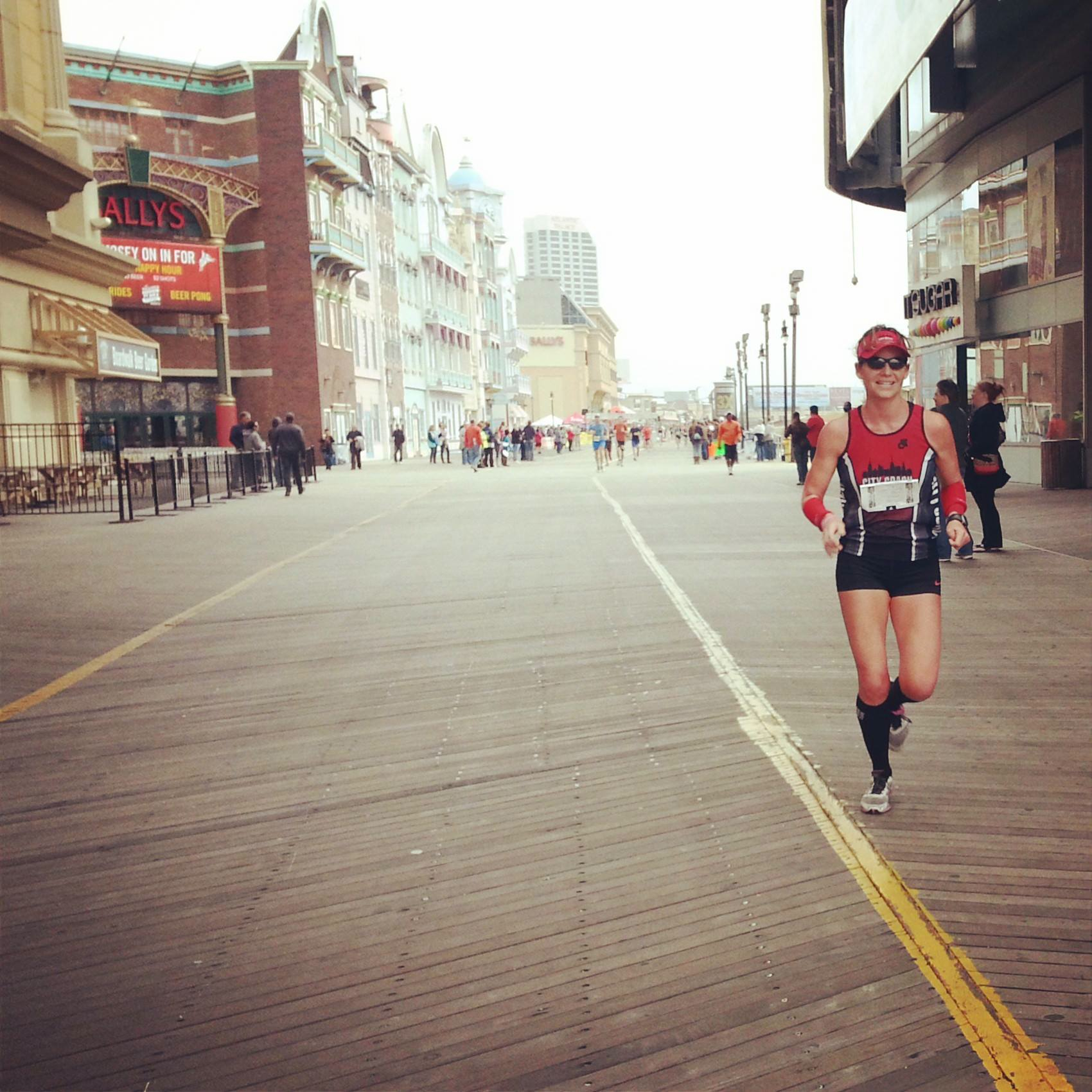
Around mile 9 of the Half Marathon.

Around mile 9 of the Half Marathon.

There are many things on race day we as runners can control. There are also a few things we simply have zero control over. Weather is one of those things. At the Atlantic City Half Marathon on October 13th, I had to accept the given weather forecast, adjust expectations, and dig deep.

I have been pretty darn lucky in my running career to rarely experience bad weather on race day. The AC Half was going to throw me a curveball: 30 MPH winds, with strong gusts. All I could do was settle into a good pace, and adjust accordingly. I was originally planning on using this race as an opportunity to test out my marathon training and to get my head in the game. While I was able to keep my head in the game, I had to abandon the notion of running a pace I had set my mind on.

The AC course has lots of twists and turns, and so I had hoped I could take advantage of some tailwinds. No dice. Somehow, I never got a lucky break. If there wasn’t a head wind, or cross wind, there were swirling gusts. A few times I was knocked sideways. I even had one of my legs knocked into the other. My race bib flapped in the wind, my visor almost flew off, and there were times where I had to lean forward and drive forward with the top of my head.

I had to abandon looking at the clock or my Garmin, and just focus on getting the job done, regardless of my finish time. I crossed the finish line in 1:35:11, one of my slowest Half Marathon times ever, but it didn’t matter. I had forged through a hard race, kept my focus, and never once experienced PTSD – which has plagued most of my races since Boston.
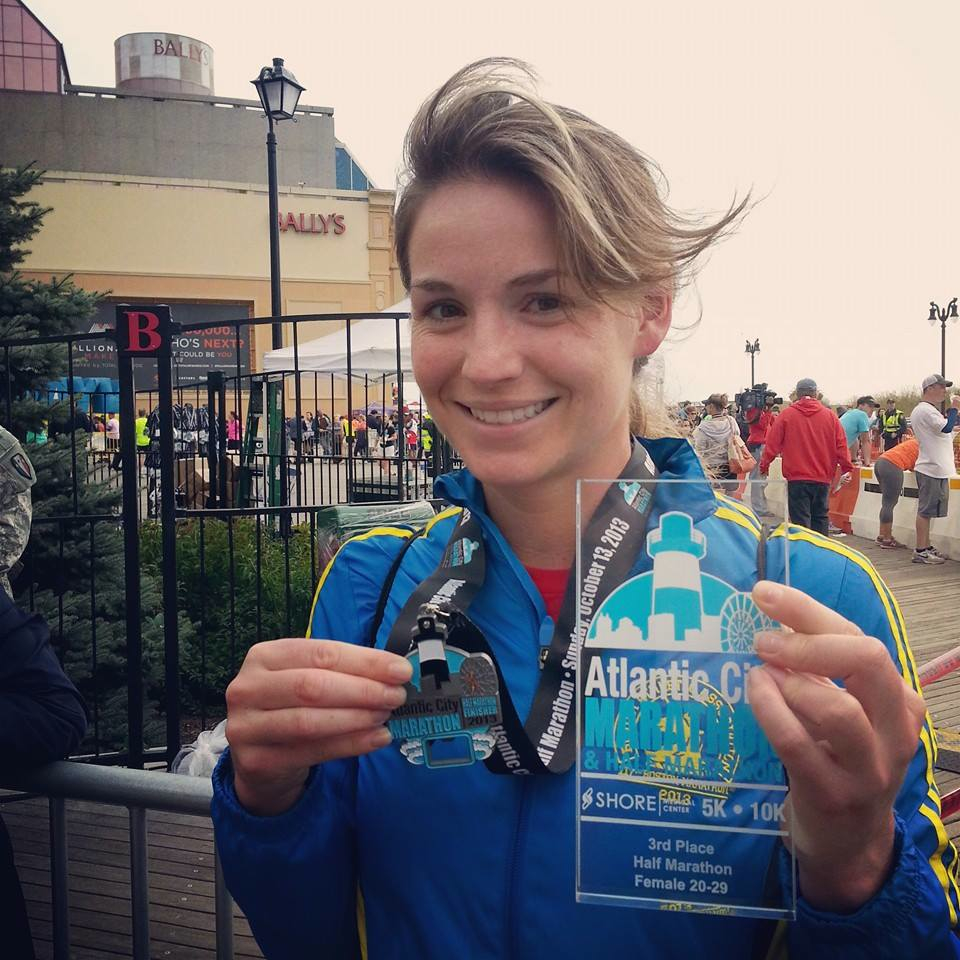
My medal and my Age Group Award

My medal and my Age Group Award

Thankfully, all of the other runners were in the same boat and their times were also slow. I finished 8th overall female – out of 740, and 3rd in my age group. Despite my compromised race time, I am happy with my performance. True, it’s not a race I can use to accurately calculate the marathon in November, but it was a good test of mental grit.

I suppose the lesson of this race is this: sometimes you cannot focus on the time on the clock. Sometimes the race is about you and the other runners, and how you all handle the circumstances at hand. Sometimes all you can do is adjust and forge on.
Hola, Honduras!

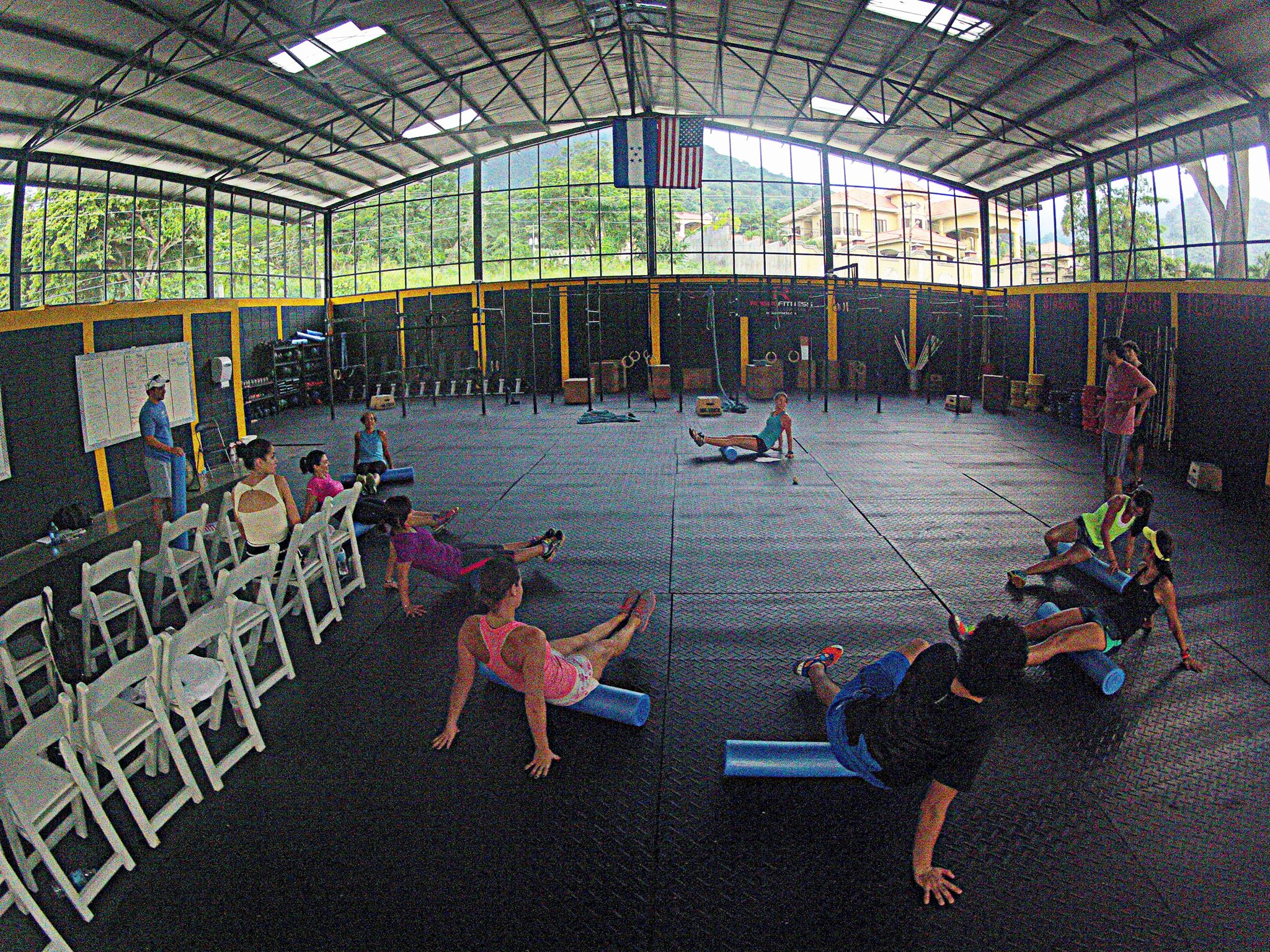
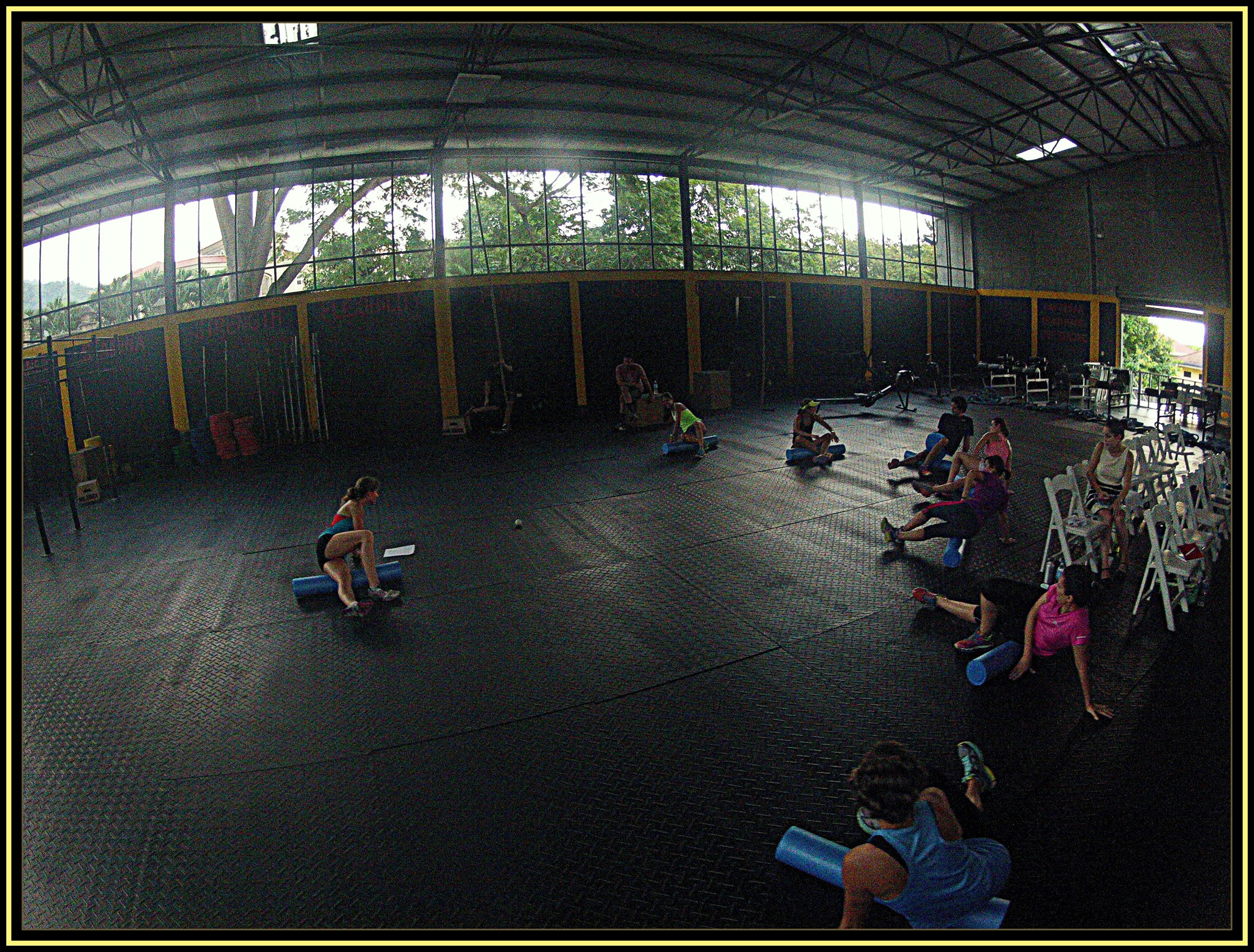
Leading the class through some ways to use the foam roller. It hurt so good!

Leading the class through some ways to use the foam roller. It hurt so good!

Recently this coach did something new: she packed her bags, flew to San Pedro Sula, Honduras, and taught a 2-day running seminar. It was a wonderful weekend, and I met some passionate runners.

While I have been to Central America before (years ago I went to Costa Rica), I was nervous about a trip to San Pedro Sula. If you don’t know much about this city or Honduras, do a quick “google search” and you’ll understand why. I should also mention that I don’t currently speak any Spanish, making me that much more vulnerable in a dangerous city. However, after a lot of research, chatting with my host, Jorge Marcos, emailing friends who live in Honduras, and chatting with a fellow non-Spanish-speaking New Yorker who has taught seminars in San Pedro Sula multiple times, I decided I wanted to go. Thankfully, my host (and arranger of the program) took great care of me, and I notified the US of my travel plans – just to be safe.

While I never spent any time in the “dangerous” parts of town, security is huge. People hire security guards to watch their houses and tote rifles. Small children beg in the street, pressing their faces again the glass window while stopped at a traffic light. Wild dogs roam the street. Some of the athletes I taught run with a guard in a car, following them for safety. The safety and freedom I experience everyday in NYC is a completely different world from those in San Pedro Sula.

Before I get into the coaching, I will say this: What I saw and experienced was no different from what I had experienced in Costa Rica. In fact, the neighborhood where I stayed was definitely safer (the neighbor has an armed guard) and prettier (at the base of beautiful mountains) than the home I stayed in in San Jose, Costa Rica. Not to say that bad things don’t happen here in this neighborhood, but everyone I met at the stores, coffee shops and restaurants were friendly, smiling people. I never felt unsafe. Of course that doesn’t change the reality that San Pedro Sula is indeed, a dangerous city.

I should also mention that in my brief time there, it was beautiful. Lush mountains everywhere, often with clouds covering the peaks. I hear the beaches are beautiful, and hopefully some day will make it there. Honduras is so beautiful, and I very much hope this country improves economically.

1273009_10151640537086761_830008827_oThe seminar was held over a weekend at Cross Fit, SPS. All of the athletes were bilingual, so there wasn’t a language barrier with them. They were all smart, passionate runners, eager to learn more and to share their experiences with me and the rest of the group. I have to say, I was a bit nervous that my lack of Spanish would be an issue while teaching. While I certainly was helpless in terms of ordering food on my own, I was totally capable of talking about my favorite sport.

I must also confess that I typically work with individuals on their training, not teaching seminars in foreign countries. Was I going to be able to speak about running for 8 hours? Would I be clearly communicating? Would I confuse newbies? Would they lose focus? Honestly, I didn’t know exactly how it would go, though I was confident in my knowledge of the sport and knew I was walking into the seminar with information and a passion they would hopefully appreciate.

If I could teach seminars every week to groups of runners, I totally would. I enjoyed it so much. I loved hearing about their race goals, their previous experiences, and taking them out for a short run. I loved making them laugh as I shared some of my own experiences – especially the mistakes. The entire seminar was great.

So much thanks to the athletes in San Pedro Sula, Jorge, and the folks at CrossFit SPS for what was a truly great weekend.

Marathon Mind-Games

elizabeth_corkum-5810web-320x444If you’ve ever run a marathon, you know that the journey is a mind game. While it’s a given that your body will scream for you to stop – no matter how great your months of training went – your head is what will make you or break you on race day.

Personally, I’ve had marathons in my past that rank as “best day ever,” and I’ve also had a few that count towards “worst day ever.” While for me the “worst day ever” has unfortunately always involved an injury or illness, it’s also always a mental struggle. Do I push through and just finish? Do I DNF? What’s smart? At the end of the day, the decision when injured is never easy.

On the “best day ever,’ marathon, the journey is still something of a mind game. Honestly, it’s the hardest mental test I can think – perhaps second to Ultra Marathons. Ultra Marathons are a completely different mind-game.

Here’s an example of a “good” race day:

Mile 3 – I feel awesome. I can go on forever!

Mile 6 – Man, I have 20 MORE MILES?

Mile 10 – My legs feel tired, but I CAN DO THIS!!!

Mile 13 – I’m only half way there?!?

Mile 15 – Come on, trust your training. This is LIVING!!! Remember, you love this!

Mile 17 – This sucks. Why did I think a marathon was a good idea? This is AWFUL. What other bad life choices have I made?!?

Mile 20 – Jesus Christ, how can I keep this pace for another 10k?

Mile 22 – Focus and get this shit done. You are stronger than this.

Mile 24 – Oh hey, this isn’t so bad! Man, I cannot wait to enjoy a nice cold beer as soon as this is done!

Mile 25 – Dear God, everything hurts and everything is tired. I just want to lay down and sleep.

Mile 26 – Total euphoria. THIS IS IT!!!! Focus is back in my eyes, as are sometimes tears. Push through and finish strong! This is the best moment ever!!!!!

Folks, in my experience, that’s often how a good day goes.

A bad marathon looks too scary to document. If you’ve been there, you know.

The good news is that if you train properly, the mental strength you’ve wielded and mastered on your long runs prepare you for your race morning mental challenge.

It’s funny, you always expect to feel physically spent after a marathon. You anticipate walking like a broken person, having limited range of motion, dealing with chafing and blisters, and having to rehydrate like a camel. The biggest shock to me, every time, is how mentally drained I am after the marathon. Your brain feels like mush, even when euphoric after succeeding at said goal. It reminds me of how I felt after taking the SATs or GREs. My brain feels completely drained.

So, if you are nervous about your looming marathon, you should be. It means you care. It also means you respect the marathon, and that you realize that a whole lot can happen within 26.2 miles. Take heart, your training is preparing you. And yes, on race day you will struggle to keep focused and to keep your brain in a positive place. But keep putting one foot in front of the other, and I promise you it won’t take long until your head shifts into a different space.

…For the love of it

DSC_0154I recently had a few clients voice that they always want to love running. That the minute running is something they start to resent, or even hate, it’s time to pump the brakes on their training. It’s often during this time in marathon training – about 10-8 weeks away from race day – where mentally it’s easy to start to burn out and lose focus. Let’s face it, pounding the pavement day after day for months can cause the most passionate running enthusiast craving a break.

My advice for my clients: try to find the fun in your training. Sometimes there are days where you just are not feeling it. When that happens, elect to ditch a day of “junk miles” here or there. The big mistake is ditching out on those long runs or tempo runs. Unless your livelihood depends on winning races, remember that you run because you WANT TO. Because you LOVE IT. If you suddenly don’t want to or don’t love it, maybe you need a break. BUT, if you are 8-10 weeks out from a goal race, try to take a step back and to focus on the light at the end of the tunnel. Tapering is in the near future, so focus on a week at a time, and your goal for race day.

After your race, take some time off. This is necessary for your body to heal, but it’s also necessary for your mind. The amount of focus, energy, and mental grit to push through a marathon is extremely taxing. Be kind to yourself.

If you don’t feel like getting back to running, find something else you love to do. Or only run and race 5Ks for a few months. Or add cross training.

It’s completely normal at some point to hit that point where you want to bail on a run or two, or to cancel race plans. Do what is right for you. Remember, you are human. No one is going to judge you, or be disappointed in you. Doing what’s best for your happiness is always what’s most important. If that means going for a run, do with with a smile on your face and a spring to your step.

Chafing Challenges

corky8

As marathon season is upon us, it’s the perfect time to discuss strategies to make those long runs and race day challenge as comfortable as possible. So, let’s talk about those unpleasant, sometimes unavoidable, casualties of running and racing long.

Let’s get nasty:

Blisters can plague you on marathon day, or on those long runs. There is often an easy fix for these painful buggers: running socks. Toss those cotton socks away. If you are still suffering from blisters after making the switch, keep an eye on your shoes. Are they old? Are they the right size?

Chafing. It can happen to anyone, and often occurs due to clothes rubbing against skin, or skin against skin. You wardrobe choice, body type, running form, sweat rate – there are many different factors. Personally, I chronically battle chafing on my sternum, from my sports bra band. I’ve also had it on my arms, from arm sleeves. Bodyglide can help ward off those painful patches of chafing, but in my experience it isn’t always full-proof. Step into the shower, and you’ll often find yourself shrieking!

Bloody nipples plague some male runners. Ladies, luckily this doesn’t happen to most of us! Bloody nipples are caused by the rubbing of your running shirt (more or less like chafing), leaving the nips extremely painful, and often bleeding. Bodyglide can help. Some guys will actually place band aids over their nips pre-race. As I understand it, the pain and recovery time is similar to chafing.

Have you encountered any other kinds of nasty running-related problems? Have you found a solution? Please share with the class!