
The Three Pillars of Success: Training, Mindset and Nutrition

Becoming the best versions of ourselves on the race course can be quite the journey. For longterm success, there are three pillars: training, mindset and nutrition. Master all three, and the sky is the limit. So below are some tips and things to consider as you evolve as a runner:

Training:

This is an incredibly nuanced subject. There are some guiding principals, but ultimately we are all a study of one. Things like work and life demands, climate and where and how you can train, and so on will all impact how you can (or should!) balance training. I highly recommend all runners do at least one of these two things: hire a running coach, read as many books on training principals and plans as you can. Knowledge is power, and being capable of making informed decisions is incredibly important – especially when we are often driven by our emotions. It’s very hard to be subjective and guide ourselves to the best of our abilities. It’s why many coaches have coaches!

The biggest mistake I see from runners: we don’t respect the time and consistency necessary to achieve the goal. This isn’t to say that the goal is unattainable or out of the realm of possibilities – just it might not be in the timeline we want. Remember, adaptation takes time and consistency. Usually there’s a lot of repetitive and unsexy work that’s a part of the journey. When we attempt to fast track fitness (pace, mileage, and so on), we open up Pandora’s Box. Injury risk skyrockets. And we usually miss out on a couple of very important adaptations that happen with the unsexy and repetitive stuff. Often fitness plateaus or we begin to see every run as a “make or break” scenario because we are short on time.

When we give ourselves the appropriate timeline, magic can occur. It won’t always happen every cycle, but maintaining stackable cycles is when breakthroughs happen. Racing fitness is the product of your running resume over time. No one run “makes” the athlete. We always want to aim for being consistently good rather than inconsistently great. Inconsistency is often a pitfall. Injuries and forced off seasons do happen, but if we can reduce our odds of those things, running potential becomes quite exciting!

We want to diversify training and racing. It’s common to get on the “marathon hamster wheel” and essentially repeat the same patterns cycle after cycle. If we want to truly get better, it may be wise to only race one marathon per year (for example), and to dedicate the months pre-marathon build to fast 10ks or half marathons. Developing more speed and better running economy for the short stuff often means much faster and stronger marathon paces!

Ultimately, if you are invested in your racing potential, having a coach in your corner or a very solid understanding of training principals and your needs is key to achieving your dreams.

Mindset:

The very cool thing about running is that while we’re out there for miles and miles, or minds have the time to wander and develop as athletes too. Confidence can take time to build, and usually it gets stronger as we get more experienced. The unknown is scary, and it’s hard to be confident in something we have yet to do. But if we can begin to trust our instincts, learn from our training runs, and recognize how damn strong we are – usually we can slowly build a solid mindset.

Confidence as an athlete doesn’t mean ego necessarily. It means being confident enough to embrace a hard workout. It means confident enough to take easy runs truly easy (this is a hard one!). A mindset of knowing what sort of run or race we are about to experience, allowing us to tap into what is or isn’t appropriate in that moment. For example, the mindset for truly racing a 5K has to be one of heightened focus, ready to hurt essentially off the line. The mind has to be ready for an intense, sometimes brutally uncomfortable state in order to squeeze out the fitness of the day. Our brains usually give up long before our bodies, so recognizing that reality and developing strategies to push through the mental noise isn’t easy.

On the flip side, mindset on the starting line of the marathon should allow the athlete to not get carried away early, even if everyone around them is charging ahead. Entrusting the plan, fueling strategy and fitness and then not flippantly deviating from the plan due to ego or fear – this mental fortitude allows an athlete to have their best day out there. It’s so easy to get carried away in the early miles of the marathon, especially when carb loaded and coming off the taper. Holding back and being mindful and calm early will allow the brain to truly turn on in the late miles, when it’s absolutely necessary.

We learn as we go. Just as most of us won’t nail everything in our first race, we do learn and take away priceless information and experiences from that event. Mindful development is similar. Our brains are incredible, and learn quickly. Don’t be afraid to go in and epically fail – we often learn the most from those days we risk and potentially learn unexpected lessons.

There are some great resources out there for athletes who experience anxiety over training runs or races. Chat with a sports psychologist, or read some books or listen to podcast episodes with expert advice. Nerves are normal, it means you care. But when those nerves have a negative impact on the athlete or get in the way of their race performance, it’s best to develop coping mechanisms to turn nerves into a mindset that sets you up for success.

Nutrition:

This is a big topic, and one that make take some serious time to fully comprehend as a runner. For one thing, many of us grew up with complicated or confusing relationships with food. Ads on tv stating that “carbs are bad” or “coffee can be breakfast” can be hard messages to kick from our brains – even decades later. And here’s the hardest part: your needs as a runner are NOT the needs of most everyone else.

Here’s the simple takeaway from this subject: how you fuel and what you fuel with will have a direct impact on performance in racing and training runs, how well you recover, and your resilience to injuries. Under fueling is very common.

I highly recommend all runners listen to podcasts with the experts in the field: Registered Dietitians. Many have websites with awesome and often free content, as well as fantastic social media accounts. Do note that a “nutritionist” is NOT an RD. I can go get a “nutritionist” certification over the weekend, while an RD has a Master’s Degree in the subject. And not all RDs are experts in Endurance Athletes.

Anything that sounds like a fad should have our spidey senses heightened. Sugar isn’t the enemy. In fact, your favorite simple carbs are often the heroes of your running performance.

You can be the most talented and dedicated runner in the world, but if you are under fueled you will never be able to train or race at your full potential. It may take years and multiple training cycles to fully understand and master what best serves you, and that’s okay! Just please never assume you can or should “muscle through” a run under fueled or fasted, or that thinner equals faster.

Conclusion:

Being a runner and deeply caring about your goals is such a cool thing. How many adults do we know who are truly passionate about their hobbies? Support your passion with the three pillars, and you are going to achieve your dreams and exceed your greatest expectations.

Run Coaching: Runna has entered the Chat (GPT)

Run Coaching has evolved in a big way in the last few years for a few reasons. First off, we have AI – so resources like ChatGPT and Runna are now tools we didn’t have a few years ago. There’s also been a huge surge in the amount of certified run coaches, thanks to many certifications going purely or mostly remote since the 2020 pandemic. Certification programs have recognized they can crank out coaches at a much lower cost to the organization and with more ease. A runner interested in becoming a certified run coach no longer needs to commit a whole weekend (and potentially travel logistics) to become certified.

As a coach who’s been in the industry full time since 2015, and as a runner who began running and training for races in 2010, I am going to do my best to share the pros and cons of an AI program and a running coach. I will do my best to reserve my biases, though I’ll freely admit I have one.

When I signed up for my first marathon in 2010, times were different. There weren’t a ton of online training plans, I didn’t know run coaches were a thing, and I relied heavily on the Runner’s World Magazine to drop in my physical mailbox each month. I found a printable marathon plan on the NYRR website, and used that as my road map.

I was also very much living on a budget. I was in the tv and film industry full time, and I never knew when my next paycheck was coming. So investing in a magazine subscription for nuggets of wisdom and then using the printed plan as my guide fit my budget. My schedule was also unpredictable. You never knew if you’d have a 4-hour day or a 16-hour day on a set, so suffice to say I trained when I could. My journey to my first marathon ultimately looked little like that printed plan by the time race day arrived. Thanks to some dumb luck and good instincts, I got to the starting line of the Philly Marathon in 2010 healthy and capable of accomplishing my goal of a Boston Qualifier.

In the next few cycles, I got my hands on books – Daniels’ Running Formula and Pete Pfitzinger’s Advanced Marathoning, and they became my new roadmaps. But as we’d probably expect, I had to make changes to the programs to balance work, illness, injuries, vacations and so on. The beauty of these books was that I had to make changes and then trust my adjustments. I was never blindly following a plan.

I view ChatGPT and Runna as being in the similar camp as a book. For one thing, nobody can argue the price point. These resources are inexpensive or free. But the big danger, and something I’ve seen over and over: is that runners are blindly following these plans and assume that any “adjustments” made by AI are correct. We’ve become so accustomed to technology being reliable and sometimes smarter than ourselves, that we ignore our own instincts.

Another huge change since the 2020 pandemic: not only are there more certified coaches, there are way more runners! The running boom post-2020 has evolved in a way that still boggles my mind. It’s incredible how many people have fallen in love with running, racing, and being a part of running communities like run clubs. But we don’t know what we don’t know, and many new runners can and do easily fall victim to following AI blindly. This isn’t to say that Runna or AI are bad or dangerous, but they can be – especially when a runner is new to the sport.

Let’s not forget that due to the repetitive and high impact nature of running, about 60% of all runners navigate an injury of some kind every year. It’s an unfortunate consequence of the sport, but I’d also argue one that we could collectively lower by running and training more wisely. For example, many of us (new and experienced runners alike) build mileage, frequency and/or pace too quickly. Many of us also get excited and want to dive into something like marathon training without an adequate foundation, or we try to stack seasons without respecting the stress and need for down-seasons between builds.

When we ask AI for a program, we get the result of what AI collects via algorithms combined with what we share with it. In theory, AI will tap into training principals that you’d find in a book like Daniels’ Running Formula, but this may or may not be how it goes. And you are trusting that AI somehow understands your injury history, work/life balance, stress levels, vacation plans, and so on. An experienced runner or someone with coaching certifications could use AI to create a plan that they then adjust as needed. Having the experience and skills to adjust could make an AI program quite fun. Runners without the experience or skill set should proceed with caution.

Here’s where I’ll put on my run coaching hat: successful training is so much more than a training plan. It’s support regarding race strategy, nutrition guidance, motivation and inspiration, and empowering that individual through the highs and lows of training and of life. It’s also support in how to change a training plan for injury, illness and vacation. It’s about going beyond the data and empowering an individual to chase their goals and better their relationship with running and themselves as people.

I’ve personally been self-coached off and on since 2010. My resources? A dozen run coach certifications and their course material, and countless books with plans and guidance from some of the best coaches in the world. I also have data and race performances on myself from the last 15 years. And I currently have a coach. The best athletes in the world do. Not because they don’t know what to do, but because guidance from the outside, or experiencing different philosophies and strategies can change the game.

I get it, hiring a run coach isn’t cheap and can sometimes feel like a selfish use of funds. Coaches range from $75-500/month, often due to their location, experience, and whether they view this as a full time job or a side hobby. Many of us can’t or won’t want to invest in a run coach. Though I’d argue as both a runner and a coach, that if you really care about your relationship with running or racing, it’s beyond worth the investment if you can swing it.

Like I mentioned at the beginning of this blog, there’s been a boom (and I’d argue over-saturation) in the run coach space in the last few years. The good news is that this means there are eager (though potentially green) coaches out there at a lower price point. Your choice doesn’t have to be “free AI” or “$350/month coach.” You could gain the guidance of a coach while that coach builds confidence in themselves and their new craft. And selfishly, I’d like to see run coaches continue to be relevant instead of replaced by a computer that can’t do the same thing.

AI isn’t going anywhere. It can absolutely be a great point of entry for runners, as long as they don’t blindly follow it. We just need to recognize that no training plan, be it via Runna, Pfitzinger’s Advanced Marathoning or a program your personal run coach creates for you will be perfect as-is. There WILL need to be adjustments. Whether a coach is making those adjustments for you, or you are doing them on your own, remembering that the goal is to stay healthy and consistent so that your running can take you wherever you want it to go.

Setting Goals, Assessing Weaknesses, and Moving Forward

Last week I posted about the importance of the off season. Today I want to personally share how I handled my off season, and what lessons I learned about myself as an athlete in my latest marathon cycle, and how I’ll plan to make changes in the future. It’s important to understand that our bodies will adapt and change to anything we toss at it – with time, consistency, and a solid combination of work and recovery. It’s always easier to be the coach than the athlete, and I’ve worn both hats for myself for the last few years. While I know my body and my strengths and weaknesses, it’s not without its challenges.

Frankfurt Marathon Training: In Spring I dealt with my first injury in 5 years. I have a heel spur in my left foot that became irritated, and plantar fasciitis stemmed from that heel. They were essentially one big issue. While I ordered special orthotics, put my foot through electrotherapy (not pleasant nor cheap!), and did everything I could, I was also asked to stop running at full body weight. So with Frankfurt, my goal marathon, waiting in the wings on October 29th, I knew the clock was ticking. I ran the entire month of June at 50-80% of my body weight on the Alter-G at Finish Line PT. The monthly membership there was beyond worth it. I was able to run – which I needed physically and mentally. In July, 15 weeks from marathon day, I was given the green light to run outside. I had 15 weeks to go from base mileage on an Alter-G, to chasing down a PR. There were times my foot still hurt leading up to Frankfurt, but at least I knew how to manage it. With a pretty short window of time, I decided to be conservative with mileage. My highest mileage week was maybe 45 miles. My longest run, 20-milers. I supplemented my training with 5-7 hours of weight training per week.

Frankfurt Marathon Reflections: Moving forward, I’d ideally have had a few more weeks of official training, and some time to build solid base mileage outside. That’s my hope for my fall 2018 goal. Also, if I’m honest about my weaknesses, I fell apart late on the course. The weather was tough, and that made me lose my head game. However, my body was capable of more than I accomplished out there – even in those conditions. Therefore, some longer long runs (21-23-milers), and some more negative-split/progressive long runs are what I’ll need to develop a stronger mental space for those late miles. I’ll also plan to increase weekly mileage a bit for next fall. I know I’m not a high mileage athlete, but I think I can add a bit more and still feel healthy and strong.

The Off Season: I’m incredibly disciplined as an athlete. Despite the fun foods I post on IG (and don’t get me wrong – I love all foods!), I also track everything I consume – the good, the bad – I track it all. I’m also disciplined with my training. I can eat a lot because most of the time I burn a lot. I’m training 2 hours per day, on average. That buys me a lot of extra calories. But during the last 4 weeks, I’ve allowed myself to relax. In fact, while in Mexico for a week’s vacation, I didn’t track a single calorie or activity. For the first time in a VERY long time, I gave myself a guilt-free, no rules, do what you want, vacation. I ordered guacamole with everything. I inhaled corn chips like it was my job. I ordered margaritas and buckets of beer without hesitation. It. Was. Fabulous. The month of November had minimal training (some lifting in the gym and minimal mileage), and I tried to really relax, reflect on my training, my accomplishments and my weaknesses, and how to better train and race in 2018.

Moving Forward: So after a training cycle that, despite the bumps along the way, still lead to a marathon PR, I have reflected, rested, and am ready to get back to work. I have no idea how much weight I’ve gained in the last 4 weeks. I refuse to weigh myself right now. I should be focused purely on the training and adapting. Race weight isn’t the focus at this time. But my mind is ready, and my body feels recovered from the marathon – and that’s what’s most important.

My goal race for early 2018 is the Saint and Sinners Half, in Nevada. I ran it last year, set a 6+ minute PR, and won. This year I am going back and hoping to break 1:20. That’s a blazing 6:05 minute mile average. I could NEVER do that on the average half marathon course. But this one is 1200 ft. net downhill, and I run downhill really well. You better believe I’ll be getting my quads and calves ready. I’ll then run Boston Marathon. No goals in time for that right now. I will simply see where my fitness is after the half. I may offer to pace a friend or team mate. I’m not putting any pressure on Boston. Last year I neglected the recovery necessary after the half, and I think that’s what began to cause my foot issues. I won’t make that mistake again. After Boston, I’ll plan for a little off season, and then gear up for a fall 2018 marathon. Right now I’m seriously considering Saint George Marathon. It’s known for its 2000+ net downhill, and being a beautiful course. Again, downhill races aren’t without their challenges. But I know how to train for that and I think that would be a great course for breaking 3 hours. But for now, my eye is on the Half in February. I have 12 weeks.

Advice for You: Above you can see how I’ve handled and structured my goals. As you look towards 2018, space out your goal races in a realistic manner. We cannot do everything. Give your body TIME. Rushing into something, especially a marathon, can be quite risky. Assess your strengths and weaknesses. What should you focus on this year? Put together an organized plan, hire a coach, or find a running club. A clear plan will reduce injury risk and help with motivation and consistency. Lastly, take and embrace the off season. You will come back better.


How to Successfully Train and Race Injury-free

Running is often a sport or activity associated with injuries. And for good reason – the percent of runners in physical therapy, on the injured list, or running through pain is alarmingly high. While doing anything repetitive and strenuous isn’t without injury risk, I’d argue that many injuries can be prevented. It’s always my first priority to keep my runners healthy, as an injured runner simply can’t achieve their goals. I’d also say that I am asked more about injuries than anything else with my runners at Mile High Run Club, and I see literally hundreds of runners each week. Preventing injury can be tough because it takes self control, a clear plan, and a good sense of your own body and what signals to listen to.
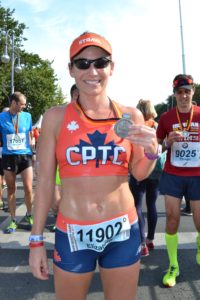
Too much too soon and overtraining are the big contributors to injuries and aches and pains that can be avoided. For many of us, too much too soon is a big one. In an ideal world, while building mileage after an off season, injury-related hiatus, or picking up running for the first time, you need to ease your body into the demands of running. Our brains often adapt faster than legs or lungs, and so there is often a tendency to go from 0-60. Runners should build base mileage for 3-6 weeks before adding the stress of speed or long runs. Honestly, many of us build minimal base mileage. Sometimes because we are simply super enthusiastic to be running, or a race was tossed onto the calendar with perhaps not enough time to sufficiently build base, train intensely, taper and race. The first thing we typically toss is the base mileage.

Try to keep in mind that physical adaptions take time. Our cells and fibers are stressed and broken down during activity, and then adapt, grow and improve. Without building mitochondria, improving bone density, lung capacity, and introducing the basic stress of base mileage (easy running), injury risk goes way up because our bodies aren’t ready to handle high mileage, speed workout, and long runs. The adaptions from stress don’t occur when we are running, but instead when we are resting. So skipping rest days in the name of progress is actually counter productive. So if you are coming back into running at virtually no miles, build carefully and with purpose. Everyone will be different, but you may simply start by running 4 30-minute runs throughout the week, mostly nonconsecutive days. On those rest days, be sure to hydrate, sleep, and maybe focus on foam rolling and stretching. Where we all start is going to vary based on experience, fitness, and if injury was the cause of the running hiatus. But easing into running should simply be that and nothing more.

The last time I was injured (November 2012), I was forced to take 8 weeks off entirely from running, and then cleared to ease back into the swing of things very carefully – with no speed runs until at least 1 month of easy base-mileage building. I remember how excited I was to be cleared to run. But I also remember how incredibly humbling an easy 30-minute run felt. When I was cleared to get back to speed runs, I was incredibly slow and I was working very hard for numbers that used to represent my easy runs. It can very frustrating. There can be the temptation to then go a little crazy and hit training hard every day. But perspective and a clear plan can help us keep our heads about us.

Overtraining can also lead to injuries. I tend to see these injuries in a few different types of runners: extremely competitive and talented athletes running 70-125 miles per week, and those who perhaps are running 30-60 mile weeks, but also do a ton of other activities – crossfit, fitness or dance classes, or runners who simply take their “recovery run” days too fast, actually not giving their body the runs that should feel super easy. Now, this also isn’t me saying runners should only run. In fact, I’m a coach who is a firm believer in supplemental and supportive training. But the training should complement your training schedule and not compromise it. We are all different. For example, I have found personally that minimal mileage but time lifting heavy in the gym has kept me feeling stronger and more efficient as a runner than ever, and I have luckily not been injured since 2012. Other runners may find weekly yoga helps their tight hamstrings, or that boxing helps their core and upper body strength.

At the end of the day, there should be purpose behind training days and days off. Know the purpose. If there really isn’t one, why are you doing it? Sometimes “because I want to,” or “for fun” is a totally fine reason. Just be honest about where you are in your running journey and how to protect your health. If you are injured, there go all those goals and races.

Running Injuries, Goals and the Gym

Berlin Marathon. Low mileage, lot's of time in the gym. Pretty good PR - 3:03:30.

Berlin Marathon. Low mileage, lot’s of time in the gym. Pretty good PR – 3:03:30.

It’s that fun time of year when there are literally dozens of races every weekend – from small 5Ks and 10Ks to some very large half marathons and marathons. The running community is filled with taper nerves, stories of recent race experiences, and reflections and goals for the new year. It’s a pretty awesome time to be a running coach and to watch the weeks and months of careful planning and training begin to pay off with some really incredible race finishes, personal records, and lessons learned.

I find that the journey can vary quite a bit per person. We are all different, and we adapt to training, goals and work load differently. I couldn’t help but notice while I was out for an 8-miler today how many runners I passed with medical tape, braces or bands on their body. It made me a little sad, angry, ad motivated to blog about it. In the non-running community, most people still assume running is bad for our knees. In fact, I cannot count the amount of times an acquaintance or total stranger says something negative about running and joints when they hear I run and coach runners. In fact, quite the opposite is true.

This isn’t to say that repetitive wear and tear doesn’t have consequences – cyclists, swimmers, dancers, tennis players – each sport has it’s own chronic injuries due to the muscles, tendons, ligaments and joints used repetitively. However, when done the right way, we actually usually stay far healthier and active when we use our body instead of sitting on our butts. Can running mess up knees? Sure. That will vary per athlete, their genetics, history, form, training practices, and overall strength. I come from the philosophy where most injuries are preventable, and most runners you see taped up simply didn’t train well. Usually they took on too much too soon (mileage or stress), or are incredibly imbalanced and could benefit from some serious strength training, cross training, stretching – or all of the above. Most injuries are preventable. Some obviously are not, and require immediate medical attention, and the diagnosis and advice should not be ignored.

Here’s the funny thing – most injured runners will willingly admit how much they are in pain, or how much their potential has been compromised, but yet they won’t take the necessary time off to rehab and recover. As a coach, I cannot help someone who isn’t willing to take the help. That may be the toughest part of my job. Knowing what needs to happen, but having an athlete unable to accept the work load, recovery, etc – to get there.

And so after witnessing all of those taped up runners today, I thought about myself and my running. I haven’t been injured (thankfully!) since 2012. I was forced to take 8 weeks off from running back then, and it was the worst two months ever. I swore to myself I would do what I could to avoid the injured list in the future. And so I finally began to take my own coaching advice. I also began to really listen and learn from my body. Dare I say, I began to train smart. Even when clocking 100-mile weeks while Ultra Marathon training in 2014, I quickly learned I needed to eliminate all speed work and simply focus on mileage. And when I shifted back to shorter and speedier goals, I cut mileage way down, and spent just as much time weight training as I did running.

In fact, that’s what struck me today. While training in 2016, my mileage was lower than most years in the past, ranging from 35-60 miles per week – including when marathon training. I’d cap my runs to 5X per week – no more, and 2 total rest days. I also spent a ton of time lifting heavy in the gym – upper and lower body – 2-3X per week for each. And for me, that combination lead to two of my three fastest marathons ever, within a 6-month span, and minimal aches and pains and no injuries.

And not only did the above combination work for me, I made myself be incredibly smart and conservative when hopping into any other races. Did I miss out on some incredible race opportunities this year in NYC? Absolutely. Did I have regrets or FOMO? Sure. And peer pressure is a bitch. But somehow I stuck to my guns, and my goals were clear. And so I didn’t add anything potentially harmful to the big goals.

Not every runner can spend hours in a gym. Or many simply don’t want to or refuse to prioritize their time. I get it. If you are very busy and love to run, you want to spend your free hour running – not in the weight room or on an elliptical. You want to be outside in the open air. I can totally relate. However, if you start to think about the longevity of your running career, and the specificity of your goals, you may start to view your training and choices a little differently.

So when you hit your off season, whenever that might be, I encourage you to take a hard look at your running and training history, and how your body has responded. Are you healthy? What hurts and why? Were your time goals achieved? How do you mentally feel? Listen, learn, and adapt.