The Perfect Match?

2013-06-25 21.48.17-1It was recently suggested I write a blog about finding a coach and/or personal trainer. Always aiming to fulfill blog requests, here’s my thoughts on the subject.

There are many, many coaches and trainers out there. Heck, there are thousands in New York City alone. Choosing one can seem as daunting as dating, or finding the perfect doctor. You could go crazy going through different data bases, viewing websites, and reading reviews. Hopefully my few tips here will help you feel slightly less stressed out.

– It sounds silly, but it matters to most people if their trainer/coach is male or female, and also the age/experience of said trainer. What’s right for you will be different than the next person. Just be honest with yourself with what you are looking for, and that will help narrow your searches.

– Go with your gut. If you find a trainer/coach who’s website, personality or reputation seems like a good match for you, make contact and see where it goes.

– References are great. If you have friends who are stoked with their trainer/coach and the results they are achieving, maybe you should reach out and see if that trainer is right for you.

– Every person is different. Which means every trainer is different. Ask questions that will help you decide if you two are a good match. After all, your trainer needs to be someone you trust, will listen to, and enjoy working with.

– Look for a trainer/coach who specializes in your needs/goals. If you are looking for a cross fit type of routine, a trainer who specializes in pilates or triathlon coaching may not be the best fit.

– Find a trainer who can give what you need. If you need a trainer/coach with a lot of time for one-on-one attention, a trainer who is already swamped and juggling a bunch of clients may not be able to give you what you need. Then again, a trainer is busy for good reason – so there’s that.

– Remember that you need to be able to be very honest with your coach/trainer. If you don’t feel personality-wise that you can be completely open and honest – about everything from diets and guilty pleasures to mental and physical struggles, that person may not be the right coach for you.

– Consider why you are looking for a coach and what your expectations of a coach are. Is the potential coach able to fill those needs for you?

– If you reach out to potential coaches/trainers and they are either extremely pushy about getting you to sign contracts, or difficult to get ahold of, consider looking elsewhere. Trainers shouldn’t be car salesmen or out of touch. A happy medium is often best.

– Research certifications and ask questions. It’s important your coach/trainer knows what they are doing. Once again, you need to be able to trust them and the program they create for you. If you question their knowledge or process, run away!

If you have any other tips you have for finding a coach/trainer, please share with the class.

Lastly, if a coach/trainer isn’t working for you, speak up. Perhaps with some communication, that person can better assist your needs. Or maybe that person simply isn’t the right coach/trainer for you. At the end of the day, don’t settle until you find someone who motivates you, and gives you the tools you need to achieve your goals.
Taper Tantrum

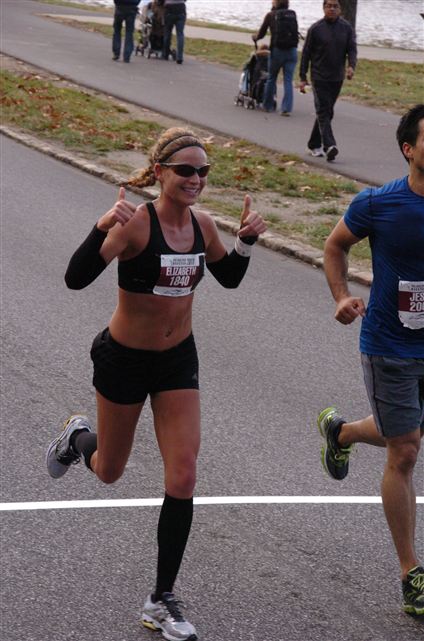
Philly Marathon 2011, and my current marathon PR of 3:15:46. Time to step it up and crush it.

Philly Marathon 2011, and my current marathon PR of 3:15:46. Time to step it up and crush it.

With less than a week to go before my goal race, I am deep into tapering. For those of you who don’t know what tapering is, it’s the few weeks leading up to a marathon where mileage and intensity is cut down in order to give the athlete time to rest, recover, heal, focus, and be ready to hit the pavement hard on race day. While tapering can sound delightful while in the middle of marathon training, actually doing it is rough. As an athlete, I despise it.

Realizing that perhaps many of you have dealt with tapering, I decided I would share my own experience this time round – in case it helps you. The truth is that tapering never gets easier.

If you are like me, you handle stress one of two ways: eating and exercising. Well, since my mileage has gone down, and I am no longer allowed to strength train until after the marathon, all of that pre-race stress goes into eating. My dreams have also been flooded with race-day visions. My mind is going wild.

During your taper, it s a good time to go back over previous races, how paces fluctuated, how training went up until that last big race, how you handled race day, etc. It’s also a good time to reaffirm your goals. I always advise my athletes to have three goals for a marathon: the goal that is the reach (everything may need to go perfectly to achieve it), the goal that seems tangible as long as they keep their focus and don’t do anything stupid, and the goal that is the totally achievable unless something goes terribly wrong. After all, it is easy to lose your head out there if things fall apart or don’t go according to plan. Having different goals gives you the opportunity to salvage the day and refocus quickly.

Here are my three goals:

The safety net goal: BQ. Unless I get injured out there, my training indicates that a sub-3:35 will be easy to achieve.

The possible with hard work goal: PR, ideally with a sub-3:10 (7:13 minute miles)

The reach: As close to 3:05 as possible. (7:03-7:05 minute miles)

My original hope for Philly was the 3:05 area and faster, but my training and mental game simply don’t show any sign that I’m there. That’s okay, and I’ve abandoned that goal. It can be saved for another time.

That’s not to say I am cutting my expectations short. My top two goals are ambitious, and I need to play it smart.

The positives: I am healthy. No plantar issues (that’s rare for me!), and no posterior tibial tendon issues, like I had last year. Last year I also battled the norovirus for a week, three weeks before Harrisburg Marathon. Plus, I know the Philly race course like the back of my hand. Knowledge is power. And it looks like I may have some crowd support from friends and family. These are all good things.

The one thing I may do this year is run with music. I generally prefer not to, but since Boston, I have had a hard time keeping my head in the game on long runs without it. Negative thoughts kick in, and I need to avoid that from happening on those quiet miles on Kelly Drive. It doesn’t look like I’ll have any pacers hop in, so I am going to be alone with my own thoughts – which I know is my weakness right now.

I am excited for Philly. I am ready to race again, healthy, and ready to leave it all out on the course. I am not going to Philly to have fun. I am going back to my home town to leave my blood, sweat and tears on the course, and to do my best.

Until then, I’ll keep eating my nerves. Mmm. Carbs.

Hola, Honduras!

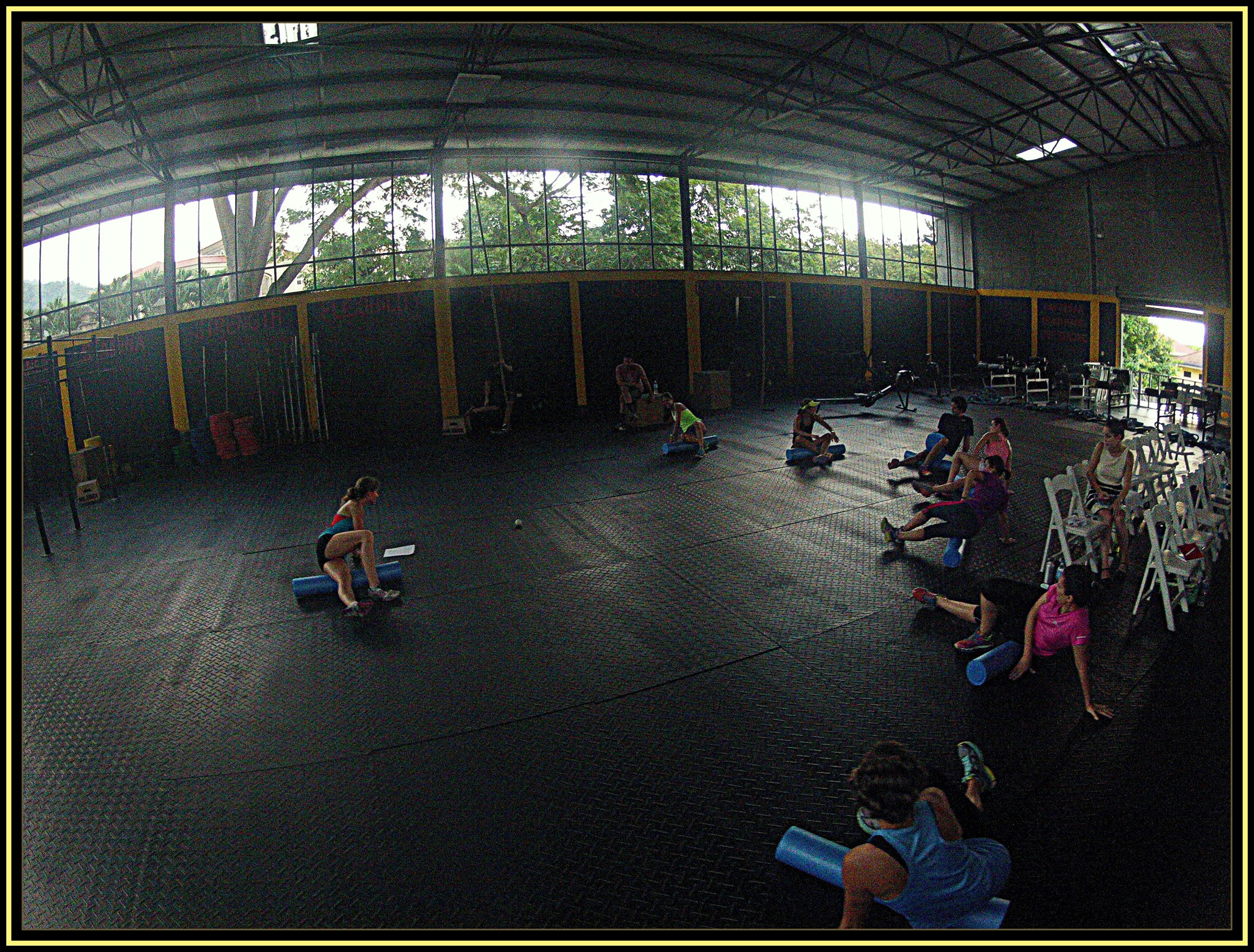
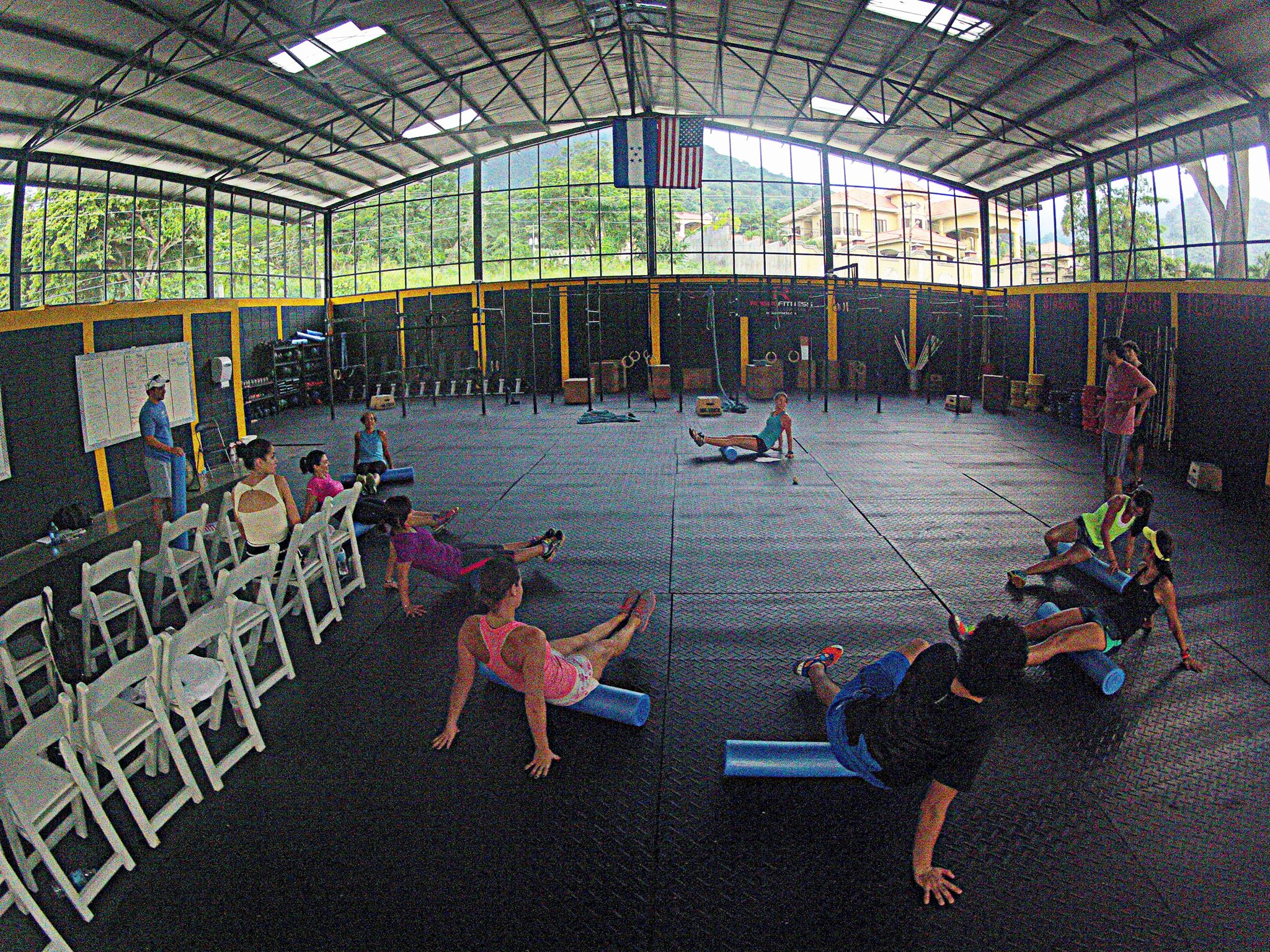
Leading the class through some ways to use the foam roller. It hurt so good!

Leading the class through some ways to use the foam roller. It hurt so good!

Recently this coach did something new: she packed her bags, flew to San Pedro Sula, Honduras, and taught a 2-day running seminar. It was a wonderful weekend, and I met some passionate runners.

While I have been to Central America before (years ago I went to Costa Rica), I was nervous about a trip to San Pedro Sula. If you don’t know much about this city or Honduras, do a quick “google search” and you’ll understand why. I should also mention that I don’t currently speak any Spanish, making me that much more vulnerable in a dangerous city. However, after a lot of research, chatting with my host, Jorge Marcos, emailing friends who live in Honduras, and chatting with a fellow non-Spanish-speaking New Yorker who has taught seminars in San Pedro Sula multiple times, I decided I wanted to go. Thankfully, my host (and arranger of the program) took great care of me, and I notified the US of my travel plans – just to be safe.

While I never spent any time in the “dangerous” parts of town, security is huge. People hire security guards to watch their houses and tote rifles. Small children beg in the street, pressing their faces again the glass window while stopped at a traffic light. Wild dogs roam the street. Some of the athletes I taught run with a guard in a car, following them for safety. The safety and freedom I experience everyday in NYC is a completely different world from those in San Pedro Sula.

Before I get into the coaching, I will say this: What I saw and experienced was no different from what I had experienced in Costa Rica. In fact, the neighborhood where I stayed was definitely safer (the neighbor has an armed guard) and prettier (at the base of beautiful mountains) than the home I stayed in in San Jose, Costa Rica. Not to say that bad things don’t happen here in this neighborhood, but everyone I met at the stores, coffee shops and restaurants were friendly, smiling people. I never felt unsafe. Of course that doesn’t change the reality that San Pedro Sula is indeed, a dangerous city.

I should also mention that in my brief time there, it was beautiful. Lush mountains everywhere, often with clouds covering the peaks. I hear the beaches are beautiful, and hopefully some day will make it there. Honduras is so beautiful, and I very much hope this country improves economically.

1273009_10151640537086761_830008827_oThe seminar was held over a weekend at Cross Fit, SPS. All of the athletes were bilingual, so there wasn’t a language barrier with them. They were all smart, passionate runners, eager to learn more and to share their experiences with me and the rest of the group. I have to say, I was a bit nervous that my lack of Spanish would be an issue while teaching. While I certainly was helpless in terms of ordering food on my own, I was totally capable of talking about my favorite sport.

I must also confess that I typically work with individuals on their training, not teaching seminars in foreign countries. Was I going to be able to speak about running for 8 hours? Would I be clearly communicating? Would I confuse newbies? Would they lose focus? Honestly, I didn’t know exactly how it would go, though I was confident in my knowledge of the sport and knew I was walking into the seminar with information and a passion they would hopefully appreciate.

If I could teach seminars every week to groups of runners, I totally would. I enjoyed it so much. I loved hearing about their race goals, their previous experiences, and taking them out for a short run. I loved making them laugh as I shared some of my own experiences – especially the mistakes. The entire seminar was great.

So much thanks to the athletes in San Pedro Sula, Jorge, and the folks at CrossFit SPS for what was a truly great weekend.

…For the love of it

DSC_0154I recently had a few clients voice that they always want to love running. That the minute running is something they start to resent, or even hate, it’s time to pump the brakes on their training. It’s often during this time in marathon training – about 10-8 weeks away from race day – where mentally it’s easy to start to burn out and lose focus. Let’s face it, pounding the pavement day after day for months can cause the most passionate running enthusiast craving a break.

My advice for my clients: try to find the fun in your training. Sometimes there are days where you just are not feeling it. When that happens, elect to ditch a day of “junk miles” here or there. The big mistake is ditching out on those long runs or tempo runs. Unless your livelihood depends on winning races, remember that you run because you WANT TO. Because you LOVE IT. If you suddenly don’t want to or don’t love it, maybe you need a break. BUT, if you are 8-10 weeks out from a goal race, try to take a step back and to focus on the light at the end of the tunnel. Tapering is in the near future, so focus on a week at a time, and your goal for race day.

After your race, take some time off. This is necessary for your body to heal, but it’s also necessary for your mind. The amount of focus, energy, and mental grit to push through a marathon is extremely taxing. Be kind to yourself.

If you don’t feel like getting back to running, find something else you love to do. Or only run and race 5Ks for a few months. Or add cross training.

It’s completely normal at some point to hit that point where you want to bail on a run or two, or to cancel race plans. Do what is right for you. Remember, you are human. No one is going to judge you, or be disappointed in you. Doing what’s best for your happiness is always what’s most important. If that means going for a run, do with with a smile on your face and a spring to your step.

Chafing Challenges

corky8

As marathon season is upon us, it’s the perfect time to discuss strategies to make those long runs and race day challenge as comfortable as possible. So, let’s talk about those unpleasant, sometimes unavoidable, casualties of running and racing long.

Let’s get nasty:

Blisters can plague you on marathon day, or on those long runs. There is often an easy fix for these painful buggers: running socks. Toss those cotton socks away. If you are still suffering from blisters after making the switch, keep an eye on your shoes. Are they old? Are they the right size?

Chafing. It can happen to anyone, and often occurs due to clothes rubbing against skin, or skin against skin. You wardrobe choice, body type, running form, sweat rate – there are many different factors. Personally, I chronically battle chafing on my sternum, from my sports bra band. I’ve also had it on my arms, from arm sleeves. Bodyglide can help ward off those painful patches of chafing, but in my experience it isn’t always full-proof. Step into the shower, and you’ll often find yourself shrieking!

Bloody nipples plague some male runners. Ladies, luckily this doesn’t happen to most of us! Bloody nipples are caused by the rubbing of your running shirt (more or less like chafing), leaving the nips extremely painful, and often bleeding. Bodyglide can help. Some guys will actually place band aids over their nips pre-race. As I understand it, the pain and recovery time is similar to chafing.

Have you encountered any other kinds of nasty running-related problems? Have you found a solution? Please share with the class!