Tips on what can make/break a runner

This week’s blog is about the best and the worst. As an athlete and a coach I have experienced and witnessed countless smart and poor choices in both training and racing. We often learn from expert advice or from our own experience, and so in hopes this blog helps you avoid bad choices and make many good ones, here are some of my favorite good/bad decisions a runner can make.

The Good:

  • Track your training. If you use a GPS device, this is quite easy. Track the miles, effort, and pace. This information is incredibly valuable. Many runners I know have data from the last 5-10 years!
  • If you are seriously training for a goal race, you need to keep a watchful eye on the forecast. Adjust training days or expectations for weather. There’s absolutely no excuse for missing a long run because it rained on Saturday. Plan to move your long run to Sunday or get creative.
  • Train with purpose. This sometimes means running or training LESS. If you don’t know the reason for your training that day, you should question why you are doing it.
  • Treat yourself like an athlete. This means eating, sleeping, and drinking like one. Set yourself up for success.
  • Be cautious. If something feels injured, DO NOT continue to run through it. Overtraining and injuries can usually be avoided. You are not brave, tough, or dedicated if you train through injuries. You are stupid.
  • Show up early to races. My athletes who achieve their race day goals usually get there early, and give themselves ample time to warmup, relax, hydrate, and prepare in every way necessary. Showing up frazzled and last-minute is usually the recipe for disaster. Respect your goals.
  • Learn how to fuel your body. Our bodies are pretty smart, and usually give us clue, cues and advice as to what works and what doesn’t. Like your training, make note of your fueling needs, schedule, etc.
  • Communicate with your coach! Though your coach can’t be a mindreader or do the work for you, they are there to support you. It’s impossible to be supportive when the coach doesn’t know how to help you. If you don’t have a coach, rely on your team or running buddies for support. The running community can be extremely knowledgable and supportive!

The Bad:

  • Skipping the taper or recovery. Elite athletes know to respect these important steps to training, so why are any of us the exception to this step? Respecting the taper doesn’t mean pausing all training, either. I’ve had plenty a runner “not run” during the taper, which is almost as bad as blowing through the taper at high speed. Training cycles exist for a reason. If you don’t understand them, do some research or ask a coach.
  • I have never heard a runner say “I shouldn’t have listened to my coach,” but I hear “I should have listened to my coach” all the time. If you hired a coach, there’s probably good reason for it. Trust that person you are paying good money to guide you!
  • Eating something new the night before or morning of a race or long run. This rarely ends well.
  • Trying new socks, shoes, or a new outfit for a marathon. Your long runs are dress rehearsals for everything – including wardrobe. Trying something new risks blisters, chafing, bloody nipples, and general discomfort – none of which are supportive of a successful race.
  • Winging it on race day. While plans don’t always pan out, having no plan at all is like dancing with the devil. Study the race course, and have a plan on pacing, fueling, and how you are mentally breaking up the race distance.
  • Giving up before you begin. It’s impossible to have a good run or race if you doom it before you start. Yes, speed workouts, long runs and races usually hurt. But dooming yourself sets you up for failure.
  • Just as one good race or workout doesn’t define you as an athlete or human being, neither does one bad one. The athletes who learn to really care about their goals but also keep a healthy perspective are usually the ones who succeed and enjoy running for life.
Race Report: Pocono Marathon

PH-515009996On May 15th I ran my first solo marathon since Boston 2015. My goal was simple: lock in a BQ. While I felt pretty confident I’d complete a 3:15-3:30 marathon, a whole lot can happen in the course of 26.2 miles. Plus, this marathon was a short two weeks since my “A” race for 2016, the Broad Street Run.

I’d never run the Pocono Marathon before, but I signed up for it for a few reasons: the time of year sounded pretty optimal for my qualifier – still cool mornings and with plenty of time for me to recover before tackling training for Berlin Marathon. The course is over 1000 feet net downhill, which also sounded pretty darn appealing. Add the location, less than two hours from NYC, and it was the best fit. It sounded so good that my training partner and fellow Mile High Run Club Coach, Vinnie Miliano decided to join in the fun.

Here are a few things I loved about race weekend:

  • Having the school open and runners hang out there pre-race was awesome. It was unseasonably cold (felt like 30 degrees at the start!), and so having a warm building with tons of public rest rooms was amazing. A huge perk. Can you imagine the difference this would have made in the rain? Game changer.
  • The volunteers were awesome, and there was hydration/restrooms every 2 miles. This is a VERY rural race, and so the little support (no real spectators) made a huge difference. You always knew water and a smiling face was a few miles away.
  • Post-race support. For a race that caps the marathon at 1600 runners, there were bagged sandwiches, muffins, orange slices, chocolate milk, bananas and water.
  • The course. Though the back 10K is TOUGH (like REALLY fucking tough!!!!), I enjoyed the quiet, beautiful course until the back 10K. The 1000 feet downhill gave you some “free” miles, and the ups were often a nice change. I don’t know if I’d call the marathon course “fast,” but the half marathon course has PR written all over it.

Here are a few things I didn’t love about the weekend:

  • On a point-to-point course, there is always transportation (shuttles) to the starting line from the finish line. Apparently this race was the exception to the rule. This meant runners hustled to book cabs from hotels to the starting line. There aren’t a ton of cab companies up in the Poconos, but I got lucky and booked one that we split with a few other runners. I booked a hotel walking distance from the finish line specifically for the reason of ending at the finish. There’s absolutely no way I was going to take a shuttle to the starting line and then drive my car BACK to my hotel after running a very hilly marathon. That was the current arrangement for this race, apparently. No good.
  • Plastic cups on the race course. NOOOOO. The first cup I grabbed slipped out of my hand and spilled cold water all over me. I mentioned it was 30 degrees, right? The second cup didn’t slip, but it’s pretty impossible to fold a plastic cup and drink. Waxed paper cups are the only cups that belong on a race course – easy to grab, easy to fold, and easy to toss – in my humble opinion. This race made hydration a struggle.
  • The course. Again, I LOVED the first 20 miles. And I don’t hate hills. But the inclines were pretty insane for the final 10K, and the road was open to traffic, which made it that much more of a struggle to focus when you weren’t sure where the next car would come from. I’d highly recommend one lane be totally closed and coned off for the runners.

At the end of the day, I ran my second-fastest marathon to date! I finished 5th overall woman, 1st in my AG, in the official time of 3:11:07. I clenched my Boston Qualifier by over 20 minutes. I’m pretty pleased with how my body held up, considering those final hills two weeks after my goal race. I am very hopeful for my goals in Berlin, and going into those goals with some confidence. Now it’s time for me to take my own advice and focus on some rest and recovery.

Would I run Pocono Marathon again? Probably not. But I’d definitely consider the half marathon for a PR course!

Building Base for a Better Race

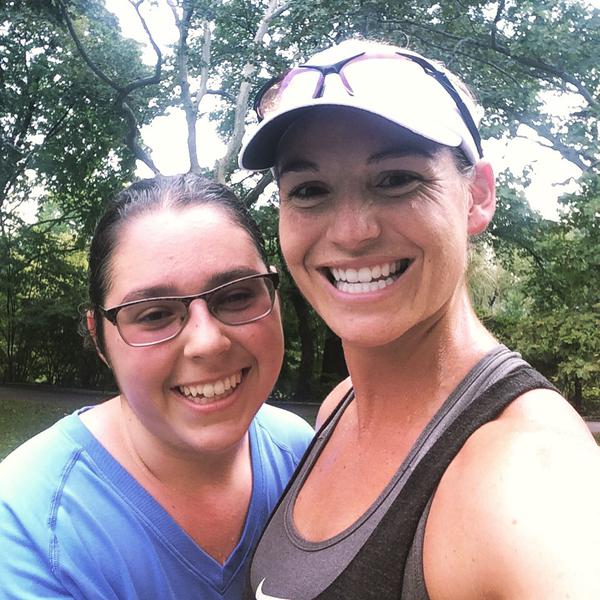
Models: Pipko and Jasmina, Assisted by Jesse Rosenthal and Andrea HeapIt’s the time of year when runners signing up and tackling Autumn half marathons and marathons are thinking about their training and goals. It’s an exciting time. The impossible could become possible. Minds and bodies are fresh. You are likely pumped and ready to dive into training!
There are a few important things to consider before you get to “official” training – the 16-20 weeks pre-race.

  • For 3-6 weeks, carefully and methodically build base mileage. The miles should be taken at a comfortable, conversational pace. There are no “long runs” yet, and you are not clocking speedy track workouts or hill repeats. That will come with time. Base mileage is necessary for priming and preparing the body for the demands and stress of those intense workouts. Skipping base mileage will raise injury risk.
  • If you are planning to lose any weight between now and your Autumn race, tackle those pesky pounds now – not while in the trenches of training. While it could be tempting to try to drop weight when mileage is high and peaked, that’s also when your body will need and use every calorie you consume. Skimping on calories and nutrition during hard training can raise injury risk, lower your immune system, and leave your training feeling slow and sluggish.
  • If you are looking to add strength training, cross training, or any other forms of physical activities to aid your race goals, get that started during base mileage. That way you aren’t tossing the new stress of weight training and track workouts to your body at the same time.
  • Get a physical. It’s optimal to check your health and lab work at this time. This way if you feel ill during training, you know what you started with and have a comparison.
  • Take a vacation. You’ll go into training rested. it’s a challenge to train well while on a vacation. Try to also eliminate any huge stresses you foresee occurring during training.

Remember that while big goals are awesome and hugely motivating, it’s risky to put all your eggs in one basket. Be sure to have an A, B, and C goal for that big day. That way if things unravel, you can keep your focus on the course. It’s never too early to think about those goals, how attainable they may be, and how you’ll get there!

Pacing in the NYC Marathon

On a very humid training run with Shira in July as she prepared for NYC Marathon.

On a very humid training run with Shira in July as she prepared for NYC Marathon.

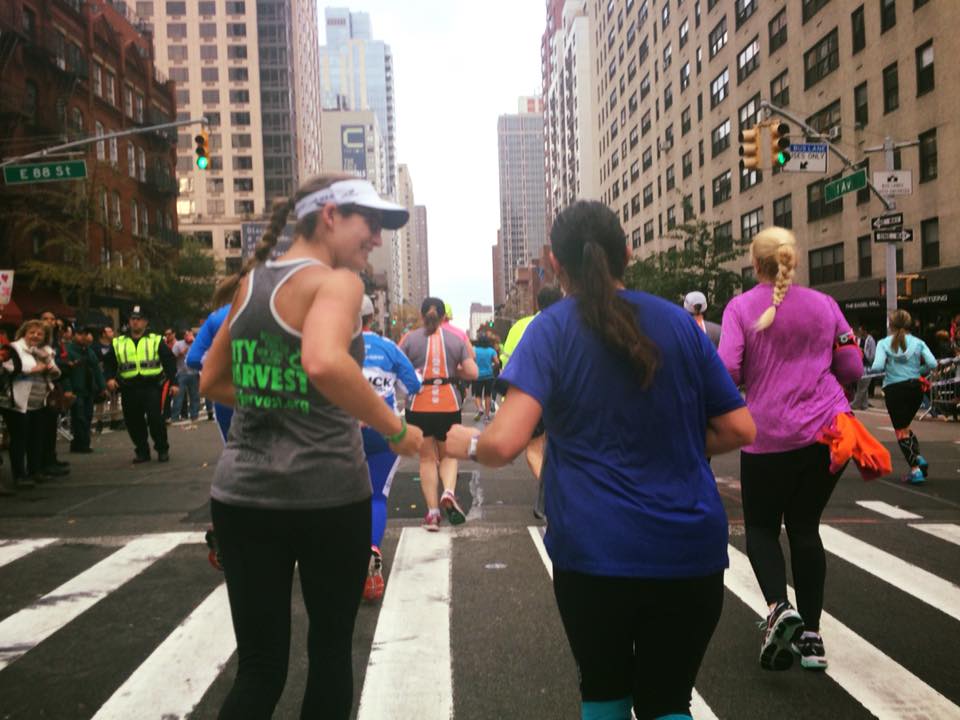
One of the greatest joys of my job is watching my athletes succeed. I get to watch them from the first day of training all the way through to their goals, witnessing the transformation that the months of hard work, dedication, and drive always deliver. On Sunday, November 2nd, between private clients, the City Harvest Charity Team, and runners who have been sweating it out at Mile High Run Club, I had over 100 runners stepping up to the starting line of the NYC Marathon. Many times, my work is done come race morning. I am left to frantically track my runners via numerous laptops and phones, or on the course cheering as my runners pass by. This year my work was a little different – I had the responsibility of pacing one of my private clients for her 26.2 mile journey.

As one might imagine, pacing a runner to their goals is a huge responsibility. It is also an honor. And it’s a completely different game to pace a pace group – simply locking in and holding a pace. When with one runner, you are with them through good and bad, needing to make modifications, judgement calls, and offer a ton of emotional support. Sometimes you need to talk them through the wall, force them to a medical tent, give them a shoulder to literally lean on, take walking breaks, try to make them laugh and think of happy thoughts, share their tears of pain and frustration. It’s always a journey of highs and lows, and you hope the highs outweigh the lows.

On Sunday, I had the job of pacing a first-time marathoner. She is only be 20 years old. I don’t know about you, but I know very few 20-year olds who run marathons. She also earned her way into the marathon via NYRR’s 9+1. She also happens to have a cognitive disability. She is incredible, and trained incredibly hard to get to Sunday’s starting line.

When I arrived at her door, I was greeted with the biggest hug and lots of excitement. Imagine a child on Christmas morning or at Disney World, and that’s perhaps close to the enthusiasm Shira had for race morning. I wish every runner was as excited to run 26.2 miles as this young lady!

Unfortunately, the day faced us with some really tough challenges: a delay on the Staten Island Ferry, a HUGE delay with the shuttle from the ferry to Athlete’s Village – so much so that we barely had time to get to our corral before it closed. Because of the delays, we both missed our opportunities to grab bagels, or even find the special tent we had been granted access to. Our very long and delayed trip to the starting line was overwhelming, and that caused the wheels to come off during the race. However, some fantastic support out there from Shira’s parents, relatives, teachers and friends were exactly what we needed to continue moving forward. At times we ran. At times we walked. We stopped for bananas twice, because Shira was starving. We stopped at a medical tent so that a medic could massage Shira’s tight quad. We stopped when we saw her family, so that she could facetime with her sister who was in Israel on Sunday. Through highs and lows, the miles ticked by.

What struck me the most was the support of the other runners out there. They were so supportive of her, often cheering her on, echoing my encouraging words, and giving her high-fives. While the crowded course for the first few miles was very overwhelming (I do not recommend someone with special needs to be in the last wave – it was too much for her), the runners around us were sometimes what got her through to the next mile.

Despite the difficulties, the minute we crossed the finish line after 5 hours and 38 minutes of being on our feet, Shira was elated. She was so proud of herself – and rightly so! Her strength is an inspiration to me and everyone who knows her.

Here are a few of my observations from the 2015 NYC Marathon:

  • In wave 4 (cannot speak for the other waves), many runners stop with their phones and selfie sticks for photos along the course – especially within the first mile as we go up and over the bridge. This was not only extremely frustrating, but also dangerous. In my humble opinion, cell phones have negatively impacted the race experience. Make memories and let the race photographers handle the photos.
  • Runners with special needs should not take the ferry – our morning included: a subway, a shuttle (subway had construction), a ferry, a shuttle, a walk. That’s a LOT of logistics/stress to handle. That wasn’t fair for Shira.
  • The race starts with cannons. If you were at the finish line of the Boston Marathon in 2013 and happened to forget that NYC marathon begins with cannons, you might jump out of your skin. You can guess how hard it was for me to keep my cool when that happened. I almost threw up.
  • There were hardly any porta-potty lines in our corral. That was pretty amazing.
  • Bagels/refreshments were nowhere near our village/corral. This was pretty awful.
  • The volunteers along the course were supportive and energetic.
  • At the finish line, we had a wrist band and permission to exit where the elite runners and Achilles athletes exit at west 72nd street. The NYRR staff would not allow us to exit, which was unfortunate considering all the extra work we had put into making Shira’s day as comfortable as possible – which had included months of correspondence with the folks at NYRR.
  • New Yorker’s are the nicest, most considerate people on marathon day. Suddenly everyone is supportive, smiling, and ready to help a runner any way possible. I wish that humanity would carry through the rest of the year.

Kathrine Switzer once was quoted saying “If you ever lose sight in human nature, go out and watch a marathon.” I agree. You see people at their most raw. You see blood, sweat and tears, and the will to push forward. You see human beings at their best and their worst – sometimes all at the same moment. If you ever feel dull and have the desire to feel “alive,” train and run a marathon.

After I left Shira’s apartment and headed towards an after party with my charity team, I was slowly able to start the process of checking results for all my other runners. My phone was flooded with emails, texts, missed calls, instagram photos, twitter updates – all from my athletes. It was amazing. The marathon is bigger than any one person, and perhaps that’s part of what makes it so epic.

Mile 18 of the 2015 NYC Marathon, pacing Shira.

Mile 18 of the 2015 NYC Marathon, pacing Shira.

Solemates – Finding and using a running buddy

We all run for different reasons. We also all have different running preferences. Some folks run on a treadmill at the gym while watching tv. Others run the same loop in their neighborhood day after day, never interested to mix it up. Some folks run with music or listen to podcasts. Some runners love the quiet and solitude of going it alone and having some peace and quiet from their busy lives. Some runners only run in groups, and cannot be motivated to run alone. Other folks have that one running buddy who keeps them accountable morning after morning, year after year. Some of us mix it up and believe variety is the spice of life. No two runners are the same.

Today I want to talk about a running buddy. If you are in a running rut – be it speed or motivation – a partner in crime may be exactly what you need.

Here are some tips and reasons to seek out a solemate:

  • Accountability. It’s not easy to get up before the sun and get in your training – especially in the rain, heat or cold. But knowing someone is getting up and planning to meet you, you will be a hundred times less likely to hit that snooze button.
  • Safety. Depending where you live, where you run, and the time of day you are training, it may be really valuable to have a buddy out there with you. Two runners in reflective gear are easier to see than one.
  • Easy run days are often taken too quickly. Having a running buddy you can continuously chat with means you’ll always be at that “conversational pace.” It’s easier said than done to hold back on effort if you are feeling good.
  • Fueling on long runs can be tricky. Having a buddy there means two brains will be thinking about fueling and how frequently to reach for that GU or pause for a water fountain. A buddy can also keep those negative thoughts from creeping in when the going gets tough. No one feels like a million bucks 18 miles into a long run, but you can keep each other motivated with positive reenforcement.
  • Just like running easy, pushing the pace on speed days is always easier with a buddy. Work together to push the pace. In a race, you have that forward motion from everyone around you. Training with that same support can go a long way. If your buddy is faster than you, you can also learn many lessons in pacing yourself. For example, you’ll learn not to go out as fast as your buddy or you’ll be in trouble down the line – a lesson many runners learn in a race. Or you can use that faster friend as motivation while hitting paces you’d otherwise struggle with solo.

If and when you and your running buddy need something different in a training buddy, be honest. Perhaps you will need to reshuffle schedules – your easy day may actually be their tough day – for example. Or perhaps paces and abilities, schedules or goals will change and you’ll need to gracefully find new running partners. The good news is that with running becoming so popular, the odds are you can both find what you need. Buddy up, and have an awesome season!