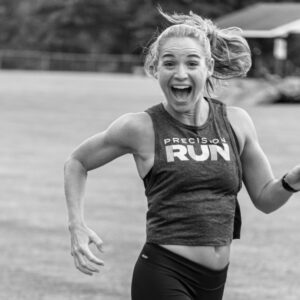
 Races that go well and exceed every expectation make running feel so incredibly liberating. They are satisfying, empowering and simply fun. It’s these races that usually motivate us to keep signing up and racing.
But what about the races that don’t go well? The ones that fail to meet expectations? Sometimes they are a fluke. Other times they are an indicator of other things. It’s important to listen to the signals, watch patterns, learn and adapt.
Here are some tips for handling and dissecting a race that fails to meet expectations, and ways to adjust on the race course:
- If the race is a goal, be sure to taper that week. Catch up on sleep and try to rest legs so they feel fresh for race day. If a taper or rest isn’t possible, know that performance may be compromised in a big way.
- Weather is a variable we cannot control. Some runners love cold weather. Others do remarkably well in humidity. Be honest with your strengths and weaknesses. It’s wise to choose goal races at times where weather is to your favor.
- Be realistic about physical capabilities and mental ones. Some days, our bodies are simply not ready. Other days, and these are the hardest to accept, our body is capable but our minds aren’t – or they give up.
- It’s common for many runners to go out too hard early in a race. This will almost always backfire. If you know that’s your tendency, try to BREAK THAT HABIT. We cannot continue to do the same thing and expect the results to change.
- When out on the course, and you can tell it won’t be your day, learn to not toss the race. If the A goal or objective isn’t in the cards, find a B goal. For example, yesterday I ran the Ted Corbitt 15K in Central Park. For various reasons, it was not a good day for me. So I decided to set the goal of holding onto Marathon Goal Pace – which humbled me as holding onto 6:50s didn’t feel as easy as I thought it would! But being 6 weeks out post-Frankfurt Marathon, and only 2 speed workouts in that time, I have lost some speed fitness. That’s okay! I had to accept what I had, and then work within those perameters. I didn’t love that, but I had to accept it and work with who I was in that moment.
- Be honest about your goals, and how tangible they are. This is a tough one. It’s easy to dream big and find that goal time. But how likely is that goal for you? And when? That’s the tough part – honestly assessing potential, the training, the head space and the course. It’s okay to try something and fail! It’s okay to say “okay, I’m not there yet.”
- On that note, be honest about whether you were truly ready for that goal that day. Our bodies are constantly changing and growing. Just because your running buddy is ready for a breakthrough race, that doesn’t mean you are. Don’t compare yourselves to others. Instead, celebrate those successes your friends or team mates have! Their success doesn’t make you a failure. You are your only competition when thinking about improving.
The good news is that the bad races make the good ones that much sweeter. Truly. Someone who always succeeds begins to forget just how special and amazing it feels. Struggling is normal. It makes you human. But if there are patterns, don’t ignore them – the good and the bad. The good: you’ve been doing something right for yourself in preparation and on the course. The bad: something, or many things, need to change.
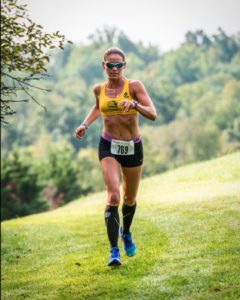 Last week I posted about the importance of the off season. Today I want to personally share how I handled my off season, and what lessons I learned about myself as an athlete in my latest marathon cycle, and how I’ll plan to make changes in the future. It’s important to understand that our bodies will adapt and change to anything we toss at it – with time, consistency, and a solid combination of work and recovery. It’s always easier to be the coach than the athlete, and I’ve worn both hats for myself for the last few years. While I know my body and my strengths and weaknesses, it’s not without its challenges.
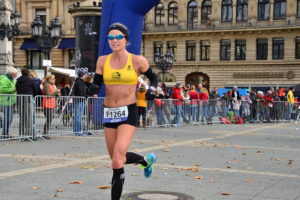 The off season. Most runners are really bad at this. It’s incredibly tempting to cross that goal finish line fired up and ready to dive into the next goal. Even if legs feel great within a day or two of that goal race, it’s important to relax and PAUSE. I completely understand that post-marathon high. I clearly remember days after my first marathon, signing up for two spring marathons with all the enthusiasm in the world. We feel invincible, fired up and inspired. PAUSE. Injury risk is incredibly high within the days/weeks following that goal marathon. Even if you FEEL good, trust that there are things that are broken down and rebuilding. Remember that just like the hard work and the taper, a reverse taper is necessary. The best marathoners in the world take an off season. None of us are the exception. How long or dramatic of an off season an athlete needs will vary. But when in doubt, be conservative.
 First and foremost, I apologize for neglecting my blog for much of 2017. That’s about to change! Second, it has been an incredible year. I am so humbled and proud of the hard work my roster have brought to the table. It’s an honor to do what I do every day.
 I would absolutely recommend Frankfurt Marathon to anyone looking for a flat and fast marathon. It was a pretty amazing day. And the days following the marathon were really fun. Food and drink is everywhere. If you enjoy baked goods and beer, Germany is for you. Frankfurt is an incredibly friendly city to travelers from all over the globe.
 Running is often a sport or activity associated with injuries. And for good reason – the percent of runners in physical therapy, on the injured list, or running through pain is alarmingly high. While doing anything repetitive and strenuous isn’t without injury risk, I’d argue that many injuries can be prevented. It’s always my first priority to keep my runners healthy, as an injured runner simply can’t achieve their goals. I’d also say that I am asked more about injuries than anything else with my runners at Mile High Run Club, and I see literally hundreds of runners each week. Preventing injury can be tough because it takes self control, a clear plan, and a good sense of your own body and what signals to listen to.