Race Report: Saints and Sinners Half Marathon

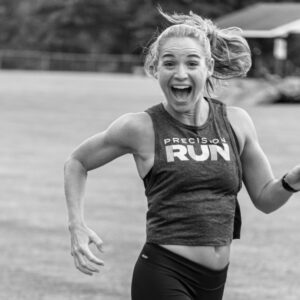
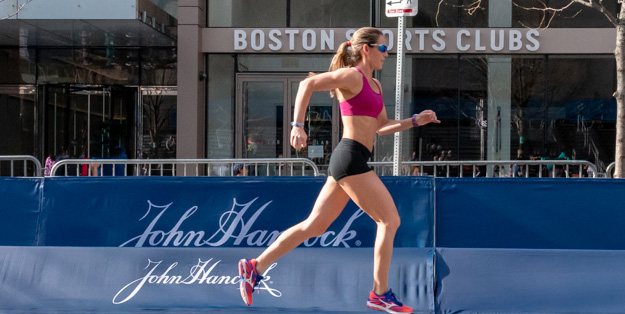
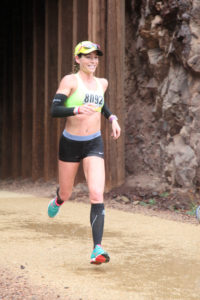
Flying down the final 5K or so. You can see how low the finish line was!

It’s been a hot second since I’ve released a new blog. It’s not that I haven’t been writing, but most of my writing lately has been for other platforms – Daily Burn, Under Armour, Runner’s World, Shape, and a few others. I’ve also been very busy preparing my private roster for their Spring race goals, and working my butt off training for my own race goals too!

Before I share my recent race experiences, I want to brag about my runners. So much hard work, and some incredible PRs outdoors in Winter conditions, at races around the country, and indoors and on the track. I am blown away month after month by the passion for running, the focus and the big goals my runners set and work towards with so much dedication. My runners inspire me to be better and try harder for my own running goals.

I do my best to lead by example as a coach, and have been working hard towards my ambitious Spring goals. While the Boston Marathon (April 17th), is my focus for Spring, I had set a half marathon race on the calendar to assess fitness, practice racing, and to set a new Half PR. I decided to look for a fast race – good weather and mostly downhill. With Boston as the goal marathon, I have been preparing for months for cruising up and down hills, and so a net downhill course sounded like a sure thing for a PR and a great opportunity to test out my legs. After some digging around a research, I settled on the Saints and Sinners Half Marathon, in Las Vegas. The course seemed beautiful and incredibly fast – with a point-to-point, 1200+ foot decent. The course is also a combination of paved bike path and incredibly soft and manicured gravel trails, taking you through the desert, numerous tunnels, and finishing at the base of Lake Mead. I was confident that between my training and the downhills, I had a 2-3 minute PR in me. I haven’t had awesome conditions for the last couple of half marathons I have attempted to race (including my previous PR), so I knew that the odds were really good I could drop my time a bit. And honestly, I knew going into it that I was perhaps at my fittest, fastest and healthiest for this kind of goal than ever.

Despite a few hiccups in Las Vegas, including a broken ankle on our shake out run on the Strip and 3+ hours in urgent care with Chris, and chilly and rainy conditions in the forecast for the entire weekend, I tried to stay calm. In years past, this would have thrown my confidence and quite possibly my race. But I now have become pretty decent at focusing on the task at hand with running, and knew once I got to the starting line I’d be okay. Even when Google maps made an update and sent all the runners to the wrong point for the starting line, I tried to not lose my cool. We parked literally 30 minutes before the gun went off, which in the past would have made me a wreck. While I didn’t love feeling rushed in the rain, I didn’t let it ruin my morning.

At the starting line I took a breath, relaxed and let go of everything around me but the race. The first 3 miles were incredibly fast. I was hitting 6:00 minute miles, which is typically around my 5K race pace. However, it was simply the drop in elevation and the course was doing the work, and so I tried not to freak out by the hot pace. About 10 runners were ahead of me for the first 5 miles, including one female for the first 3 miles. I then passed her and never saw her again. Between miles 4-7 there are some gradual declines and flat portions, so I was able to settle into a pace that seemed more acceptable: 6:15-6:25s. I ran miles 4-8 with a runner from Arizona, and we chatted here and there. He mentioned he had just recovered from brain cancer, and was looking to finish in under 1:30. I told him that his goal seemed incredibly attainable, as we were on our way to the half way mark way ahead of that pace. (Turns out he crushed his goal and finished in 1:22!!!!)
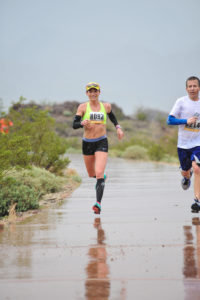
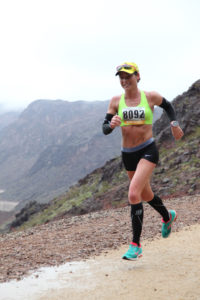
It was raining pretty hard around mile 5. Sharing miles with Josh, from AZ.

Coming through the 10K mark and an aid station, he and I were #8th and #9th. At mile 7 there was our only climb worth mentioning, and I said that now, on this climb and during the second half is where the work happens. I felt strong on the uphill, and the views of the lake, even in the rain, were beautiful. We passed a few men on the course, and began going through the tunnels. Around 8-9 miles in, I slowly pulled away from Josh and began gaining on a few other men. Each one was incredibly nice, and I tossed positive tips and comments their way.

The aid stations and volunteers at the turnaround (a small part of the course was an out-and-back) were the highlight of the race for me. It was at the end of a big tunnel, and the kids at the aid station were so excited to see the first female come through. I couldn’t help but feel like a role model for the young girls watching and volunteering. On the “back” portion, Josh and the few men I recently passed gave thumbs up, words of encouragements and cheers. Glancing at my watch around mile 9-10, I knew a big PR was in my hands if I didn’t do something stupid like roll and ankle, and continued to feel as smooth and strong – it was a little surprising and I kept waiting for the blazing early miles to catch up and compromise my pace or effort – but that never happened. I now knew the win was mine, as the next female was a good 5-8 minutes behind me at this point.

I had to stop at the mile 10 mark to tie my shoe. I couldn’t believe that with a double-knot and tucking the laces under themselves that my right shoe was untying! At first I thought maybe it just felt heavy and loose because of the rain and puddles, but a quick glance down and I could see loose laces! So I stopped, took a deep breath, focused on having my somewhat chilled fingers work, and then get back to running. The final 5K was incredibly fast (thanks, elevation drop!), and I was able to drop pace to 6:05-6:15 minute miles. With 2 miles to go, I was doing the math in my head and it all felt unreal. The thrilling part was that I felt awesome. Really awesome. Form felt smooth, breath felt controlled, and I simply worked with the race course.

Coming through the finish line in 1:21:13 was surreal. I never in my wildest dreams thought I’d ever see that number for a Half Marathon. It’s funny how we all tend to define ourselves and our potentials. It isn’t until we prove our limitations wrong that we see ourselves in a new light. Unlike Berlin Marathon, where I struggled so much for that PR and to keep my body and brain on board, this race felt easy and in control from start to finish. The only bummer: no finish line tape. I find it sad that women don’t get their moment of glory the way men do. I finished 5th overall, and 1st women by 10 minutes. And while there was no real prize other than a water bottle, the PR and strong race experience was all the winnings I wanted.
Now, here’s the thing: there’s absolutely no way I could run a 1:21 Half Marathon on a course with less hills. No two courses are created equal. This course handed me that time. I’m not saying I didn’t work for it, but that time would not translate the same to say NYC Half Marathon. My guess is that same performance would give me more of a 1:24-1:25. But that’s why it’s important to choose your races wisely. What’s your objective? What is your ace? Your weakness? I don’t need crowds and tons of people on the course to run well. Others do. I know how to run hills perhaps better than flat courses. Others don’t. You are different from the next runner. Learn what works for you.

And so this past week as I focused on easy miles (my legs were pretty trashed from the course!), I tried to let my big breakthrough of a 6+ minute PR settle in. I’d like to go back and race this course and/or the Poconos Half in 2018 and aim for 1:19. Both are incredibly fast. And I think I can do better. I am also transitioning all focus towards Boston. I know what I have to do to get the job done. And while aiming to break 3 hours won’t be easy, I am more confident now than ever that there’s the potential for it that this April.

The Twelve Myths of Fitness – Day 12: You should eat 5 meals per day

The theory that there’s a magic number of meals per day for weight loss, muscle gain, etc. is something doctors, nutritionists and celebrities have varying opinions about. While you’d think we’d take an educated and certified professional’s advice over a celebrity, that sadly isn’t always the case. The media and we as a culture often admire and adore folks in the limelight, and give them perhaps far more credibility than we should. And so many myths becomes “facts” in some warped way.

The advice that 5 small meals per day will lead to weight loss is somewhat both a myth and sometimes a fact. When we go long periods of time without eating, it can be common to feel a dip in energy, mood and focus. Maintaining somewhat consistent blood sugar can prevent dips and spikes in energy. So it makes sense that continuously fueling your body at a slow burn would keep your energy, metabolism, and blood sugar all happy and in check. Here’s the danger with that: it can be easy to overeat and consume far more calories if you are actually eating 5 “meals.” And if you are eating around the clock, your body will be using the fuel in your stomach for energy, not the body fat you are hoping to lose. Remember that insulin plays in a big role in how we use what we put in our mouths – and when.

The best way to eat for weight loss, maintaining weight, and feeling fueled tends to trend with the concept of 3 meals per day, and some snacks throughout the day. Now, snacks of donuts or candy probably aren’t what doctors are recommending. Instead, something nutritionally dense, and in the 100-300 calorie range. Think of a piece of fruit, a container of greek yogurt, sliced veggies with hummus – that kind of thing. Another thing to keep in mind is portion size for the meals. In general, portions are way too big in America. So that means we are consuming more calories at a sitting than necessary but assuming that’s “normal.”

It’s also important to remember that we are all different. While our bodies are all quite similar, we have different variables. Working different hours, sleep, age, activity level. Some of us are naturally grazers. Others need the ritual of sitting down to a “real meal” in order to feel satisfied. While some people like to drink their calories (smoothie, shake, etc.) others feel the need to chew their food. It is common that when hangry, we will reach for the most available and desirable item. This scenario rarely leads to good choices. So preventing that hangry state from occurring can help.

So while there may be no magic number of meals for us across the boards, a balance in macros throughout the day and at each meal can help. And if you are consuming the amount of calories needed, weight gain won’t be an issue. If you are looking to lose weight, stay away from temptations, and keep your macros in check.

The Twelve Myths of Fitness – Day 11: Older people shouldn’t exercise

Today’s myth is one I hope is something of the past, as recent research makes it quite clear that this myth is truly that. While we all probably know some elderly folks who seem pretty frail, delicate, and anything but athletic, the amount of badass strong senior citizens out there is growing. And while it’s probably unfair to compare my grandparents in their 90s to a 65-year-old marathoner, I can tell you that my grandparents were definitely not running marathons in their sixties. Or ever, actually. But I will tell you that my grandfather, who was active (a farmer) most of his entire life, didn’t become weak or frail until he was forced to quit farming and being outside much due to some other health issues. But the cool news is that the amount of masters athletes out there is growing, breaking records, kicking major ass, and taking name.

Some folks will suggest older folks protect their joints by not using them. Unfortunately, a body that isn’t used is naturally going to be weak and used to sitting around. We can all picture that old person sitting in a rocking chair, looking so delicate and ancient. That doesn’t have to be the way! A body in motion craves to be in motion. While it’s completely true that sometimes activities, intensity, and recovery will need to be adjusted as we age, there’s a ton of science backing up and supporting we be active our entire lives. In fact, some research suggest that exercising can have an anti-aging affect. Is sweating the fountain of youth?

Often non-impact and low-impact exercise has been recommended for older joints. There’s the common belief that older joints are fragile, and we need to be careful. While some folks may certainly have joint issues – cartilage, arthritis, other possible issues or aches – impact activities like running can be critical for staying healthy. The shock and vibrations high impact activities send through our body help with bone density. And some research shows that running will make an older person a more efficient walker – walking with the pep of someone decades younger. If you are already a runner, but perhaps struggling to deal with aging and how to adjust your training and goals, here are some helpful tips.

While running and cardio is good for us, there’s also a lot of evidence that strength training can do amazing things for our bodies as we age. This medical study has some very promising things to share about resistance training. While muscle mass typically declines as we age, strength training reduces the amount lost. This will help that individual feel stronger, have better balance and agility, and probably look and feel better in their skin. And more muscle will usually mean less body fat. Many studies suggest it is never too late to start strength training, and that while starting any new workout program takes some adjusting and some bumps along the way, a consistent strength training program can have incredible benefits.

So not only is there some pretty good evidence that exercise is good for an aging body, it is also good for the brain. Here’s an article suggesting that physical activity can slow the brain aging by 10 years! So not only may you have a strong and kick ass bod, capable of doing all kinds of things, you’ll have a brain to match it!

The Twelve Myths of Fitness – Day 10: Lifting heavy will make women bulk

While some people are super passionate about cleanses or the newest fitness trend, today’s myth is near and dear to my heart. But I won’t lead with my opinions. I’ll do my best to lead purely with research, science and facts – and to perhaps toss in my own experience as a woman, a personal trainer and an athlete.

For whatever reason, many women believe lifting heavy will make them bulk up. In my Mile High Run Club Dash28 class, I always stress that you should be lifting the heaviest weight possible, as long as you can manage it with good form. And guess what – there’s always a decent percent of women who reach for the 2lb. kettle bell – and then use it for squats! Honestly, if you are going to take the baby weight for those large power muscles, just do a bodyweight squat. To make gains in fitness, you need to stress your body. Lifting a 2lb. weight for a thousand reps will never make you look any different. And while you may be a little stronger, you make big gains in strength and appearance when you lift heavy.

And as Medical Daily explains, lifting heavy increases metabolic rate (you’ll burn more calories), and so fat loss is pretty much inevitable as long as you aren’t consuming additional calories. You’ll be stronger and leaner, and other benefits include increased mobility, preventing muscle loss, fixing posture, and alleviating back pain. And if are still worried about bulking up, relax. It’s incredibly difficult for most women to do. For one thing, our testosterone level isn’t high enough to increase mass. And unless you are consuming excess calories, you have nothing to worry about.

And aside from the sleek muscles you can be sporting, there are lots of health reasons to lift heavy – especially as you age. Bone and joints will have a better shot of staying happy and healthy, your agility, balance, and energy will thank you. You’ll also probably carry less body fat, which as an aging female can be tough to manage. Establishing a weight training routine now, no matter your age or fitness level, is the right step. Here are some good points and tips for getting started.

Personally, I have found lifting heavy to transform my body in a bunch of ways. I am more defined and have lost fat. I am stronger. I am a far more efficient and faster runner – especially on hills or late in a race. And honestly, I feel better in my skin. Muscles and strength makes me feel more confident and sexy. A thousand years ago when I was lifting light (and weight a good 10lbs less than now), I was skinny but I wasn’t nearly the confident woman or athlete I am now. And most importantly to me, I was more injury-prone back then. My injury risk has gone way down with my improvements in strength and power.

It’s important to focus on quality in the gym. Don’t rush your workout and give rest/recovery between sets. Focus on full range of motion. Be sure you are using good form and make adjustments to the machine for your body. Hydrate throughout the day, and get in some protein after your gym session. A shake, greek yogurt, lean meat, a banana with peanut butter – whatever is appealing to you. As a rule of thumb, you will usually feel the progress before you see it. Focus on consistency. Your body will change. Sadly most of us get frustrating and give up before our bodies begin to really show the progress. Keep at it.

The Twelve Myths of Fitness – Day 9: Your body will fall apart at 30 years old

Unless you find the fountain of youth, aging is pretty much inevitable. I say “pretty much” because we all age differently. Some of that is due to genetics. And some is due to lifestyle. I remember when I was in my 20s, I was told by 30-something year olds that once I hit 30, everything would go to shit. I’d feel different, and staying in shape would be tough. I never understood why a number would matter so much. Why not 29? Or 34? Why was 30 this magical age where we go from youthful, calorie burning, fit and hangover-free kiddos to old, tired, fat, hangover-fighting people, remembering better days? Having now spent a few years in the “over 30” category, I am now warned and cautioned relatively frequently that my days of being fit, improving as a runner, and eating pizzas and pints of ice cream will catch up with me any day now. So today’s blog is about that magic number, and what’s true and not so true about the “over 30” theory.

Genetics are something we cannot control. If you can look into the physical, mental and emotional aging of your siblings, parents, cousins, grandparents and so on – there are some clues for what you may be able to expect. Some traits, diseases, weaknesses and so on are genetic. Others are brought on by other factors. So your mother isn’t necessarily a clear example of what you will look like, feel like, and be capable of when you are her age. Though you can expect some similarities. Hormone levels play a huge role in how we age – from mood, energy level and sex drive to muscle density, bone density, and so on. Men and women naturally experience a dip in hormones at some point in their life. The dip or change in hormones, combined with perhaps less activity can naturally lead to weight gain, fatigue, and change in mood.

The cool thing is that while we can’t control our genetics, we are pretty darn in control about our choices we make in our lives. Our happiness, quality of life, stress level, sleep, hydration, activity, nutrition choices – all greatly factor into how we age. And while there are certainly things that cannot be helped, like work deadlines or sick children, choosing to eat well and exercise regularly can help many of us age in a slightly more graceful manner. Here’s some helpful info on exercise and being active, food and lifestyle adjustments you can try to make.

Now, if you are an athlete, your body may at some point need extra recovery time and there will be a time those personal records tend to stop happening. But lifting heavy can greatly help our bodies age, and runners can certainly achieve very impressive things after 30, 40, 50, or 60. I’ve had athletes in their 50s and 60s achieve things many folks in their 20s can only dream of doing. And personally, I am faster at almost every race distance in my 30s than I was in my 20s. And I am definitely in better shape. Other runners will peak in their early 20s, but those are usually folks who were running and competing in high school, and quite possibly now feel the consequences of pushing a body still growing and developing.

While we cannot fight Father Time, there are things we can do to stay as active, energetic and strong as possible. So remember the next time you don’t feel like going to the gym or eating a big bowl of greens, that doing things that are good for you are always worth it. This article from Harvard Medical School breaks down how we age when exercising versus not. It’s a good reminder that some changes as we age we cannot really feel, but those changes are important.