 Virtual races have gone from a novel idea to essentially the only race option for many of us during the pandemic. Many runners are missing the ritual of training for a race – the build up, focus, and goal – and then race morning – toeing the line with other athlete, ready to put all that fitness to the test. While in-person races are rare these days, and not without risk, race directors and organizations are offering virtual races to help keep their finances afloat, while offering an alternative to runners desperately looking for one.
There are some major pros and cons to this new virtual boom, and both should be considered.

 The long run. The cornerstone of marathon training. The weekly run that is essentially “dress rehearsal” for marathon day. It’s the run most runners stress about, and the one that over times builds confidence and endurance fitness. A marathoner cannot be prepared for race day without consistent long runs under their belt, but there’s a lot of opinions, beliefs and falsehoods regarding the long run – especially the magical peak mileage number. It’s important to understand that coaches will have their own reasons for how long they take the long runs, and (hopefully) there’s science-based factors considered. Most non-coaches toss out “20 miles” as the long run distance every marathoner should hit. But I’m going to attempt to shed some light onto the reason for the long run, what mental and physical adaptions occur, the different types of long runs, and why the 20-miler staple is actually not always the correct number. So strap in, cause here we go!
 As most have heard, the weather on Patriot’s Day was anything but kind. Marathoners are pretty tough people, and Monday demanded our mental strength to carry when our bodies succumbed to the elements. I often preach to my runners that they need to learn to train in most elements because we never know what we’ll be handed by Mother Nature on race day. Monday was a reminder of that. Not surprisingly, the runners I know who preformed best were the Winter Warriors and the Ultra Marathoners.
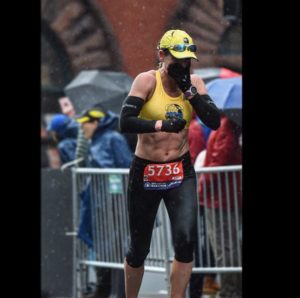 My calves felt like they were on the verge of cramping due to the cold around mile 14. I did everything I could to prevent cramping from happening, which meant changing my stride, form and pace in the late miles. I knew I was better off adding a minute to each mile than cramping and needing walk and stretching breaks in the elements. At the finish, I could barely lift my legs. My hips were in incredible pain, so cold and tight, and I wasn’t confident I’d make it to my hotel without a wheelchair ride to medical. Marni and the cup of hot cocoa at the finish line were the only reason I didn’t end up in a wheelchair.